What is soil carbon, and why is it becoming a new asset class for companies and investors?
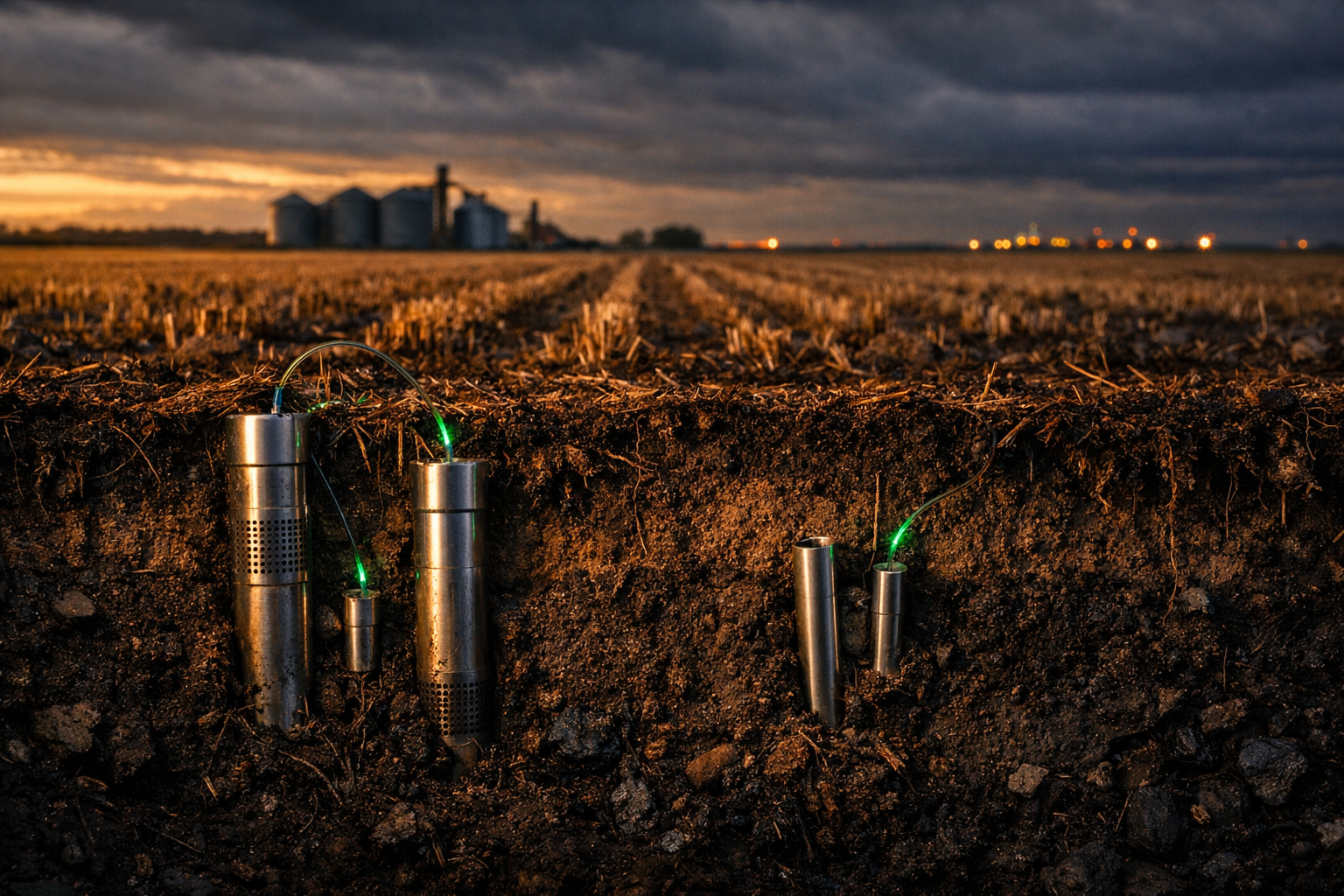
The starting point is simple: Soil Organic Carbon (SOC) is the stock of organic carbon contained in the soil profile. Many methodologies look at a “standard” soil layer—often 0–30 cm or 0–40 cm—because that’s where it can be measured consistently over time. When the stock increases relative to a baseline, that delta can be treated as carbon removal, not just “avoidance.” (FAO)
The reason it’s now being discussed as an “asset class” is that SOC can be turned into a stream of verified credits that companies can purchase. One signal cited by the financial press is the announcement of a multi-year commitment to buy soil carbon removal credits, read as an indication that the market is picking up pace. (IPE)
For B2B buyers, though, it’s not only a credits story. FAO links soil carbon management to agronomic and resilience effects as well—highly relevant for sectors with agricultural supply chains. (FAO) This is also where the “CFO angle” comes in: many companies distinguish between insetting (actions within the value chain, often not sold as credits) and offsetting/BVCM (credits that can be purchased for actions beyond the value chain). In corporate discussions, attention to near-term removals is growing. (Carbon Direct)
Finally, one driver that weighs on prices and demand is integrity. The Core Carbon Principles (ICVCM) have become a reference point for explaining why some “soil” credits are perceived as more robust than others—especially on additionality, quantification, permanence, and governance. (ICVCM) And the fact that ICVCM has approved the first sustainable agriculture methodologies from standards such as Verra and Climate Action Reserve is a sign of maturation toward more comparable criteria. (ICVCM)
Which farming practices actually increase soil carbon (and which may not be additional)?
Practices that typically appear in Improved Agricultural Land Management methodologies include reduced/no-till, crop diversification and rotations, residue management, water management, more efficient fertilization, and more effective grazing systems. (Verra)
A useful way to read them is “practice → mechanism → data to track.” Practical examples:
- Reduced tillage: less soil disturbance, therefore less carbon loss, but you need to track tillage events and field management.
- Rotations and diversification: more biomass and organic inputs, but you need a clear and consistent cropping history.
- More efficient fertilization: it can change the overall greenhouse-gas balance, so you need data on type, rates, and timing. (Verra)
The main risk, from a credits perspective, is additionality. If a practice is already “common practice” in an area, or is driven by supply-chain rules or incentives, it becomes harder to argue that the project is creating a change that would not have happened anyway. This is exactly the kind of issue the ICVCM principles aim to make more rigorous, by requiring credible baselines and solid additionality tests. (ICVCM)
There is also a more operational risk: some practices are reversible. If adoption is short-lived, or if management changes, the SOC increase may not hold up under a later check. (ICVCM)
Finally, you can’t look only at soil carbon. IALM methodologies may also consider changes in emissions of other greenhouse gases, because increasing SOC “at any cost” can create trade-offs in N₂O or CH₄. For many buyers, what matters is net climate impact, not a single indicator. (Verra)
How credits are measured: soil sampling vs models, costs, accuracy, and audit frequency
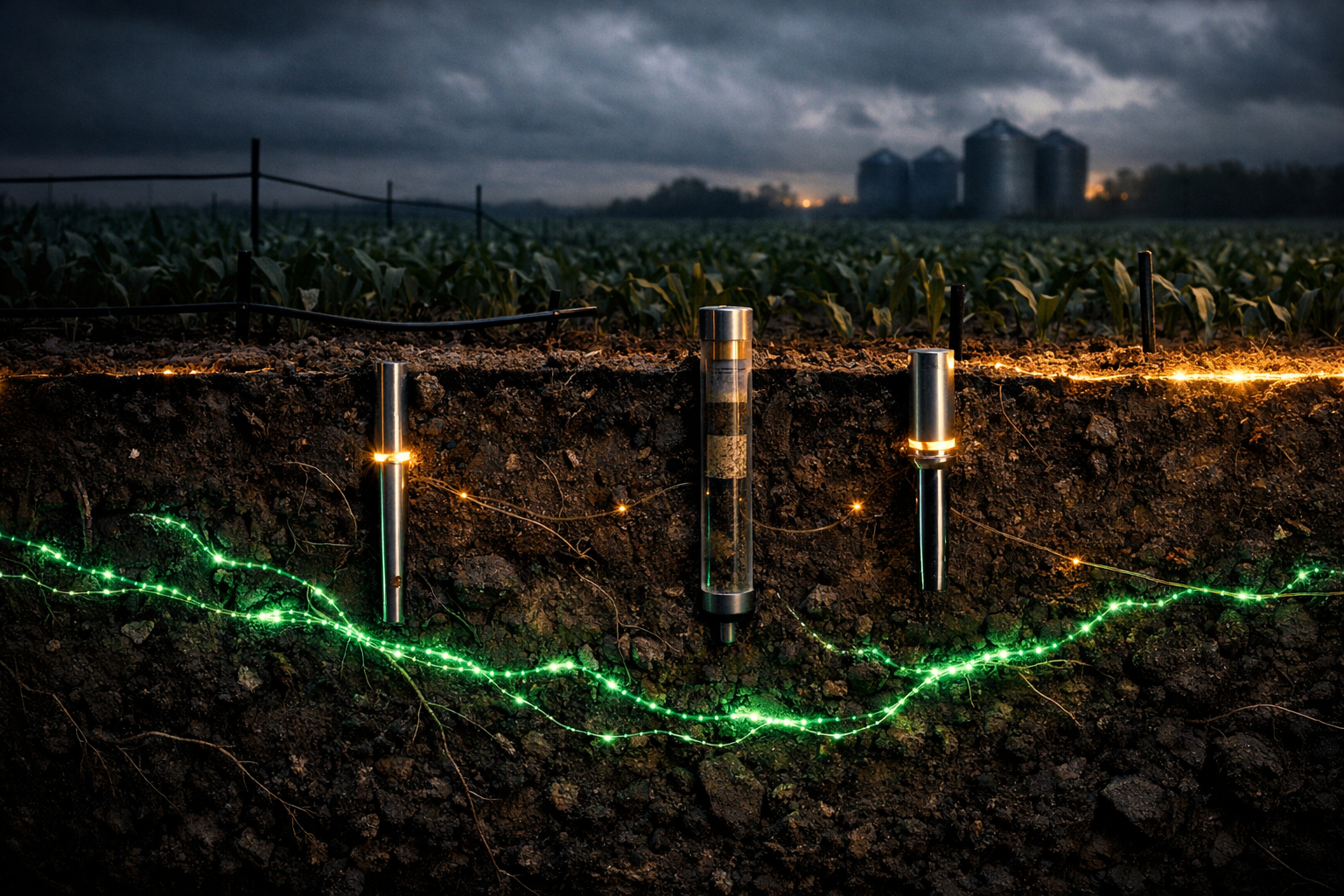
MRV is less mysterious than it seems. In practice it follows four steps: (1) initial baseline, (2) periodic monitoring, (3) third-party verification, (4) issuance of credits on the registry according to the standard’s rules. (Verra FAQ)
The most debated choice is between measurement-based and model-based approaches, often with hybrid solutions. (Verra FAQ)
Physical sampling is intuitive: take soil, analyze it, compare over time. The advantage is that it is anchored to local measurements. The problem is that in agriculture SOC variability can be high, so you need robust statistical designs—often with stratification by soil and management—otherwise sampling error becomes an issue. (GIZ)
Models scale better and can reduce costs, but they shift attention to input quality and transparency. From a buyer’s perspective, the same questions always come up: data traceability, QA/QC, audit trail, and the ability to explain how the model arrives at the number. This links directly to the governance and transparency requirements referenced by ICVCM. (ICVCM)
A trend cited in market analyses is the push toward more digital MRV and soil mapping, with the goal of reducing the number of samples while maintaining statistical rigor—especially in large projects. (Sustainable Atlas)
Audit frequency and crediting cycles depend on the standard and methodology. The practical point is cash flow: MRV costs come first, credits come later, once the monitoring cycle and verification are completed. (Verra FAQ)
Which standards and rules matter for agriculture: permanence, leakage, buffer pools, and reversal risk
Buyers first look at the “skeleton” of rules. In soil carbon, recurring standards include Verra VCS with IALM methodologies (for example VM0042) and Climate Action Reserve with soil protocols. On top of these, increasingly often, there is the ICVCM filter with the Core Carbon Principles and the integrity label. (Verra; ICVCM)
The key word is permanence. Soil carbon can return to the atmosphere if management changes, if the land is plowed, or if events and conditions lead to SOC loss. That’s why standards include long-term commitments, monitoring, and rules on what happens in the event of a reversal. (Verra FAQ)
The most common mechanism to manage risk is the buffer pool: a share of credits is set aside on a “risk-adjusted” basis to cover potential reversals. Verra describes a global buffer pool for land-based projects. (Verra FAQ)
The bar can be raised further. In ICVCM decisions on the first sustainable agriculture methodologies it approved, conditions cited include a minimum permanence commitment of 40 years via a Project Implementation Agreement. This has direct contractual implications for farms, aggregators, and buyers. (ICVCM)
There are also alternative accounting approaches in the permanence debate, such as tonne-year accounting, discussed in Climate Action Reserve work on permanence. For a buyer, this changes how they interpret climate equivalence over time and how internal policy accepts that type of credit. (Climate Action Reserve)
How to sell credits from agricultural production: market channels, expected prices, and buyer requirements
In practice, sales go through three channels. First, spot via brokers or marketplaces. Second, multi-year offtakes with corporate buyers. Third, supply-chain programs where payment may be linked to performance and, in some cases, to a revenue share from credits. Sector analyses note a shift toward longer contracts for quality and continuity of supply. (Sustainable Atlas)
On pricing, it’s right to remain cautious. Market analyses cite indicative ranges for high-quality nature-based removals, with wide dispersion linked to vintage, rating, MRV, and co-benefits. (Sustainable Atlas)
Requirements that recur in serious procurement are repetitive—and that’s fine: demonstrable additionality, clear claims and no double counting, MRV transparency, permanence and reversal management, rights to the credit and registry, plus “no harm” criteria. These themes align with ICVCM principles. (ICVCM)
As evidence that the market is seeking scale and track record, the verification and large-scale issuance of soil carbon credits under Verra has been reported in a case cited by the trade press. (Business Wire)
In term sheets, finally, expect clauses on holdbacks and risk, make-good rules in case of reversal, and very concrete data requests: field boundaries, practice logs, evidence on inputs, and audit access. (Verra FAQ)
Checklist for launching a project on a farm: data, contracts, MRV, and realistic monetization timelines
Data comes first. A “ready” project starts with parcel boundaries in GIS and a management history: crops and rotations, tillage, fertilizers with rates and timing, yields, irrigation, residues, and grazing. You also need documentary evidence for baseline and additionality, such as logs and invoices. (GIZ)
The standard must be chosen for fit and constraints. You need to align geography and farm type, permanence requirements, MRV options (samples vs models), and the costs and timelines for validation and verification. VM0042 (Verra) and the Soil Enrichment Protocol (Climate Action Reserve) are recurring reference points in industry discussions. (Verra VM0042; ICVCM)
Contracts determine who monetizes and who carries risk. Clarify credit ownership, exclusivity, duration, data rights, audit rights, and how buffer and reversals are handled. If you are targeting credits with stricter integrity labels, consider that there may be long commitments, such as the 40-year requirement cited by ICVCM for some approved methodologies. (ICVCM)
The MRV plan should be written like an operating plan. If you sample, define stratification, depth, density, lab, analytical methods, and QA/QC. If you go with digital MRV, define rules for input data and cross-checks. (GIZ)
Monetization timelines are not immediate. In general, you need to account for onboarding, baseline, a first monitoring window, then validation, verification, and issuance. In addition, methodology windows and transitions can affect when a project can be listed and brought to verification. (Verra VM0042)