
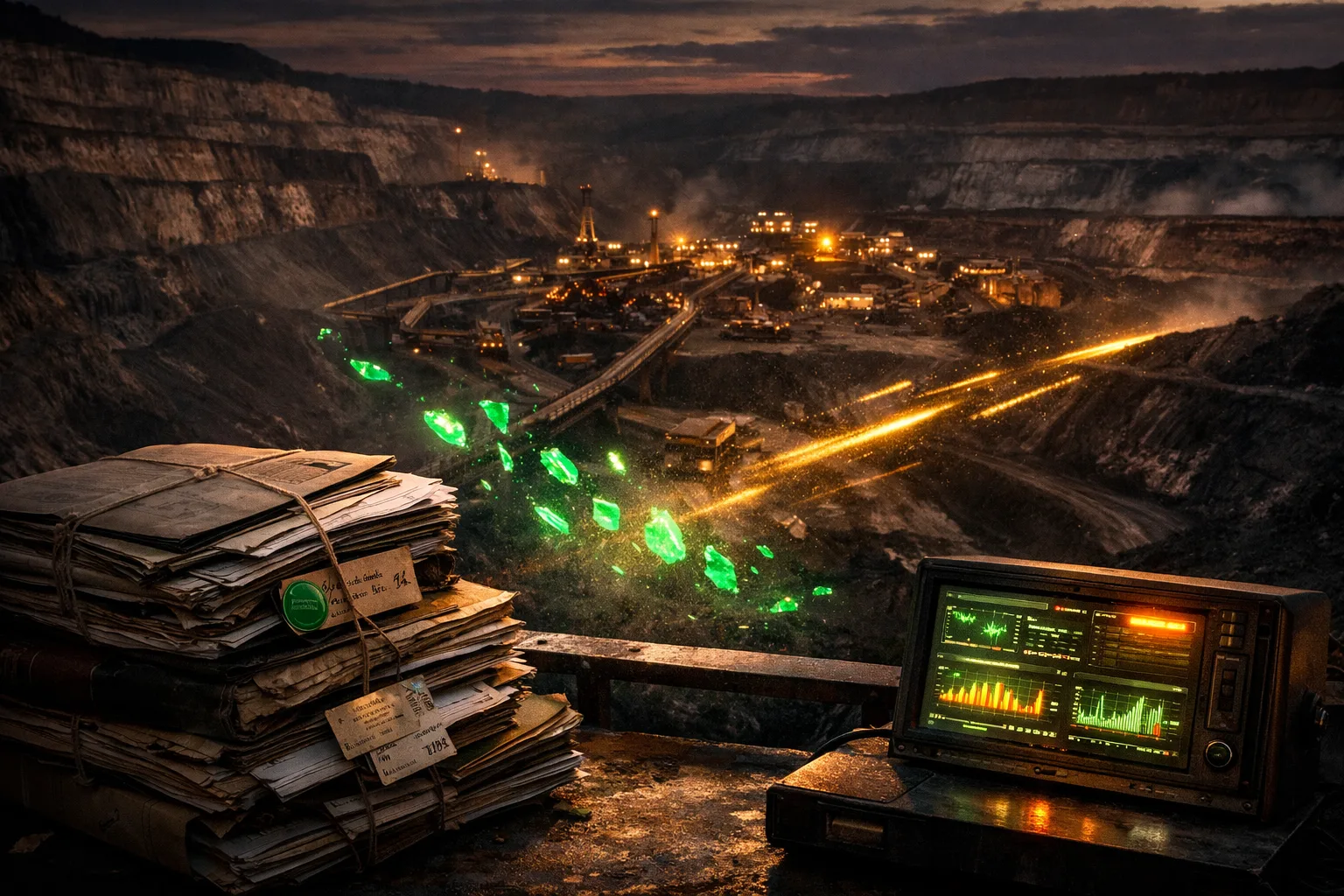
Australia’s Coal Sector Is Leaning on Offsets: What the Safeguard Review Could Change for Compliance Markets
Why coal mines are turning to emissions accounting and offsets instead of direct cuts
Coal mines are leaning on emissions accounting, baseline management, and ACCU offsets because many sites have limited near-term room for direct cuts. The practical focus shifts to fugitive emissions, better estimation, and buying credits to cover the compliance gap.
The economics are straightforward. For operators with methane-intensive assets, the choice between abatement capex and surrendering carbon credits depends on payback time, operational risk, and production continuity. In coal mining, the marginal cost of mitigation can be higher than the market price of credits when regulation tightens.
Reporting quality matters more every year. From 1 July 2026, open-cut mines covered by the Safeguard will need to use Method 2 or 3 to estimate fugitive emissions from 2026-27, which raises the bar on data quality, mine-specific modelling, and audit trails.
For buyers and processors, the risk is no longer just how much is emitted. It is also how those emissions are demonstrated. Method choice, sampling, and validation now matter for liability management and credit procurement.
That is why the key question is whether the system is driving real abatement or tactical liability management through offsets. The Safeguard Mechanism is where that tension shows up most clearly.
How the Safeguard Mechanism works for high-emitting industrial facilities
The Safeguard Mechanism covers Australia’s largest industrial facilities and uses declining baselines. The government links it to the goals of minus 43% by 2030 and net zero by 2050.
This structure matters for coal because emissions below the threshold do not face a direct carbon price, but emissions above the baseline must be addressed through onsite reductions, baseline management, or the purchase and surrender of ACCUs.
Baselines were built from historical data and then reduced in a predictable way. For many facilities, that creates a compliance curve that tightens year by year and increases exposure to ACCU price volatility.
The commercial point is simple. Compliance is not a single-year exercise. Procurement, treasury, and risk teams need to think about forward exposure to credits, not just the spot cost in the current year.
The next question is whether recent data show a system that is actually cutting emissions or one that is mainly shifting cost into the credit market. That is where the latest analysis on offset dependence becomes important.
What the latest analysis suggests about offset dependence and liability management
The latest government data show that net emissions from Safeguard-covered facilities fell 5.5% year on year and are now more than 12% below the level recorded when the reforms began.
At the same time, critical analysis argues that the market is rewarding some large fossil emitters with safeguard mechanism credits, which points to a possible gap between physical reduction and compliance accounting.
For corporate buyers, the issue is liability management strategy. When a facility generates or buys credits to stay compliant, reputation risk and future regulatory tightening become part of the carbon portfolio decision.
The most relevant change for coal is that the government has increased scrutiny of measurement and fugitive emissions calculation methods. That can reduce the room for purely defensive accounting approaches.
This leads directly to the policy question. What gaps does the review need to close so offsetting does not become a permanent shortcut instead of a bridge to real decarbonisation?
The policy gaps the upcoming review may need to close
The ongoing review of NGER Method 2 and the broader 2026-27 review of the Safeguard Mechanism show that Canberra is reassessing both emissions factors and the compliance perimeter for open-cut coal mines.
One structural gap is the risk of underestimated fugitive methane. If the methodology does not reflect site geology well, the compliance baseline can become too permissive and push too much pressure onto the ACCU market.
Another open issue is consistency between carbon leakage risk and rules for trade-exposed sectors. The government has already said the results of the Carbon Leakage Review will be considered in the Safeguard review.
For buyers and processors, the commercial concern is regulatory arbitrage. They want rules that reduce the gap between operators that invest in abatement and those that buy credits to delay transition.
If the review tightens offset use and raises reporting quality, the next question is the economic one. What happens to demand, price, and project pipelines for carbon credits?
What tighter rules could mean for carbon credit demand, prices, and project developers
Stricter Safeguard rules tend to support ACCU demand in the short term because facilities with tighter baselines have less room for onsite abatement alone and more need for compliance credits.
The supply side is not neutral. The coal mine waste gas method expired on 31 March 2025 and the government decided not to renew it, so no new projects can be registered under that method. That removes a historic source of ACCU supply linked to coal.
For project developers, that increases the need for pipeline depth in other ACCU segments. It also raises the value of projects with strong additionality, robust monitoring, and low reversal risk, especially if the regulator becomes less tolerant of credits used as a compliance bridge.
On pricing, tighter demand and a narrower methodological supply can create upward pressure or more volatility, especially if operators seek early coverage through forward procurement.
The broader point is the one that matters most for global compliance markets. Offsets can support compliance, but they cannot replace credible emissions cuts if the market is going to keep trust.
Why this matters beyond Australia for global compliance market credibility
Australia is watched closely because its system combines industrial baselines, domestic offsets, and regulatory reviews in a setting where credits are used for compliance, not just reputation.
If the market starts to believe that the rules allow too much offset dependence without comparable physical reductions, confidence in the price signal weakens across other compliance schemes and carbon pricing systems.
For international buyers, that affects two practical decisions. First, how much regulatory quality premium to assign to a credit. Second, how much weight to give the strength of the national framework when selecting counterparties and portfolios.
For processors and project developers, the message is clear. Compliance market credibility depends on three pillars: accurate emissions measurement, strict baseline setting, and credible offset supply. If one weakens, systemic risk rises.
In short, the Australian review is not just about local coal. It could become a benchmark for how compliance markets balance real abatement, credit integrity, and cost containment.