
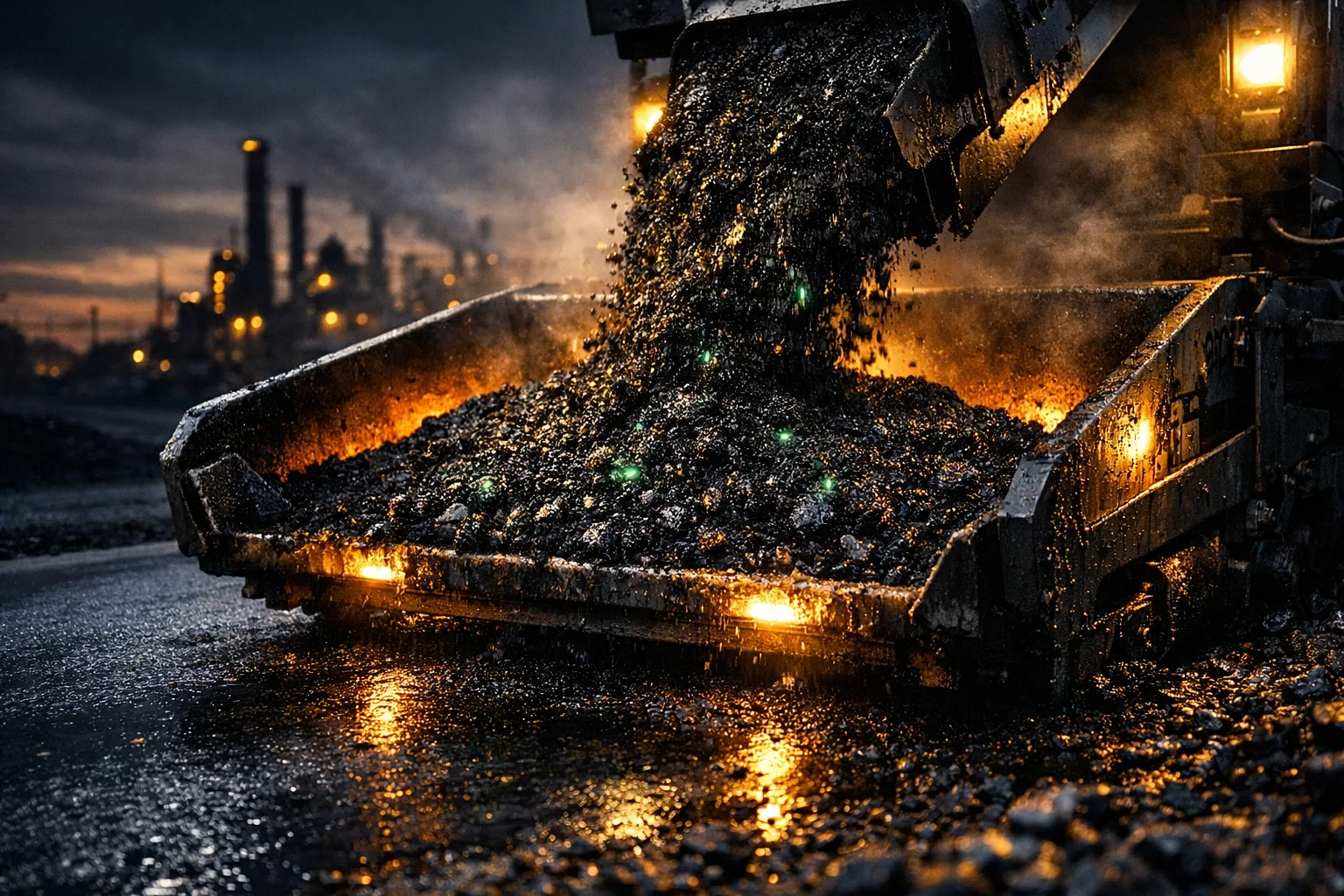
Why construction materials are emerging as a new carbon storage pathway
The built environment is becoming a serious carbon storage channel because it is a huge, steady demand center. Buyers are looking at construction materials, embodied carbon, low-carbon asphalt, and carbon storage in infrastructure as a parallel route to point-source decarbonisation.
Policy momentum is also building around low-embodied-carbon procurement and Buy Clean-style programs. That matters because procurement rules can pull carbon storage into normal purchasing decisions instead of treating it as a niche climate add-on.
The market logic is simple. Asphalt, concrete, aggregates, and paving binders are bought in massive tonnage, so they can carry durable carbon storage at scale. For carbon removal strategists, that creates a route to embed removals into existing procurement flows rather than selling them only as standalone climate products.
This matters for buyers because material substitution can align climate value with operational value. It can support mix design, supply-chain differentiation, and ESG reporting at the same time.
Biochar fits this story well because it sits inside the broader biogenic carbon removal narrative. Waste biomass is converted into a stable carbon-rich material, then used in a non-soil application. Recent reviews and studies frame biochar in asphalt as both a performance modifier and a long-duration storage vector.
That is why the commercial question behind the Verde-Ergon deal is so important. If the downstream material channel is real, the next issue is not scientific plausibility. It is bankable supply architecture, and that is where a 10-year contract becomes strategically important.
What a 10-year biochar supply agreement signals for project bankability
A long-term offtake-style agreement is a strong sign that the market is moving from pilot logic to project finance logic. It points to predictable volumes, contracted demand, and lower revenue volatility for the biochar producer.
For carbon removal projects, that shift is often the difference between interesting technology and financeable asset. Buyers and lenders both care about whether the project has a real route to revenue over time.
A 10-year horizon helps solve three core issues for buyers: feedstock security, production uptime, and price stability. In infrastructure-adjacent markets, procurement teams usually want consistent spec, consistent tonnage, and consistent delivery windows across multiple paving seasons.
For project developers, the signal is that carbon revenue is being underwritten alongside industrial demand. That improves bankability, revenue stacking, and expansion planning.
Ergon’s scale matters here. Its asphalt platform includes 54 terminals in 26 states, and the company positions itself as a major asphalt and infrastructure supplier. That kind of footprint makes it a credible downstream partner for an emerging carbon-removal input.
The commercial takeaway is clear. Long-term supply contracts may become a preferred route for scaling biochar into heavy materials. The next buyer question is whether those molecules of carbon can be translated into durable carbon removal credits with defensible accounting.
How biochar in paving could generate durable carbon removal credits
Biochar’s creditability comes from its durability. It stores biogenic carbon in a form that can persist for hundreds to 1,000+ years, depending on the methodology and storage pathway.
That is why biochar is one of the most commercially relevant carbon removal categories. It combines a physical product with a carbon storage claim that can be measured and verified.
Verra’s VM0044 Biochar Utilization in Soil and Non-Soil Applications is especially important for paved applications. It covers non-soil use cases, which creates a formal route for quantifying removals when biochar is embedded into industrial materials rather than land-applied.
In asphalt, the crediting logic usually depends on how much biochar is incorporated, how much carbon remains stable through the service life, and whether the end use qualifies as a durable sink rather than a short-lived carbon-containing product. Academic reviews note that biochar particles can improve mixture durability while also contributing to sequestration.
For buyers, the commercial appeal is straightforward. Paved infrastructure could become a repeatable end market for carbon removal certificates, CORCs, or Verra-issued removals, especially where the material is already purchased at scale by contractors, asphalt producers, and public infrastructure buyers.
The open question is not whether biochar can contain carbon. It is how to prove the claim at project level in a way that withstands buyer diligence. That leads directly to MRV and certification.
The MRV and certification questions buyers will want answered
Buyers will want a clear MRV framework covering feedstock origin, pyrolysis conditions, carbon content, incorporation rate into asphalt, chain of custody, and end-of-life assumptions. Without that, the carbon claim is hard to underwrite and difficult to fit into enterprise procurement policies.
Feedstock eligibility is a core diligence item. Many standards restrict or define which biomass sources qualify, so buyers will need to know whether the project uses waste biomass, residues, or purpose-grown material. That matters for permanence credibility and reputational risk.
System boundaries are another issue. If biochar is added into asphalt, who owns the credit? It could be the biochar producer, the asphalt formulator, or the project developer. Buyers will want contract language that defines issuance rights, retirement mechanics, and whether environmental attributes are separated from the physical material sale.
Procurement teams will also ask for third-party verification, registry traceability, and auditable batch-level documentation. Standards like Puro and Verra are attractive because they provide a structured certification pathway and registry infrastructure.
This verification burden may sound like friction. It is also what can turn road materials into a premium carbon removal segment rather than a generic green-material claim.
Could road materials become a scalable demand channel for CDR?
Road infrastructure is compelling because it combines high tonnage, repeat procurement, and geographically distributed demand. If even a small fraction of paving spend adopted carbon-storing binders or biochar-modified mixes, the addressable market could matter for biochar producers and carbon removal offtakers.
The scalability case is strongest where road materials are already procured through centralized frameworks. State DOTs, highway contractors, terminal operators, and large asphalt networks can standardize specs and unlock repeat volumes across projects.
The most credible near-term pathway is probably not “all roads go carbon-negative.” It is premium segments such as municipal pilots, resilient infrastructure programs, climate-aligned procurement, and projects where embodied-carbon reporting is already required. That lowers adoption friction while building a track record.
For investors and operators, the strategic upside is channel diversification. Biochar would no longer depend only on soil credits or voluntary carbon removal buyers. It could attach to a real industrial input market with long-lived assets and multi-year contracts.
The conclusion is simple. Road materials may not be the biggest carbon removal market today, but they could become one of the most commercially durable because they combine industrial demand, infrastructure longevity, and certifiable carbon storage in a single procurement pathway.