Why ammonia and nitrogen fertilisers sit at the centre of Europe’s industrial carbon dilemma
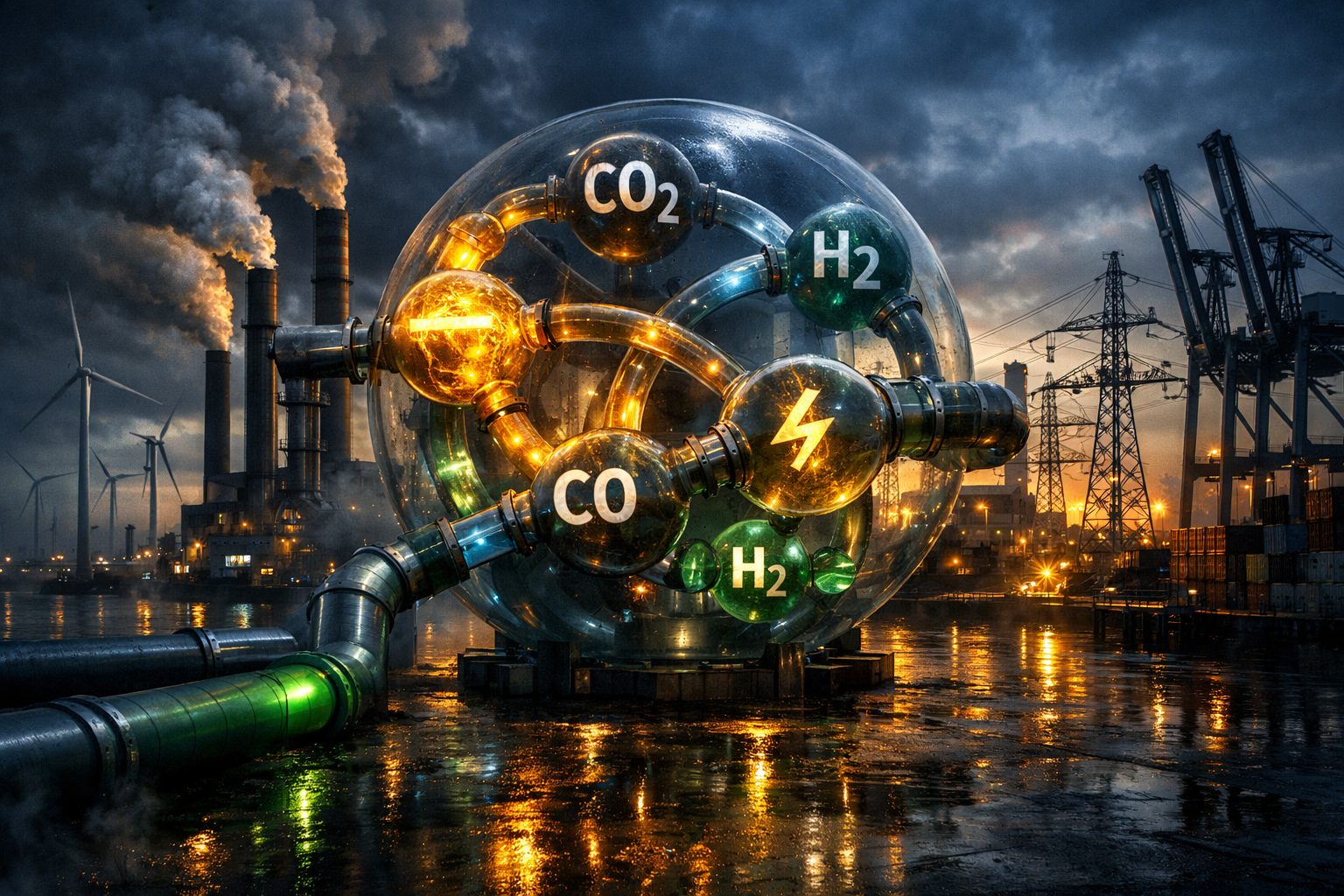
Ammonia and nitrogen fertilisers are a structural pressure point for Europe’s carbon policy. The sector is gas-intensive, trade-exposed, and closely tied to food security, so Brussels cannot treat it like a normal industrial input.
The policy problem is also practical. The Commission’s Fertilisers Market Observatory keeps tracking price swings, trade disruption, and production volatility as live issues. That matters because fertiliser is not just another chemical product. It sits inside the food system.
The emissions profile is heavy. IEA notes that ammonia production remains a major industrial emissions source, with roughly 170 MtCO2 per year in indirect CO2 emissions globally. It also says Europe’s plant fleet is older on average than China’s, which adds cost pressure for EU producers.
For buyers, the key issue is continuity, not only decarbonisation. When EU gas prices spike, domestic nitrogen output can fall and import dependence rises. That changes contract pricing, lead times, and counterparty risk for distributors and blenders.
Fertiliser demand is also linked to wider agriculture policy. Brussels is trying to reduce dependence on mineral fertilisers while protecting yields and water quality through RENURE and nitrate-related measures. That means industrial carbon rules cannot be designed in isolation.
This is why any CBAM exception is politically sensitive. If Brussels softens border treatment, someone still has to absorb the carbon cost. The real question is whether that cost stays at the border, shifts into the ETS, or gets pushed into domestic support and pricing.
What a special treatment could mean for CBAM compliance and border cost exposure
CBAM is already in its definitive phase from 1 January 2026, and fertilisers are in scope. The Commission has also confirmed that indirect emissions are covered for fertilisers, which makes compliance more complex than for product groups where only direct emissions matter.
A “special treatment” should be read as cost management, not a clean exemption. The Commission has published the first CBAM certificate price methodology, linked to EU ETS auction prices. That means even small changes to scope or calculation rules can move landed cost for importers.
For importers of ammonia, urea, and nitrogen blends, the main exposure is embedded carbon pass-through at the border. Price gaps can widen quickly between low-carbon producers, gas-based producers, and suppliers already facing domestic carbon pricing abroad.
In contract terms, this affects Incoterms, price-adjustment clauses, and supplier selection. Traders may need verified emissions data, country-specific carbon documentation, and fallback pricing formulas for multi-origin cargoes.
If Brussels trims or delays the CBAM burden for fertilisers, the immediate effect would likely be lower border friction and less volatility in import landed cost. But that would also shift the policy burden downstream to ETS design and domestic industrial incentives.
How an ETS carve-out would affect emissions incentives, free allowances, and investment timing
An ETS carve-out would matter because the EU has historically used free allowances to reduce carbon leakage risk in exposed sectors. If fertilisers get lighter treatment at the border, Brussels still has to decide whether domestic plants need equivalent protection or tighter carbon pricing.
The timing problem is real. Ammonia and nitric-acid assets are long-lived, and IEA warns that the current global ammonia stock could generate up to 15.5 GtCO2 over remaining lifetimes. Policy signals in 2026 to 2027 can therefore shape whether plants retrofit, repower, or delay capex.
If free allowances stay generous while CBAM treatment is softened, the carbon price signal weakens. If free allowances are cut too fast, EU producers face a double squeeze from energy costs and decarbonisation capex, especially where CCS or low-carbon hydrogen still costs more than conventional production.
For operators, the commercial choice becomes sharper. They may keep legacy natural-gas units running, sign tolling or offtake agreements for blue or green ammonia, or sequence projects to match expected ETS scarcity and CBAM visibility.
This is why Brussels’ approach to fertilisers matters beyond one sector. It shows whether the EU can preserve decarbonisation incentives without triggering sudden deindustrialisation. That has direct spillovers for exporters and downstream buyers.
The spillover risk for global fertiliser exporters, traders, and downstream food supply chains
The spillover effect is already visible in trade data and policy moves. The Commission has monitored ammonia import surges, while EU institutions in 2025 and 2026 pushed tariff measures on fertilisers from Russia and Belarus alongside CBAM implementation.
Global exporters now have to manage three layers of exposure at once: tariffs, CBAM carbon costs, and customer demand for low-carbon credentials. That changes the commercial logic for suppliers across major export routes and Russia-linked supply chains.
Traders and distributors will need stronger due diligence on emissions provenance. CBAM-related documentation is moving from a regulatory checkbox to a competitive factor in tendering and long-term supply agreements.
Downstream food manufacturers and agri-input processors should expect price transmission. Even if a policy concession lowers immediate EU border costs, the broader trade reaction can still tighten supply and raise volatility in nitrogen-linked inputs, freight, and inventory financing.
The strategic question is simple. If Brussels is willing to flex on fertilisers, is that a one-off food-security exception, or the template for how Europe will treat other hard-to-abate sectors under CBAM and ETS?
What this policy shift reveals about Europe’s wider approach to hard-to-abate industries
Fertilisers are a stress test for the EU’s carbon architecture. They combine industrial emissions, trade exposure, food security, and geopolitical supply risk, so Brussels is balancing decarbonisation against strategic autonomy in real time.
The likely pattern is selective pragmatism. CBAM stays as the baseline discipline, but exceptions, methodologies, and transition aids can be adjusted where abrupt pricing would destabilise essential supply chains or trigger import leakage.
For other hard-to-abate sectors, the lesson is clear. Europe may prefer a managed transition model over pure punishment. That means using tariff tools, market observatories, temporary support funds, and targeted regulatory carve-outs rather than a single carbon price for every case.
For buyers and investors, policy risk now sits beside energy risk and feedstock risk in procurement models. Carbon cost forecasting, supplier diversification, and verification capability are becoming core commercial assets, not compliance extras.
The broader takeaway is that Brussels is signalling continuity in climate ambition, but with more sector-specific flexibility where Europe’s industrial base, supply security, and downstream food system are most vulnerable.