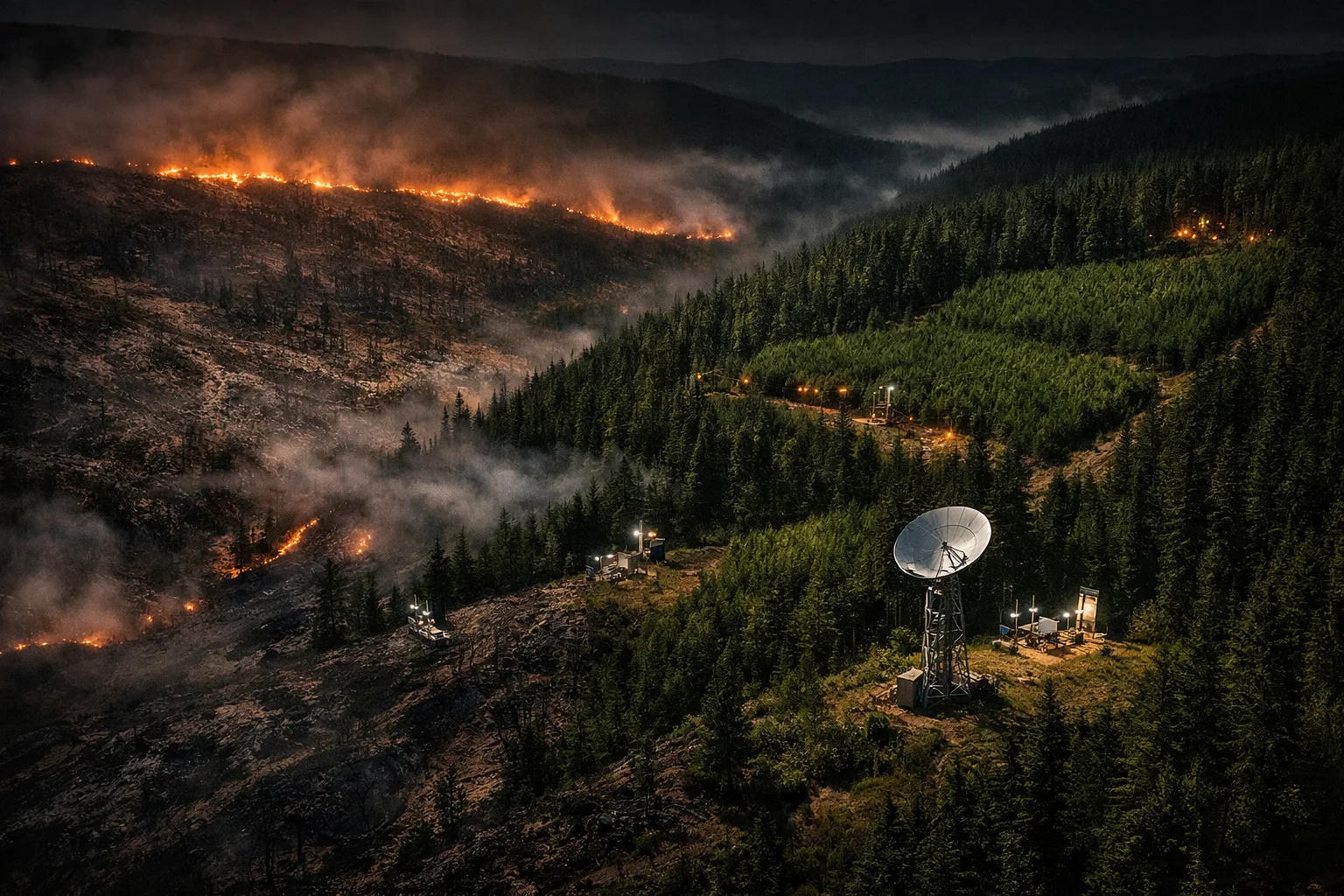
Why wildfire exposure is becoming a core carbon project diligence issue for international buyers
Wildfire risk is now a permanence issue, not a side note. For buyers underwriting AFOLU, ARR, IFM, REDD+, and peatland credits, the real question is how fast stored carbon can be lost and who carries the downside.
That matters because standards are formalizing reversal risk into credit mechanics. Verra’s AFOLU buffer-account tools and ICVCM’s permanence work both point in the same direction: wildfire exposure is being priced into issuance, liability, and compensation rules.
The macro backdrop is also getting worse. NASA and related science sources continue to frame wildfire as a climate-amplified hazard, and long-run forest-fire carbon emissions have risen sharply. That makes long-dated credits harder to underwrite with confidence.
International buyers are treating wildfire exposure like a material diligence item alongside title, leakage, additionality, and MRV. A reversal can wipe out delivered volume and interrupt portfolio claims continuity.
That changes the commercial conversation. Higher-risk projects can still clear, but usually only with stronger buffers, tighter monitoring, insurance, or lower pricing.
Which project types and geographies face the highest fire-related reversal risk
Forested carbon projects usually face the highest wildfire reversal exposure. IFM, ARR, and mixed natural regeneration projects are especially exposed because biomass stocks are concentrated and fire can cause immediate loss plus longer-tail degradation.
Peatlands and boreal taiga need separate treatment. When they burn, the issue is not only aboveground biomass. Deep carbon loss, soil combustion, and in some cases permafrost-related feedbacks can make the reversal more severe and more durable.
Buyers should also look closely at fire-prone jurisdictions with repeated extreme seasons, lightning-driven ignitions, and long dry periods. Western North America, Canada’s boreal belt, parts of Australia, southern Europe, the Amazon/Cerrado fringe, and wildfire-prone savanna-forest mosaics all deserve scrutiny.
Project design matters as much as map location. Contiguous monoculture plantations, dense fuel loads, and remote sites with weak access roads usually carry higher operational and suppression risk than mosaic landscapes with breaks, fire roads, and diversified age classes.
Buyers increasingly want fire susceptibility segmented by parcel, not just by country. Risk can differ sharply within the same jurisdiction depending on slope, fuel type, human access, and seasonal wind patterns.
How satellite monitoring changes the economics of early warning, response, and insurance
Satellite monitoring has moved from retrospective mapping to near-real-time use. NASA’s FIRMS ecosystem, Landsat, VIIRS, and related tools are now used to identify fire location, intensity, perimeter, and recovery signals at scale.
That changes the economics for developers. Faster detection means faster dispatch of patrols, firebreak crews, suppression equipment, or community alerts, especially in remote projects where ground surveillance is expensive or incomplete.
The monitoring stack is also getting more granular. Landsat’s long archive helps with burn scars and recovery, while AI-enhanced satellite analytics improve hotspot classification and reduce false positives from smoke and cloud confusion.
Better monitoring can also reduce insurance basis risk. It helps prove whether a project suffered a partial or full reversal, when it happened, and what area was affected. Those are critical inputs for parametric or indemnity-style wildfire cover.
For buyers, satellite-backed monitoring can become a pricing lever. Projects with live fire dashboards, auditable alert logs, and incident-response protocols may justify tighter spreads than similar assets that rely on periodic manual field checks.
What developers should build into project design, buffers, and permanence planning
Developers should treat wildfire as a design constraint, not an ex-post shock. Site selection, fuel management, access roads, firebreaks, water points, and community response agreements should be built in before crediting starts.
Buffer logic should be stress-tested against realistic fire scenarios, not average historical conditions. Verra’s AFOLU non-permanence tools and buffer-account framework formalize risk-based contributions, and permanence management remains central to the current rule set.
Stronger permanence planning usually means a portfolio approach. Diversified geography, staggered age classes, lower-stock design in hotspots, and contingency triggers for replenishment or replacement all help reduce single-fire concentration risk.
Developers should also document response capacity in the PDD. Buyers increasingly want to know who monitors alerts, what threshold triggers field action, what equipment is staged, and what recovery protocol follows a burn.
The stronger the design, the easier it becomes to justify differentiated pricing and shorter diligence cycles. The question then shifts from whether wildfire is a fatal risk to how buyers, standards, and insurers will price the residual risk.
How buyers, standards, and insurers are likely to price wildfire risk in the next market cycle
Expect explicit wildfire risk premia in carbon offtake and spot pricing, especially for long-duration AFOLU credits. Projects with stronger fire exposure will likely face wider discounts unless they can show better monitoring, insurance, and buffer positioning.
Standards are likely to keep tightening durability language and risk allocation. ICVCM’s permanence work and Verra’s durability pilot both point to a market where reversal liability is more clearly assigned, quantified, and potentially insured rather than implicitly mutualized.
Insurers will probably price projects on a blend of hazard, exposure, and control quality. Location, fuel load, access, active monitoring, and incident response are likely to matter as much as historical fire frequency.
Buyers will increasingly ask for disclosure on buffer contribution, reversal history, fire management plans, and whether credits are backed by pooled buffers, project-level insurance, or both. That transparency will shape procurement decisions for corporates seeking durable claims.
The strategic conclusion is simple. Wildfire risk will not disappear, but it can be turned into a competitive edge through smarter siting, stronger permanence architecture, and continuous monitoring. In the next market cycle, those controls are likely to separate premium assets from merely financeable ones.