
Mati Carbon’s First V1.2 ERW Delivery: Why Isometric’s Protocol Milestone Matters for Carbon Removal Markets
Why the First V1.2 ERW Credit Delivery Matters Beyond One Project
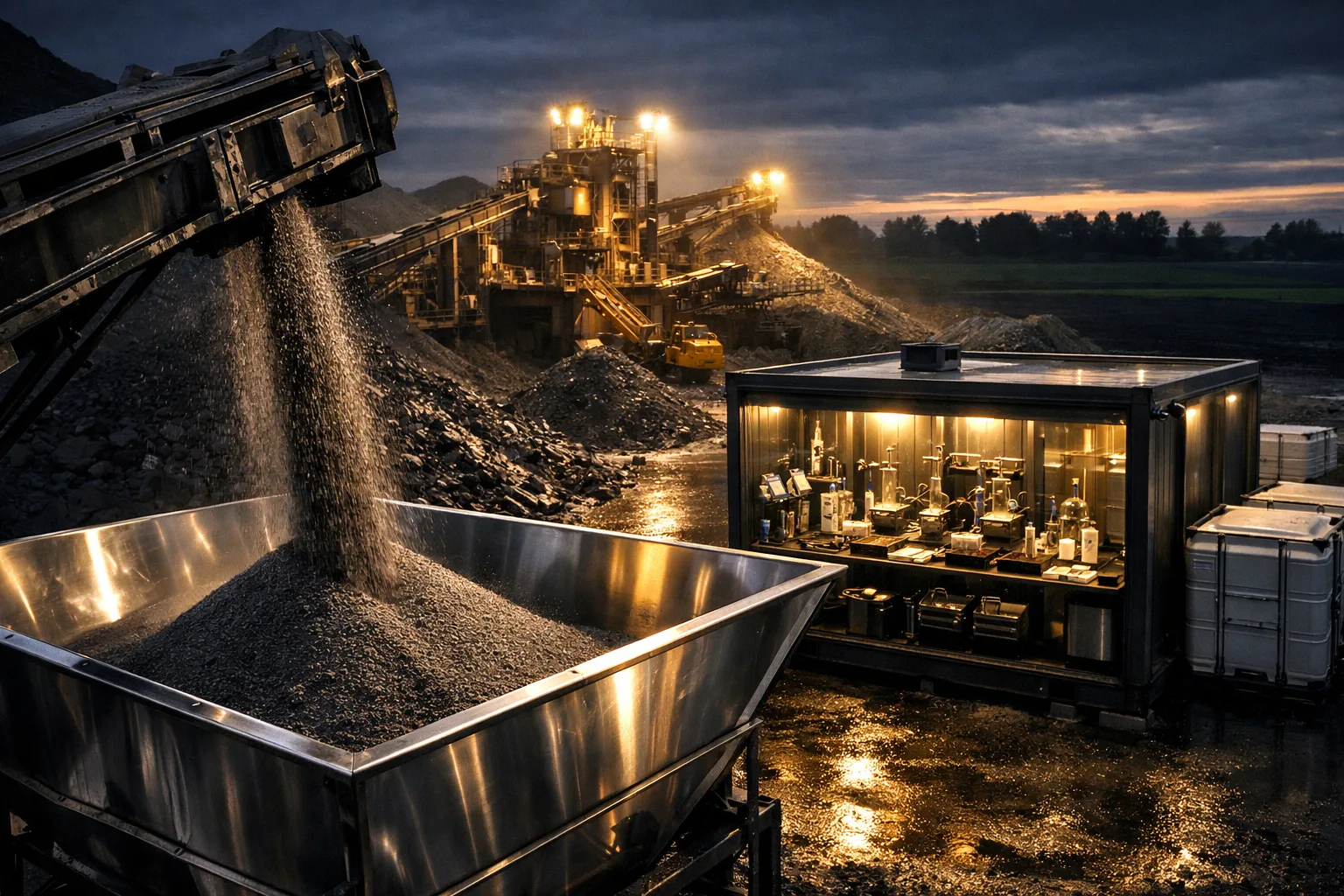
The first delivery under Isometric’s Enhanced Weathering in Agriculture v1.2 matters because it shows ERW moving into a more commercial phase. Mati Carbon’s project is registered in India, with expected first credits in 2026, and it covers deployment in Central India with smallholder farmers using basalt powder from the Deccan Traps as feedstock.
For buyers, the point is not just that another tonne has been removed. It is that a carbon removal protocol delivery can move from pilot science to verifiable supply, with a 10-year crediting period and an MRV framework already in place.
That matters in a market where volume is still limited and trust depends on project quality, not only on the method. In CDR.fyi’s 2025 survey, buyers include financial firms, consumer services, and industrials, which is a useful reminder that sophisticated procurement teams want strong evidence on durability and verification.
ERW is also attractive for buyers looking for durable carbon removal with agricultural co-benefits. For smallholder farms, it can combine CO₂ removal with soil improvement and a possible reduction in inputs such as fertilisers or pH balancing agents.
This first delivery also raises the key question for the next section: what changed in v1.2 that made crediting possible with more confidence, and what is actually different from earlier versions?
What Changed in Isometric’s Updated Enhanced Rock Weathering Protocol
Isometric describes v1.2 as an updated protocol that incorporates learnings from real deployments. The changelog points to a mass and charge balance approach, explicit handling of permanent and temporary losses of base cations, and a more structured set of requirements for accounting and data reporting.
A major change is clearer feedstock characterisation. The protocol points to a dedicated module for rock and mineral characterisation, which helps distinguish basalt, ultramafic, and other feedstocks by composition, reactivity, and impurities.
On the MRV side, Isometric requires a statistically significant signal with a minimum 95% confidence threshold and cross-validation between soil and aqueous phase measurements. For institutional buyers, that lowers the risk of over-crediting and makes the claim easier to defend in audit and ESG reporting.
v1.2 also removes some operational friction. The companion document explains why secondary validation is no longer required as it was in v1.0 and v1.1, which suggests a move from over-controlled experimentation to a system that can scale without lowering quality.
For B2B readers, the real question becomes this: how do you use methodology versioning to assess credit quality, compare supply options, and defend a purchase decision in front of CFO, legal, and claims teams?
Why Buyers and Investors Care About Methodology Versioning and Credit Quality
Methodology is not a technical footnote. In a young market, the protocol version directly affects credit quality, additionality, uncertainty treatment, and bankability. Isometric says credits are issued only when CO₂ has been durably removed, and its framework includes rules on validation, ownership, and uncertainty.
For corporate buyers, versioning matters because a CDR portfolio has to hold up over time. If a project was validated under an earlier version, Isometric says existing projects remain unchanged until re-validation, unless there is a different justification.
Investors look at methodology as a signal of revenue quality. Clearer protocols reduce the risk of haircut in due diligence and improve the odds of pre-sale or offtake, especially in a market where the gap between price expectations and reality remains wide.
Market data also suggests that methods with cleaner measurement stories tend to build buyer confidence faster. In 2025, CDR.fyi noted that biochar, BECCS, and DACCS gained traction partly because of clearer MRV, which is a useful benchmark for ERW as well.
That leads to the next question: if stronger methodology builds trust, can ERW really move from scientifically promising to bankable supply with cash flow and industrial scale-up potential?
How ERW Is Moving From Pilot Science to Bankable Carbon Removal Supply
ERW is moving from proof of concept to a bankable durable CDR pathway because updated protocols, registry infrastructure, and verifiable delivery cases now exist. Isometric issued its first EW credits in 2024, and in 2026 it continues refining the framework through periodic updates.
Bankability depends on operational design. Agricultural sites, feedstock sourcing, grinding size, logistics, and sampling density all need to work together in a unit economics model that makes sense. In a project like Mati, using local basalt reduces supply-chain complexity and can improve the economics for buyers looking for scalable volumes.
Market demand is still concentrated and selective. CDR.fyi shows that durable markets are small but evolving, with purchasing driven by sophisticated buyers and a strong focus on delivery, verification, and pricing transparency.
For developers and intermediaries, the practical issue is whether ERW can sit inside portfolio procurement alongside other methods. Diversified supply, multi-century permanence profiles, and agricultural co-benefits can make it useful for companies building a credible narrative around net-zero residuals.
The next natural question is competitive: if ERW gets past the pilot stage, how does it position itself against other durable pathways such as DACCS, biochar, and mineralization?
What This Signals for Other Durable Carbon Removal Pathways and Market Competition
Mati’s V1.2 delivery says something about the whole market, not just ERW. When a methodology reaches a more mature version, the bar rises for DACCS, biochar, mineralization, and river alkalinity enhancement in MRV, uncertainty management, and deliverability.
Isometric is expanding its family of protocols and modules, and in 2026 it moved to a semiannual update cadence. That suggests the competition is not only between projects, but between standard ecosystems trying to become the reference point for global buyers.
For buyers, the real implication is portfolio strategy. Anyone buying durable CDR has to balance methods with high measurability and methods with high scalability, while comparing cost, permanence, local impacts, and readiness for delivery.
For operators, ERW has a rare mix to compete on: durability linked to ocean chemistry, agricultural co-benefits, and feedstock availability. But it still has to prove repeatability, data standardisation, and the ability to move from demonstration projects to commercial-scale supply.
The strategic signal is clear. Market competition will increasingly shift from “which method is novel?” to “which methodology is trusted, financeable, and repeatable at scale?” That is where ERW, if it keeps maturing, can become a benchmark for durable carbon removals.