
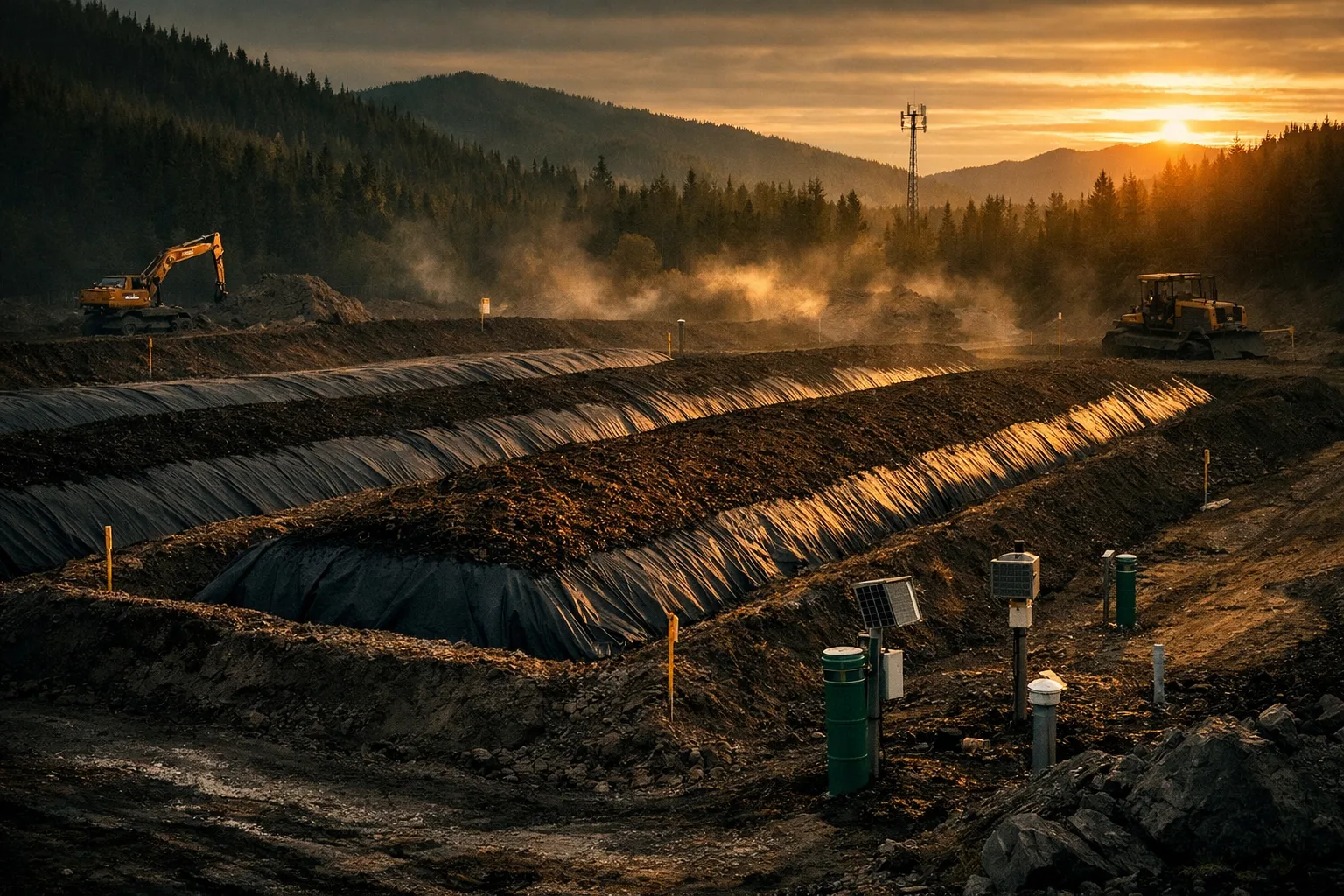
How biomass burial carbon removal works and why it is attracting buyers
Biomass burial carbon removal, also called biomass carbon removal and storage or subsurface biomass storage, works by taking lignocellulosic feedstock such as wood residues, forestry byproducts, or other lignin-rich biomass and placing it in conditions designed to slow or prevent decomposition. The goal is durable carbon dioxide removal with long-duration storage claims.
Buyers are interested because the pathway is relatively simple compared with many engineered options, but still offers a measurable storage chain. Feedstock sourcing, preprocessing, burial site controls, and monitoring can all be documented under methodology-led MRV. That matters for procurement teams comparing CDR classes on auditability.
Demand for durable CDR is already large enough to make this relevant. In H1 2025, total carbon removal offtakes reached at least 61.5 million tonnes CO2e, with Microsoft accounting for the vast majority of tracked volume. That shows buyers are treating durable removal as a strategic procurement category, not a pilot line item.
Methodology design is also becoming more specific. Isometric’s Subsurface Biomass Carbon Removal and Storage protocol requires stage-by-stage monitoring and documentation, including carbon-content testing, calibrated metering, and batch-level records. For corporate buyers, that is the kind of evidence trail that supports due diligence.
The real question is no longer whether biomass burial can remove carbon. The question is whether it can scale into repeatable, financeable supply with credible permanence claims. That is where a 100% sold project becomes important.
What selling 100% of the credits signals about demand for durable CDR
A fully sold issuance or pre-sold project allocation signals more than a single transaction. It suggests durable CDR is being treated as contracted supply, with offtake-style procurement behavior closer to infrastructure finance than spot carbon buying.
The 2025 market has been concentrated in a small number of large buyers, especially Microsoft, which Fastmarkets reports accounted for close to 90% of tracked global offtake volumes in 2025. That concentration means a 100% sold project is evidence of real institutional demand, even if that demand is still narrow.
For corporate buyers, a project selling out entirely is a positive signal about bankability. It suggests the seller can clear due diligence, match delivery schedules, and secure long-tenor demand for future vintages. That matters for project finance, debt support, and equipment procurement.
It also shows a market that is still forming. CDR.fyi and related market reviews show fast growth, but buyer depth remains limited. A sold-out Montana biomass burial deal may therefore reflect a few sophisticated buyers racing to secure high-integrity supply early, rather than broad market diversification.
This kind of pre-commitment can also compress price discovery. Buyers often accept a premium for durability, traceability, and delivery certainty when credits are scarce and the method is new. That leads directly to project economics.
The project economics behind burial-based removal in the US market
Burial-based carbon removal economics depend on feedstock cost, logistics, site preparation, burial depth or containment design, verification overhead, and long-term monitoring. That makes the model look more like an industrial storage project than a conventional nature-based offset program.
Low-cost biomass residues can improve unit economics, but delivered cost per tonne is what buyers will really care about. Hauling, preprocessing, and MRV can change the economics quickly. Buyers will also compare the price band against other durable pathways such as biochar, BECCS, and mineralization.
The 2025 market has shown that buyers are willing to sign very large forward deals for durable CDR when methodologies are credible and supply is visible. That supports the financing logic for burial projects that need capex for land access, equipment, batching systems, and compliance-grade documentation.
For B2B procurement teams, the key question is not only spot price. It is the all-in delivered cost with contractual certainty. Forward offtake can shift working capital risk away from developers and toward buyers seeking supply security.
Montana matters because a US-based project can potentially benefit from domestic biomass logistics, cleaner chain of custody, and easier commercial onboarding for North American buyers. But those buyers will still scrutinize whether the removal is durable enough to justify premium pricing.
Key risks buyers will watch: permanence, monitoring, and verification
Permanence is the central underwriting issue for biomass burial. The project must show that buried biomass will not substantially decompose, re-emit CO2, or be disturbed over the crediting period. Storage conditions have to be conservative enough to support durable claims.
Monitoring and verification are becoming more technical, not less. Isometric’s protocol requires documentation and measurement across the project lifecycle, including feedstock carbon content testing, equipment calibration, and batch records. That reduces the chance of over-crediting, but it also raises compliance costs for operators.
Buyers will also test whether the methodology fits emerging integrity expectations. ICVCM’s 2025 work on permanence and its approval of additional CDR methodologies show the market is moving toward tighter standards. Durability classes are being differentiated by storage security and evidence quality.
A practical B2B concern is reversal risk management. Buyers will want to know who bears liability if storage integrity changes, how often the site is re-verified, and whether remote sensing, sampling, or physical inspection is required to keep credits eligible.
Interoperability with registry and audit systems will matter too. ICVCM has highlighted the need for stronger market infrastructure, better auditability, and harmonized data formats. That is especially important for new burial-based pathways that need to prove they can scale without integrity drift.
Once those risks are addressed, the remaining question is strategic. Can a Montana deal become a template for international carbon credit markets and future project pipelines?
What this means for international carbon credit markets and future project pipelines
A fully sold Montana biomass burial project would be read globally as a sign that durable CDR is moving from niche experimentation into a financeable asset class. That matters as ICVCM and other integrity bodies continue to tighten standards around permanence and market infrastructure.
International buyers are watching US projects because they provide a reference point for price, MRV rigor, and delivery structure. If burial-based removal can clear sophisticated due diligence in the US, it improves the investability of similar BiCRS pipelines in other biomass-rich regions.
The global market is still concentrated, but it is broadening. Reports in 2025 noted that durable CDR is attracting more buyers and that project pipelines are increasingly backed by forward offtakes. That can unlock capex for new facilities, logistics networks, and site development.
For international carbon credit markets, the bigger implication is methodological convergence. Buyers want comparable durability claims across pathways, so biomass burial will be judged alongside biochar, BECCS, and mineralization on a common set of integrity, traceability, and delivery criteria.
For project developers and investors, the Montana deal could become a pipeline catalyst. Once one project proves the commercial model, developers can replicate the feedstock, burial, and MRV stack in other jurisdictions, but only if they can match the same standard of permanence evidence and buyer confidence.
The broader lesson is clear. Durable CDR finance is shifting from proving the concept to proving repeatability, and biomass burial may become one of the pathways that shows how carbon removal credits can move into structured, international project finance.