Why Forest Carbon Credits Are Missing the Climate Future in Their Risk Models
How Buffer Pools Work and Why They Became the Default Safety Net
Buffer pools are the main safety net for forest carbon credits. In most standards, a share of issued credits is withheld into a reserve, often called a buffer pool, permanence buffer, or reversal reserve, to cover future losses from wildfire, drought, pests, disease, or mismanagement.
That structure matters because forest credits usually promise long-lived storage. The point is to preserve 100-year permanence claims by turning physical carbon loss into a collective insurance mechanism. For buyers, that is not a technical detail. It is central to VCM integrity, retirement confidence, and auditability.
California’s forest offset system is a useful stress test because its buffer pool was designed to absorb catastrophic losses. Recent assessments have argued that it has been materially undercapitalized relative to actual wildfire exposure. Independent analyses have also reported that wildfire losses in California forest offsets have already consumed millions of buffer credits, which raises a hard question: are reserve contributions calibrated to today’s disturbance regime, or to legacy historical averages?
The real issue is not that buffer pools exist. The issue is that their calibration still leans heavily on historical loss frequencies that may no longer describe future climate volatility.
The Core Problem: Historical Loss Data vs Forward-Looking Climate Risk
Most reserve models are built on actuarial assumptions and historical incident rates. That works only if the future behaves like the past. Climate change breaks that assumption. In other words, stationarity is fading, and forward-looking risk is becoming harder to ignore.
This matters directly for credit buyers. If fire seasons are longer, heat extremes are stronger, and drought persists for more months at a time, then a model built on retrospective averages can systematically understate reversal probability. It can also overstate durability.
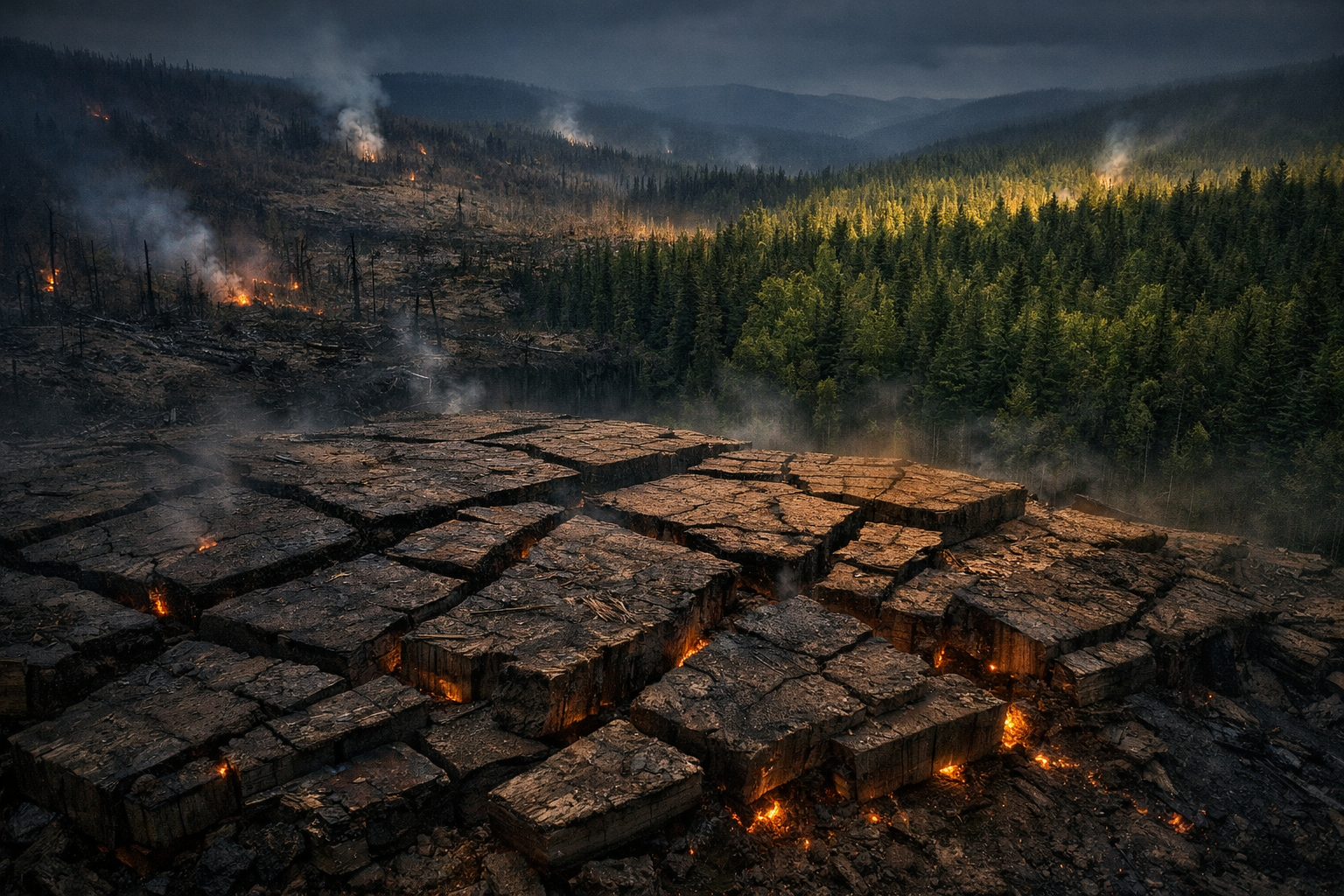
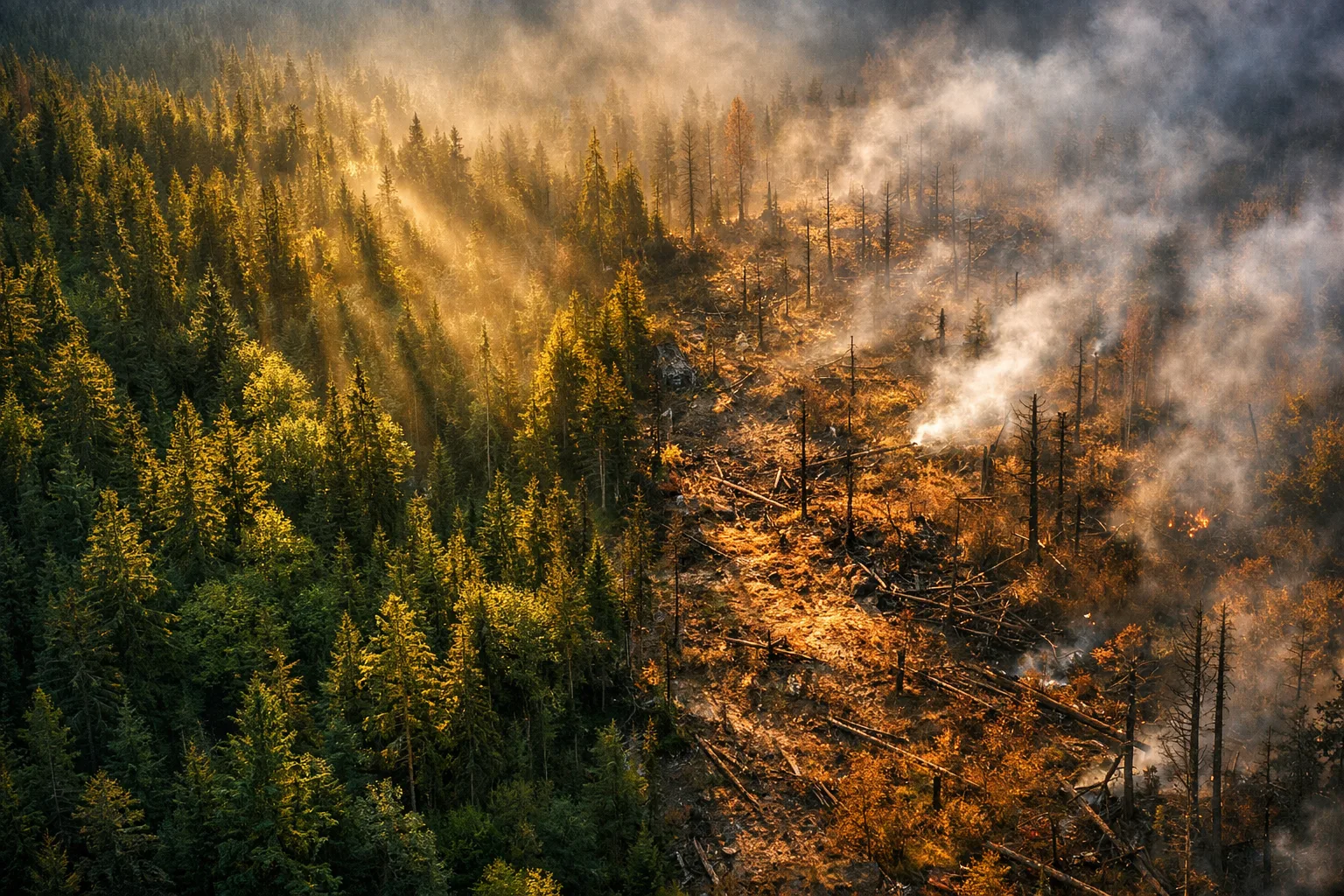
The technical risk is not just average loss. It is loss exceedance, tail risk, compound events, and cascading disturbance. Drought can weaken forests, then wildfire can move faster through stressed stands, and the same system can lose both carbon uptake and stored carbon. Recent research shows drought and wildfire are interacting more strongly, which increases carbon loss risk in the same landscape.
That is why due diligence should go beyond “does the project have a buffer contribution?” Buyers evaluating removal quality, project vintage, or issuance jurisdiction should ask whether the permanence model reflects changing climate baselines, not just legacy fire-return intervals.
What the New Research Suggests About Fire, Drought, and Pest Exposure
The latest evidence points in the same direction. Research from the U.S. Forest Service and peer-reviewed literature increasingly shows that carbon storage risk is rising under warmer, drier, more disturbance-prone conditions. That includes wildfire risk, drought stress, insect outbreak, and broader forest disturbance modelling.
One quantitative anchor is especially important for buyers. An analysis of global forest carbon offset projects found fire exposure could increase by about 55% by 2080 under a mid-range emissions scenario. That is a large gap between climate-adjusted hazard and historic risk assumptions.
A second point is just as relevant for program design. A recent study of Verra-style buffer pool contributions found that contribution levels can be inconsistent with simulated forest biomass trajectories in many disturbance scenarios, especially when disturbance frequency or severity is moderate to high. In plain terms, the buffer formula can lag the risk curve.
For corporates procuring offsets at scale, this means two projects can both be labeled “forest carbon” and still have very different permanence profiles. A project in a fire-prone basin is not equivalent to one in a lower-risk biome, even if the credit type looks similar on paper.
That becomes even clearer when you look at the standards that most institutional buyers benchmark against.
Why This Matters for California, Verra, and Gold Standard Projects
California compliance offsets, Verra AFOLU projects, and Gold Standard land-use methodologies are where permanence, buffer design, and project-level risk assessment are most visible to institutional buyers.
California is a stress test for the whole market. Wildfire impacts have already forced reserve retirements and intensified scrutiny over whether the program’s buffer pool is sufficiently capitalized for a hotter fire regime.
Verra’s AFOLU Non-Permanence Risk Tool is operationally important because it asks project developers to assess fire, pest, disease, drought, hurricanes, earthquakes, and similar hazards. The criticism is that the resulting contribution grid may still lag behind climate-adjusted realities.
Gold Standard is more nuanced. Its land-use methodologies do require structured durability and monitoring logic. But buyers still need to examine whether project-specific climate exposure is being translated into conservative buffer assumptions and credible monitoring plans.
The standards lens matters because it shapes the commercial question next: how do these durability gaps affect pricing, permanence claims, and buyer due diligence in the real market?
The Market Impact: Pricing, Permanence Claims, and Buyer Due Diligence
Thin buffer pools should lead to a durability premium for lower-risk projects and a discount to par for higher-risk credits. That is what risk-adjusted pricing should look like when an insurance-like reserve is doing its job.
If reversal risk is underestimated, headline volumes can overstate true climate value. That affects net-zero claims, internal carbon pricing, and portfolio-level accounting. A buyer may think it has retired durable removals, when it has really bought exposure to a higher reversal probability than the model admitted.
Sophisticated buyers should ask for a project’s risk assessment memo, buffer contribution logic, fire history, management plan, remote-sensing evidence, and any third-party rating or independent durability analysis. Those documents matter because they show whether the project was underwritten against real climate exposure or just against a standard template.
Scrutiny is rising because market participants increasingly compare registry methodology with external climate-risk models. That comparison can reveal gaps between issued credits and economic permanence.
If the market is going to price risk properly, it needs a better climate-risk accounting framework that can sit alongside, or replace, legacy buffer assumptions.
What Better Climate Risk Accounting Could Look Like for Forest Credits
A better model would use dynamic buffer pools, climate-adjusted hazard models, scenario analysis, geospatial risk scoring, and probabilistic permanence accounting.
The practical architecture is straightforward. Combine fire-weather projections, drought indices, pest susceptibility, stand age, fuel loading, management intensity, and regional exposure into a living risk score that updates over the crediting period rather than staying fixed at issuance.
That would change practice for both buyers and project developers. Reserve contributions could become project- and biome-specific. High-risk regions could face more conservative issuance. Projects could be re-underwritten periodically. And the market could separate nominal sequestration from durable storage more clearly.
Better climate accounting would also improve comparability across registries and standards. It would support more credible permanence disclosures and reduce reputational risk for corporates that need defensible offset portfolios.
The strategic takeaway is simple. The next generation of forest credits will likely be judged less by how many tonnes were issued, and more by how well their risk models price the climate future rather than the climate past.