Why New Methane and N2O Credit Methods Could Redefine the Next Phase of Carbon Markets
What the UN’s New Methodology Signals for Non-CO2 Credits
The UN’s new Article 6.4 methodology for cutting N2O in nitric acid production is a clear signal that non-CO2 credits are moving to the front of the market. That matters because methane credits, N2O carbon credits, and other non-CO2 credits are tied to gases with high warming impact and strong industrial relevance, not just CO2 avoidance or removals.
This is not an isolated step. In 2025, the Supervisory Body also adopted the first methodology for landfill methane, then continued to advance other standards and methodologies. The direction is hard to miss: the Article 6.4 methodology pipeline is broadening in a systematic way.
For buyers, the practical point is simple. Credits issued under UN methodologies may carry a stronger compliance-grade profile than many legacy voluntary credits. That usually means tighter baseline rules, better traceability, and a clearer path to future use in regulated or authorized markets.
For the market narrative, this shifts attention away from generic offsets. It puts the focus on high-integrity credits linked to measurable industrial emissions and fugitive gases. For developers and intermediaries, that can increase the value of portfolio strategy and reduce reliance on bundled projects with weak granularity.
The next question is obvious. If the methodology is stronger and closer to compliance, which project types can scale fastest while still delivering credible issuance? Waste methane is the clearest case.
Why Methane Reduction From Waste Is Becoming a Priority for Credit Developers
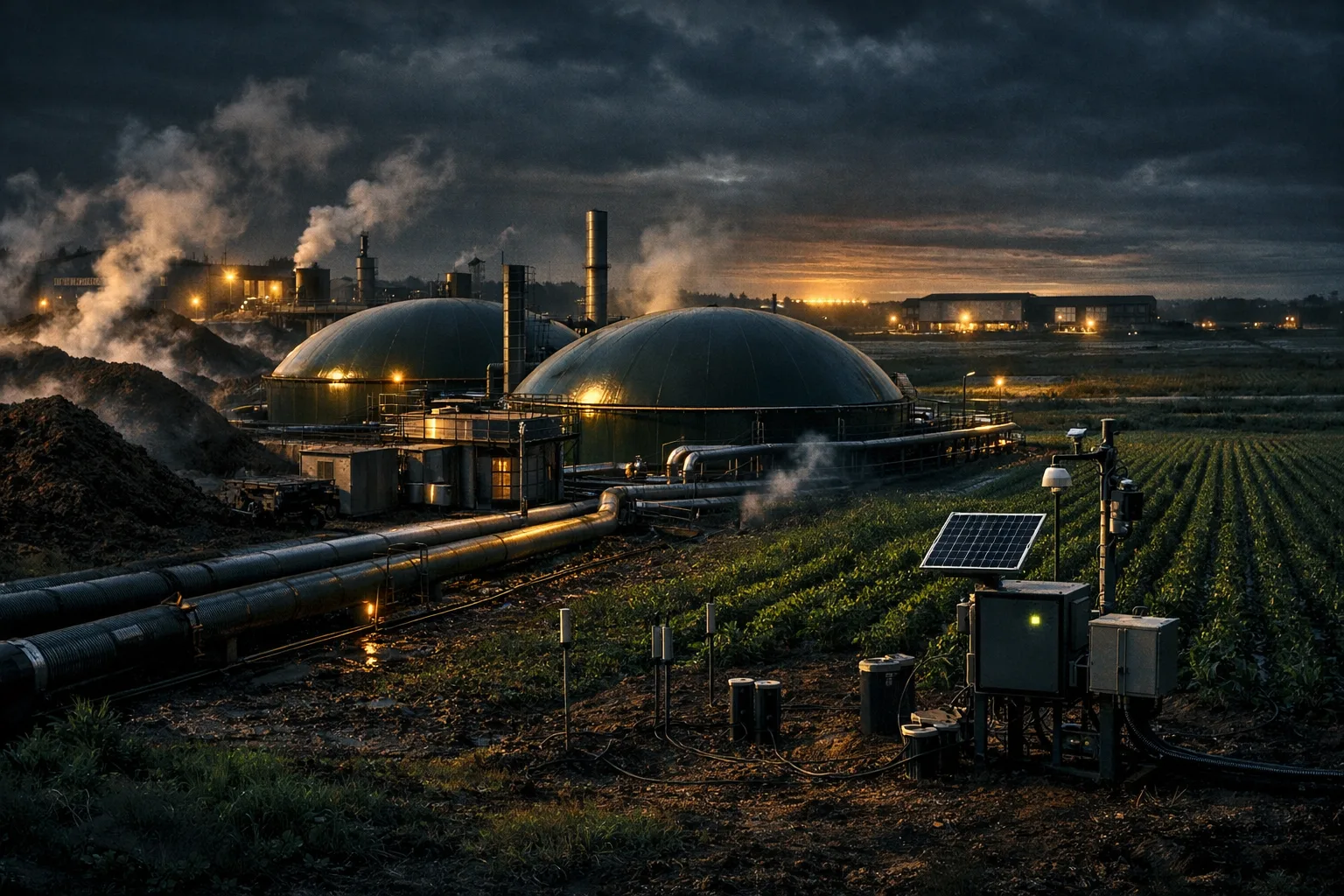
Landfill methane has become the pilot project of choice because it combines large emissions, structured monitoring, and fast abatement of a highly impactful gas. For developers and EPC or turnkey operators, that makes it one of the more bankable segments in the pipeline.
The UNFCCC’s own sequence of decisions shows why waste is moving first. The landfill methane methodology was the first to be approved under the new mechanism, which tells the market that waste projects are more ready to scale than many other non-CO2 categories.
Wastewater and biogas projects still matter as well. UN and legacy CDM documentation continues to show methodologies for open lagoon systems, anaerobic treatment, biogas recovery, and flaring. Those project types remain relevant for industrial buyers in food and beverage, pulp and paper, and agro-processing.
For corporate buyers, the use case is concrete. Supermarket chains, food producers, municipal utilities, and waste operators can build Scope 3 and transition finance claims around activities that reduce CH4 in measurable ways. The operational metrics are familiar too, including capture rate, destruction efficiency, and methane slip.
The key transition is this: once a project sits under a UN mechanism, it is no longer judged only as a climate story. It is judged on quality, additionality, and compliance alignment. That changes both demand and pricing.
How Compliance-Grade Methodologies Could Shift Buyer Demand and Pricing
The commercial gap between a traditional voluntary methodology and an Article 6.4 methodology is meaningful. Buyers usually reward credits with stronger MRV, better registry traceability, potential for corresponding adjustment, and lower risk of reversal or overcrediting.
That can move demand toward more institutional supply. In practice, these credits may become more attractive to compliance buyers, utilities, traders, offtakers, sustainability-linked finance structures, and large corporates that need an inventory they can defend in audit or ESG assurance.
The market is already reading the signal. UNFCCC’s emphasis on high-quality carbon credits and the PACM work programme suggests that credits backed by UN methodologies could trade at a different level from legacy credits, especially in methane and N2O segments where quantification is more direct.
For developers and aggregators, the real question is whether to build around premium methane credits or a more diversified blend. That decision depends on contract length, first issuance risk, delivery profile, and the ability to pre-finance or sign forward offtake.
This leads to the harder issue. If compliance-grade status raises the quality premium, the methodology still has to survive technical scrutiny on additionality, baseline setting, and monitoring frequency. That is where markets either scale or stall.
The Quality Questions: Additionality, Baselines, and Monitoring for Short-Lived Pollutants
For methane and N2O, credit quality depends on whether the methodology can prove additionality. In practice, that means showing the project would not have happened without carbon finance. In waste projects, that often includes CAPEX gaps, revenue gaps, and the absence of binding regulatory obligations.
Baselines have to be conservative and realistic. For landfill and wastewater, that means scenarios for anaerobic release, organic degradation, and capture or decompression rates. For nitric acid, it means industrial emission factors and verifiable performance targets. If the baseline is too loose, overcrediting becomes a real risk.
Monitoring is stricter than in many removal projects. Short-lived pollutants need high-frequency data on gas flow, methane concentration, flare uptime, destruction efficiency, biogas system performance, and QA/QC for instruments. MRV is not a side issue here. It is the core of the credit.
The fact that PACM is publishing more specific methodologies and tools in 2025 and 2026 suggests the market is moving toward tighter standardization. That helps buyers, but it also raises the bar for developers who need to fund equipment, sensors, and audit trails.
The next question is where these credits will actually sit. Some will fit Article 6. Some will stay in voluntary markets. Some may end up in results-based finance structures. The answer depends on how fungible the credit really is.
What This Means for Article 6, Voluntary Markets, and Future Supply Pipelines
Article 6.4 is building a pipeline of credits that may be used in regulated markets and, in some cases, as Mitigation Contribution Units or as non-authorized instruments in voluntary markets and domestic climate finance schemes. For buyers, that creates more structuring options, but it also makes end use more important.
The distinction between authorized credits with corresponding adjustment and non-authorized credits will matter for price, claimability, and secondary liquidity. Buyers and intermediaries will need to state upfront whether the product is meant for compliance, voluntary claims, Article 6 transfer, or blended finance.
On the supply side, the message is broader than methane alone. Methodologies for landfill methane, cooking energy transitions, savanna fire management, industrial N2O, and other areas show that non-CO2 is becoming a real asset class, not a side category.
For global buyers, the practical response is to build differentiated sourcing strategies. That can mean short-term abatement credits for quick engagement, long-dated offtake for pipeline certainty, and portfolio hedging across waste, industrial gases, and other non-CO2 sectors.
Methane and N2O are not just adding new projects to the market. They are changing the benchmark for what a high-integrity credit looks like as the market moves from voluntary use toward an Article 6-ready architecture.