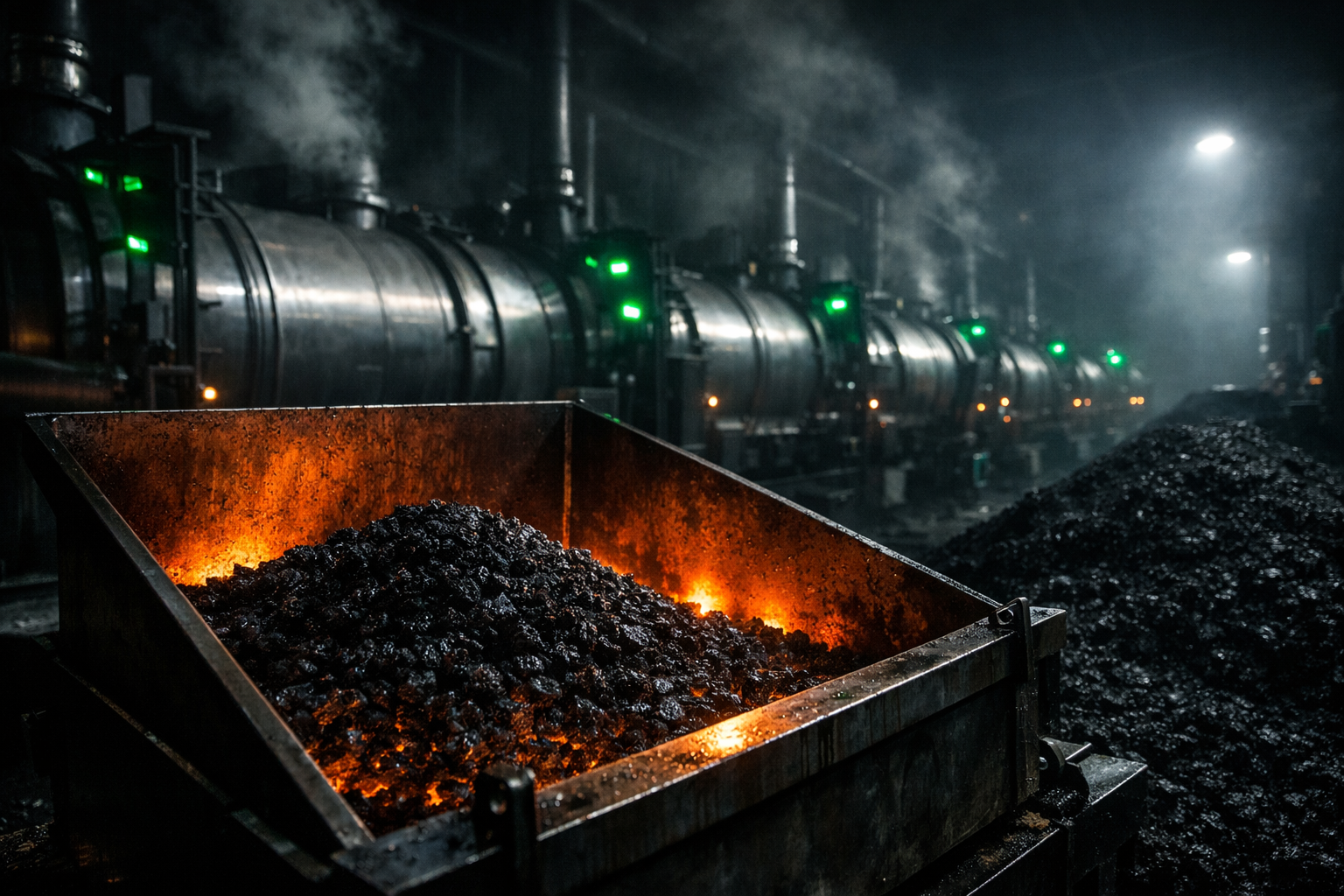
ADM, one of the world’s largest agricultural processors, announced on September 21 that it plans to enter the voluntary carbon removal market with credits generated by the carbon capture operations at its corn processing complex in Columbus, Nebraska. The facility captures more than 800,000 tonnes of biogenic CO2 per year, making it the largest bioethanol carbon capture plant in the world and the planned credit offering one of the largest of its kind. The credits are undergoing certification and issuance by Puro.earth, with the first tonnes expected by the end of 2026. For buyers watching the engineered removal supply stack, this is a new category of entrant: not a venture-backed CDR startup, but an industrial incumbent monetising infrastructure it has already built.
The Asset Behind the Credits
The Columbus complex, where ADM employs more than 650 people in Nebraska, runs wet and dry mills that turn corn into food ingredients, fuels and animal feed. The CO2 comes from ethanol fermentation, a stream that is already nearly pure, which is why bioethanol is considered one of the cheapest capture sources in the CCS cost curve.
ADM inaugurated carbon capture and storage operations at Columbus in 2025 in partnership with energy infrastructure company Tallgrass. Captured CO2 is purified, compressed and transported to Tallgrass’ Eastern Wyoming Sequestration Hub, where it is injected underground through wells regulated under a Wyoming Department of Environmental Quality Class VI permit, the US federal framework for geologic CO2 storage.
This is not ADM’s first CCS project. The company has more than a decade of experience with carbon capture and geologic storage, including operating Class VI wells at its Decatur, Illinois facility. What is new is the decision to convert that operational record into a voluntary market product.
Certification: Puro.earth and the Geologically Stored Carbon Methodology
The credits are being certified under Puro.earth’s Geologically Stored Carbon methodology, Edition 2024. Certification and issuance of the initial credits are expected by year-end, pending completion of an independent audit and verification process. Once certified, ADM will begin a 15-year crediting period, giving the Columbus facility a long runway of potential supply.
Puro.earth president Jan-Willem Bode framed the audit as a test of industrial-grade MRV: “Certifying carbon removal at this scale demands real rigor, and we believe ADM has approached every stage, from measurement and data collection through to third-party audit, with the discipline and transparency that an investment-grade market requires.” He described the project as turning “one of the world’s largest bioethanol carbon capture facilities into verified, investable carbon removal” and “a replicable benchmark for this sector worldwide.”
That replicability point is the strategic signal. The United States has a large fleet of ethanol plants with similarly concentrated CO2 streams, and several are already connected to, or being connected to, CO2 pipelines and storage hubs. If the Columbus certification completes smoothly, it establishes a template that other bioethanol producers can follow into the voluntary market.
What ADM Intends to Do With the Tonnes
Kris Lutt, ADM’s vice president of Innovation & Growth, positioned the offering as an extension of existing customer relationships: “We’re already working with customers in our own value chains to help them meet their ambitious goals. This substantial carbon removal offering will allow us to expand our efforts to new customers across multiple industries, from technology and finance to aviation and pharmaceuticals.”
The named sectors are instructive. Technology and finance are today’s deep-pocketed CDR buyers. Aviation and pharmaceuticals point to the next demand wave: industries with hard-to-abate footprints and net zero commitments that will need durable removals, including, in aviation’s case, potential alignment with CORSIA-eligible supply over time. ADM is effectively marketing a bridge between its agri-industrial value chain and the corporate procurement desks that have so far bought from project developers rather than from industrial incumbents.
What This Means for Buyers and Developers
For buyers, the entry of industrial-scale bioethanol CCS changes the supply calculus for engineered removals. A single facility with more than 800,000 tonnes of annual capacity, a 15-year crediting horizon and an existing operating record offers something scarce in the CDR market: volume, durability and a counterparty with an investment-grade balance sheet. Buyers who have struggled to fill removal portfolios beyond pilot-scale offtakes now have a different kind of negotiation to run, one where the questions shift from “will the technology work” to price, vintage allocation and contract structure.
For project developers, the message cuts both ways. Bioethanol CCS supply at this scale could put downward pressure on prices for geologically stored biogenic removals, compressing margins for smaller developers of comparable pathways. At the same time, ADM’s entry validates the category: a Fortune-scale industrial group would not build a credit offering around certification, audit and a 15-year crediting period unless it expected durable demand at remunerative prices.
For investors, the detail to note is the asset base. These credits are not backed by a plant to be financed and built, but by capture operations that have been running since 2025 under a federal-class storage permit. That compresses delivery risk relative to most engineered CDR supply currently on offer.
What to Watch
Three markers from here. First, the completion of the Puro.earth audit and the actual issuance of initial credits by year-end, including the verified volume relative to the 800,000-tonne capacity figure. Second, the pricing and structure of ADM’s first offtakes, and whether buyers from outside the technology sector appear early, as Lutt suggests. Third, follow-on moves by other ethanol producers: if Columbus becomes the benchmark Bode describes, the voluntary removal market could see a meaningful wave of bioethanol CCS supply entering certification over the next two years.