
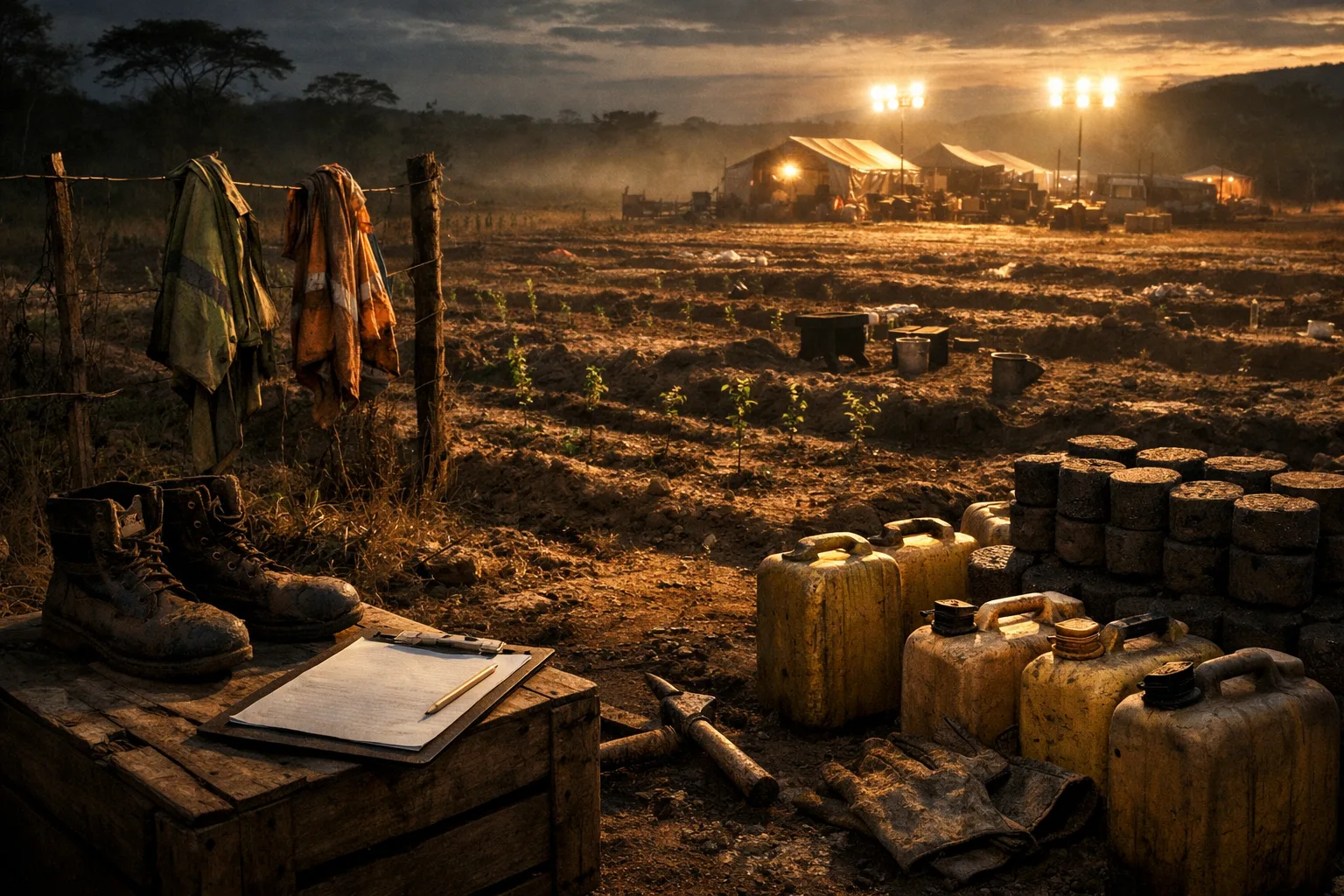
Africa’s Carbon Offset Boom Has a Worker-Rights Problem Buyers Can’t Ignore
Why Worker Exclusion Is Becoming a Material Risk in Carbon Credit Procurement
Africa’s carbon credit supply is scaling fast in nature-based and household-energy projects, but buyers can no longer assess projects on carbon performance alone. They also need to map workforce composition, labor rights, and inclusion gaps.
That matters because high-integrity now includes people governance, not just tonnes of CO2e. The ICVCM Core Carbon Principles explicitly require social and environmental safeguards, so labor conditions sit inside quality, not outside it.
In many project settings, a large share of labor is informal, seasonal, or subcontracted. That makes it easy for buyers to miss unrecorded workers, women laborers, migrant labor, and local service providers during vendor screening.
The procurement question is therefore broader than “Is the credit real?” Buyers also need to ask who worked, under what contract, and with what grievance access. That is especially relevant where carbon revenue depends on rural field implementation, aggregation, monitoring, and community-based enforcement.
This is commercially relevant because buyers are being pushed toward traceable, audit-ready project data. Frameworks such as RMI’s Carbon Crediting Data Framework already treat labor rights, compliance, and stakeholder participation as structured data fields.
Worker exclusion is not a soft ethical issue. It is a procurement-quality problem that can affect project continuity, delivery certainty, and a buyer’s ability to defend the asset in diligence or assurance reviews.
How Poor Wages and Unsafe Conditions Can Undermine Project Permanence
Low wages and unsafe work can weaken the project itself. The ILO’s wage and decent-work materials make the point clearly: wage adequacy, social dialogue, and safe conditions are core to durable economic outcomes.
In carbon projects, underpaying crews or relying on unsafe labor can reduce field execution quality, monitoring quality, and long-term maintenance. That is a direct threat to delivery.
Occupational safety is also a climate issue. The ILO has warned that climate change is already amplifying OSH risks, and carbon projects in heat-exposed agricultural or forestry settings can face higher injury rates, fatigue, and absenteeism if they do not budget for heat mitigation, PPE, and work-rest cycles.
In practical terms, poor labor conditions can compromise tree survival rates, cookstove distribution quality, biomass collection controls, MRV fieldwork, and leakage management. All of those feed directly into credit durability and reversal risk.
Buyers should think in terms of operational permanence. If staff turnover is high, subcontractors cut corners, or local workers avoid participation because wages are not competitive, then the project’s carbon and non-carbon outcomes become less stable over time.
That is a commercial risk, not just a CSR concern. Once labor failures start affecting delivery quality or community outcomes, the downside moves from operations into disclosure, marketing claims, and external scrutiny.
The Reputational Exposure for Corporates, Traders, and Intermediaries
Labor issues can trigger a chain reaction for buyers, traders, and brokers. The result can be procurement controversy, delayed retirements, questions from sustainability teams, and loss of confidence from customers who expect carbon credits to meet both climate and social-integrity thresholds.
Scrutiny in carbon markets now extends beyond additionality and permanence into human rights, just transition, and decent work. That means intermediaries can be exposed if they market African offsets as community-positive without verifying wage practices, worker representation, or grievance mechanisms.
This is especially important for high-volume B2B buyers in energy, food, logistics, and financial services. Public claims are increasingly cross-checked against disclosed due diligence practices and supply-chain expectations, so weak labor oversight can become a greenwashing narrative even when the carbon accounting is technically sound.
Intermediaries also carry market-access risk. If project documentation does not prove fair labor practice, some buyers will discount pricing, require remedial covenants, or exclude the asset from preferred supplier lists altogether.
The practical issue is simple. Labor failures can become a commercial filter, not just a reputational one. That leads to the next question: what does credible labor due diligence actually look like in African offset supply chains?
What Better Labor Due Diligence Should Look Like in African Offset Supply Chains
Strong labor due diligence should start with supply-chain mapping down to subcontractor and seasonal-worker level. Buyers need to know who is hired for field implementation, transport, monitoring, nursery work, and community engagement, not just the project developer on the cover page.
Buyers should also request evidence of wage floors, contract terms, working hours, OSH training, incident logs, and access to grievance channels. Those are the minimum artifacts needed to assess whether labor conditions align with decent work norms and audit expectations.
A serious diligence package should include sex-disaggregated workforce data and participation metrics. Gender-blind project design can hide exclusion from paid work, leadership roles, and benefit-sharing, even in projects that claim broad community impact.
In African supply chains, buyers should test whether labor protections are actually implemented on the ground through spot checks, worker interviews, and third-party verification. That is especially important where informal labor and local intermediaries are common.
Once those controls are in place, the procurement conversation can shift from avoiding risk to pricing risk. That is where institutional buyers start to separate high-integrity credits from the rest.
How Buyers Can Price in Social Risk Without Walking Away from High-Integrity Projects
The most sophisticated buyers are not abandoning African projects. They are building social-risk haircuts, covenant structures, and remediation reserves into pricing so that labor diligence becomes part of the valuation model rather than a late-stage objection.
Pricing can reflect the cost of stronger labor controls. Higher verification frequency, worker training, safer equipment, grievance-system administration, and independent social audits all add cost. That tends to narrow the spread between cheap credits and credible credits.
Buyers can also distinguish between projects with remediable weaknesses and projects with systemic labor abuse. The former may justify a discount plus a corrective-action plan. The latter should be excluded because the reputational and delivery risk is not priceable in a meaningful way.
In practice, the better B2B model is to treat labor integrity like any other quality dimension. Set minimum thresholds, ask for documentary proof, and use structured data fields to compare suppliers across projects, countries, and methodologies.
That approach preserves access to high-potential African offsets while reducing the chance that a labor scandal, wage dispute, or safety incident turns a climate asset into a liability.