India’s Fragmented Farms Could Become the World’s Next Carbon Credit Test Case
Why India’s Smallholder Landscape Is Attractive for Credit Supply but Hard to Measure
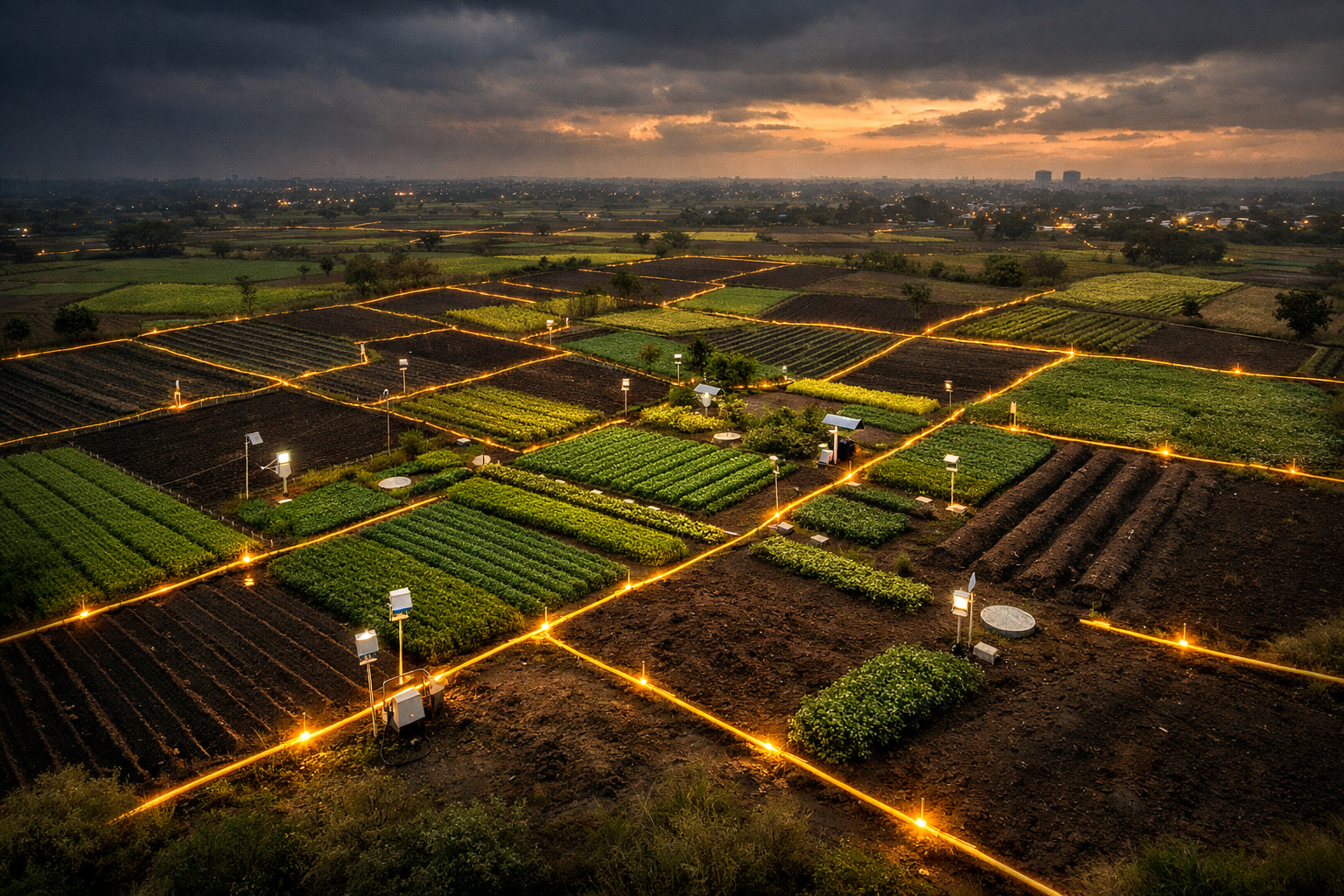
India looks like a serious supply base for agricultural carbon credits because smallholders dominate the sector. FAO says about 80% of Indian farmers are small, and a recent Indian agricultural engineering review puts the number of smallholders below 2 hectares at close to 100 million, or 83% of all farmers, with roughly 70% of national food supply linked to them. That is why smallholder farmers India, fragmented landholdings, agricultural carbon credits, and distributed supply aggregation matter so much here.
The commercial appeal is scale plus co-benefits. The same farm footprint can support soil carbon sequestration, methane reduction in rice, regenerative agriculture, and potentially farmer income uplift. That matters for buyers that want a multi-objective procurement story, not just tonnes on a spreadsheet. Verra’s 2025 rice methodology explicitly highlights water efficiency, fertilizer efficiency, pollution reduction, and farmer income as co-benefits.
India also has a policy tailwind that could turn fragmented farms into a formal credit pipeline. FAO and NABARD said in June 2025 that the government is building a Voluntary Carbon Market for Agriculture and a Carbon Credit Trading Scheme, with FPOs and cooperatives positioned as credible project developers. For buyers, that is the key question: who can aggregate thousands of micro-decisions into bankable supply?
The hard part is that fragmentation creates volume and data sparsity at the same time. Plot sizes, crop rotations, irrigation practices, fertilizer timing, residue handling, and livestock integration vary farm by farm. That makes baseline setting and additionality harder than in centralized industrial projects. In other words, farm-level heterogeneity, baseline variability, and distributed MRV are not side issues. They are the core challenge.
That leaves the real buyer question. If supply is potentially huge but scientifically messy, what does a credible measurement, reporting and verification architecture look like when it has to convert millions of tiny farm actions into issuance-grade evidence?
The MRV Problem: Aggregating Millions of Tiny Farm Decisions Into Bankable Data
India already has an MRV-policy backbone. The Carbon Credit Trading Scheme’s offset mechanism includes published procedures covering Measurement, Reporting, and Verification, and the government has said the institutional framework is operational with a registry, administrator, and regulator. That is important because buyers need MRV framework, registry-grade data, issuance protocol, and carbon credit certificates before they can treat supply as investable.
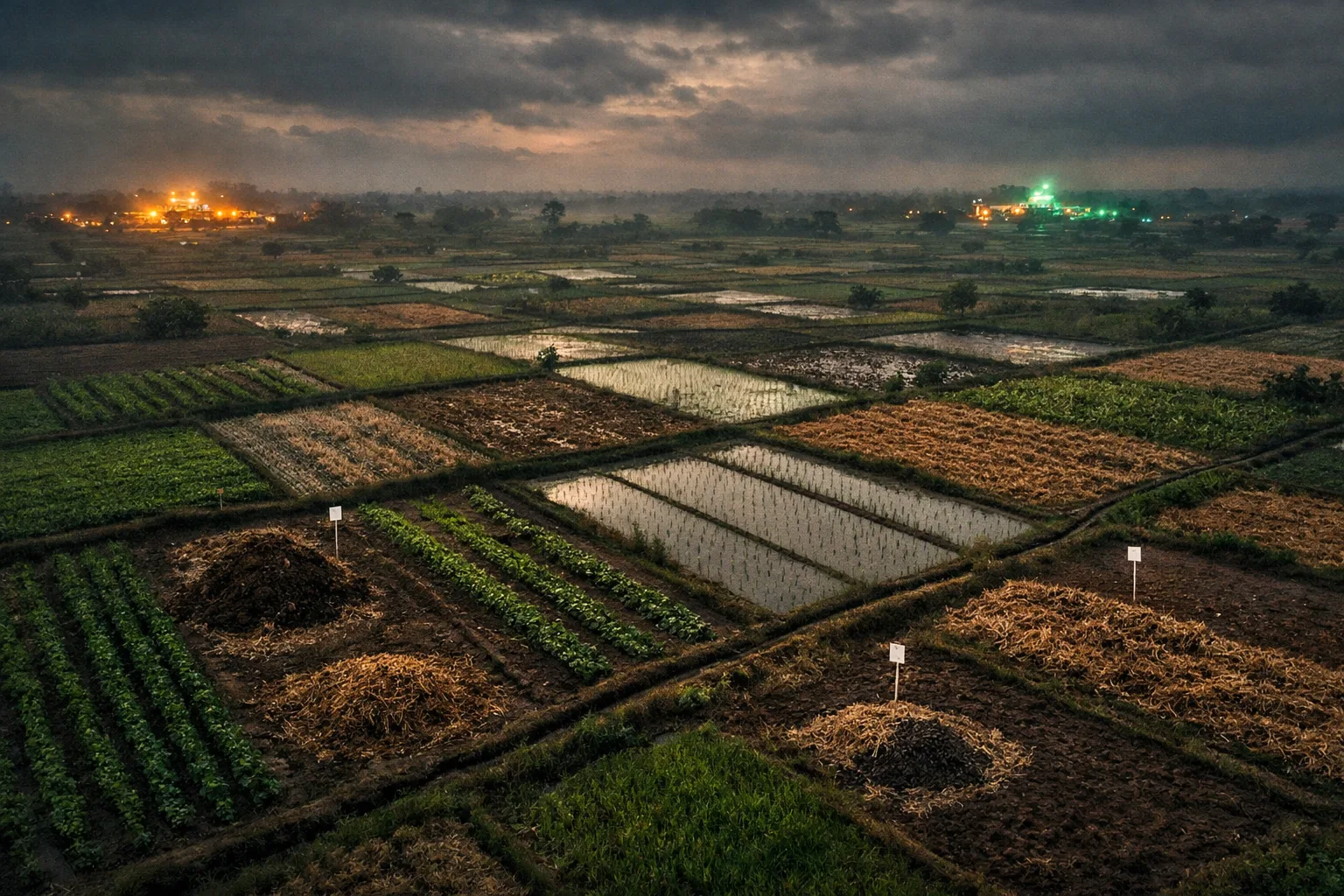
For agriculture, the technical problem is simple to describe and hard to execute. MRV has to capture practices that are operationally straightforward but analytically complex. Alternate wetting and drying in rice, reduced tillage, cover cropping, fertilizer optimization, compost management, and residue handling all have different data burdens and different emission factors. Verra’s new rice methodology shows how modern methodologies are trying to quantify these practices more robustly.
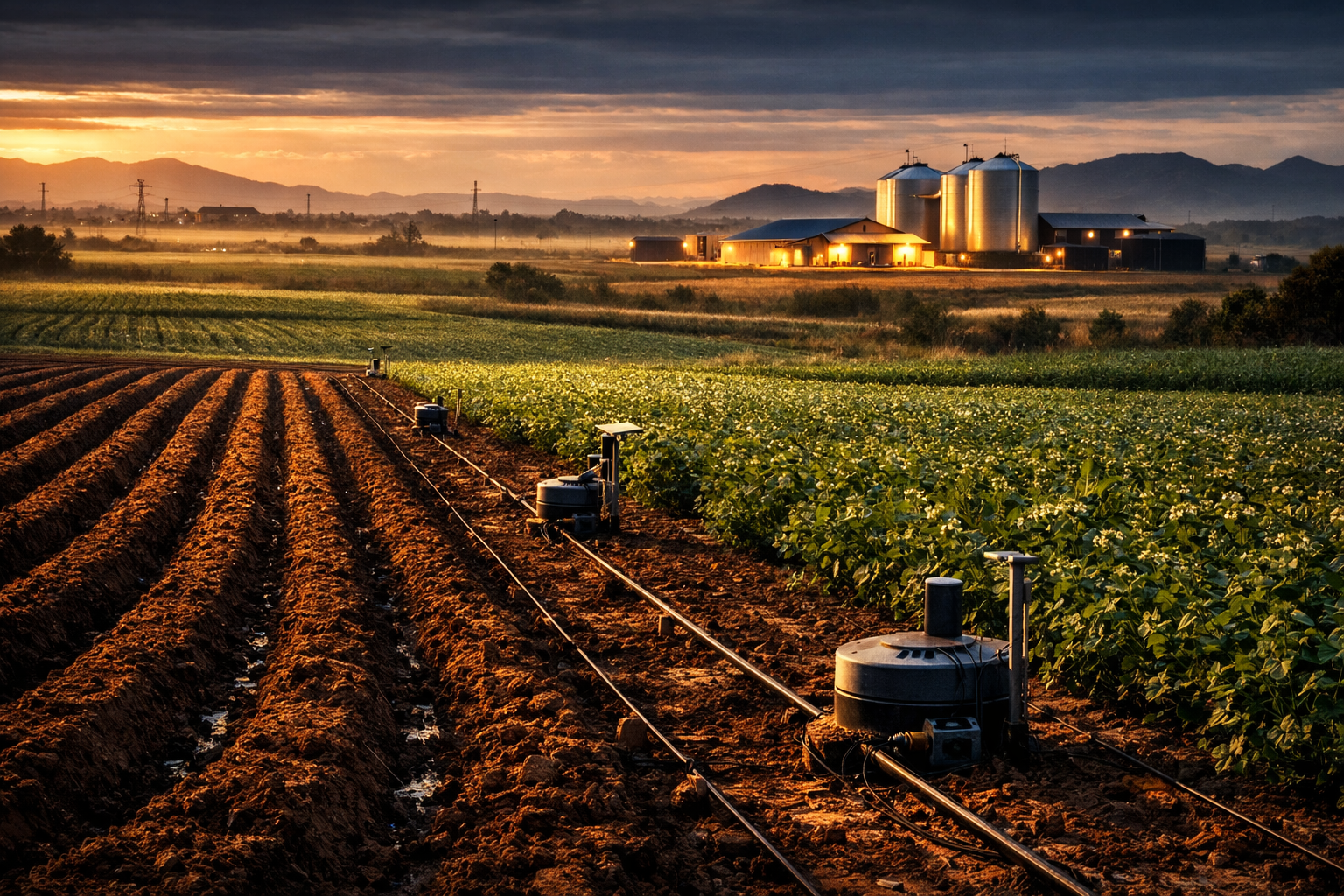
A scalable Indian model will probably rely on farmer producer organizations (FPOs), cooperatives, remote sensing, mobile agronomy logs, and sample-based field audits. Full manual inspection of every plot is not realistic if the goal is to make millions of sub-hectare decisions auditable at acceptable transaction cost. That is the practical implication of aggregation and the government’s emphasis on FPOs as project developers.
Buyers should focus less on big volume claims and more on data chain-of-custody. Who collected the practice data? How often was it verified? How are leakage and double counting handled? Can the project separate real practice change from business-as-usual management? Those are the questions that decide whether credits are bankable or just claims.
That also leads straight to integrity screening. Once MRV works at scale, buyers still need to know which project types in India are more exposed to reversal risk, over-crediting, or weak additionality before they sign offtake or prepayment structures.
Credit Quality Risks Buyers Should Watch in Soil, Methane, and Regenerative Agriculture Projects
The biggest agricultural credit narratives in India will likely cluster around soil carbon credits, rice methane credits, and broader regenerative agriculture credits. Each has different integrity risks. Soil carbon depends on permanence and sampling confidence. Methane projects depend on baseline fidelity and water-management adoption. Regenerative agriculture often bundles multiple practices, which can blur attribution.
Buyers should watch for measurement uncertainty in soil carbon. Carbon gains can be slow, spatially heterogeneous, and sensitive to weather, soil type, and sampling design. For procurement teams, that means conservative issuance rules, transparent uncertainty deductions, and multi-year monitoring commitments. That is a due-diligence lens, not a generic sustainability point.
Rice methane is different. The key quality question is whether the project is truly changing water management at scale and sustaining the practice long enough to generate durable reductions. Verra’s VM0051 matters because it replaces an older CDM methodology and explicitly targets flooded rice systems with updated scientific principles.
Buyers should also evaluate co-benefit inflation. Claims about farmer income, water savings, women’s participation, or biodiversity can be real, but they should not substitute for rigorous tonnes-CO2e accounting. The right commercial approach is to price those co-benefits separately, not use them as a proxy for credit quality.
The market signal is that large buyers are willing to transact when integrity is strong. Recent high-volume offtake and issuance activity in rice methane and soil carbon elsewhere shows demand for methodologies that can survive scrutiny. The question for India is whether its projects can reach the same bar, especially if they want to matter for compliance-leaning demand.
How India’s Domestic Carbon Market and Voluntary Projects May Interact With Article 6.2
India’s market architecture is no longer theoretical. The government has said the Carbon Credit Trading Scheme covers both compliance and offset mechanisms, and that sectors including agriculture are eligible for project registration under the offset mechanism. That means agricultural credits could matter for both domestic buyers and international purchasers.
The same government answer says India has finalized thirteen activities eligible for international trading under Article 6.2 and Article 6.4 of the Paris Agreement. That is a crucial signal for developers thinking about exportable credits and corresponding adjustment risk.
The commercial tension is clear. A project can be designed for the voluntary market first, but if it later seeks Article 6.2 authorization, buyers may need to know whether the host country will apply corresponding adjustments, what claims remain usable, and whether the project can still sell into premium corporate procurement channels. That is a forward-looking inference based on the policy setup.
This interaction matters because domestic compliance demand can support early project economics, while Article 6.2 can create a second demand lane for higher-integrity, exportable credits. That is especially relevant for methane reduction in rice and other agriculture activities that are easier to quantify than diffuse soil sequestration.
The bridge to procurement is straightforward. Once buyers know which credits are domestic-only, voluntary, or potentially Article 6.2-aligned, the next issue is what they must lock down in contracts, governance, and supplier readiness before scaling in India.
What Global Buyers, Developers, and Investors Need Before Scaling Procurement in India
Global buyers should require a project-level due diligence pack. It should include methodology version, baseline assumptions, additionality test, leakage treatment, permanence approach, verification frequency, registry status, and ownership of environmental attributes. In India, that matters even more because agricultural supply will likely be aggregated through FPOs, cooperatives, or multi-state programmatic structures.
Developers need operational partners, not just financiers. Seed and input suppliers, agronomy teams, digital MRV vendors, and farmer collectives will determine whether the project can actually deliver monitored practice change across thousands of micro-plots. The FAO-NABARD framing around FPOs and cooperatives is the strongest current indicator of the likely operating model.
Investors should underwrite execution risk as much as carbon price risk. Fragmented land, monsoon variability, low irrigation coverage in rainfed areas, and farmer income volatility can all slow adoption or create reversal risk. That is why scale should be released in tranches tied to verified performance. For capital providers, programmatic carbon finance, portfolio offtake, performance-based disbursement, and agri-climate risk are the right lenses.
The best early transactions in India will likely be those with a clear MRV story, a repeatable practice package, and a buyer that values high-integrity agricultural decarbonization rather than the lowest-cost offsets. Rice methane looks especially near-term because modern methodology support is now in place, while soil carbon may need more conservative pricing and longer verification windows.
India is not yet a solved market. It may still become the most important test case for whether smallholder agriculture carbon credits can move from pilot-scale storytelling to investable, auditable, cross-border climate infrastructure.