What the latest report says about emissions intensity, capital spending, and missed progress
The gap is simple to state and hard to fix: India’s steel sector has climate targets, but capital spending is not yet moving fast enough to back them. That matters because steel decarbonisation is not mainly a branding exercise. It is a plant-level investment problem.
Global steel is still highly emissions intensive. Worldsteel’s latest framework shows that BF-BOF production remains far more carbon intensive than scrap-EAF and DRI-EAF routes, and the global benchmark in 2024 was about 2.18 tCO2e per tonne of steel. That benchmark is useful because it shows where the sector is starting from, and why route choice matters so much.
India’s challenge is structural. The country’s steel base still relies heavily on coal, DRI, and integrated furnaces, so the issue is not only how much the sector emits today. It is also how much CAPEX is needed to shift the technology mix. The Ministry of Steel’s “Greening the Steel Sector in India: Roadmap and Action Plan,” released on 10 September 2024, lays out the main levers: energy efficiency, renewables, green hydrogen, natural gas-based DRI, CCUS, and biochar. The message is clear. Progress is slower than ambition.
That is why buyers, EPC contractors, and investors should read the sector through an investment lens, not just a compliance lens. The timing matters. Once a high-emitting asset is locked into a long industrial life cycle, the cost of changing course rises quickly.
The industrial data also matters beyond India. Steel is a supply chain input, a procurement issue, and a climate finance issue. The next question is not whether Indian steel is relevant. It is why it matters so much for global industrial decarbonisation.
Why India’s steel sector matters for global industrial decarbonisation and carbon markets
India’s steel sector is systemically important because of scale. The IEA estimates that by 2050, nearly one-fifth of global steel could come from India, compared with about 5% today. That means every delay in India has global consequences for industrial emissions trajectories.
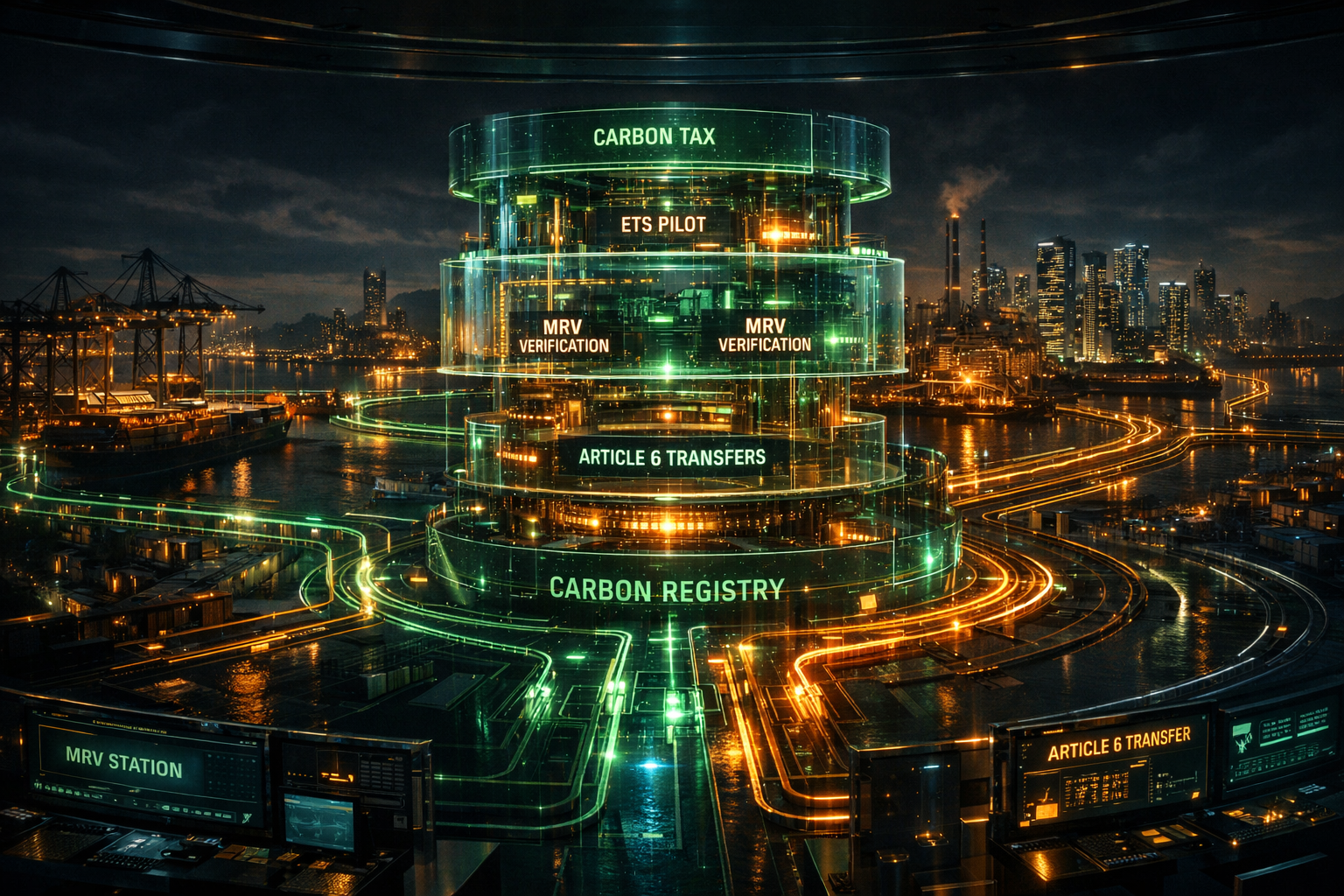
This also matters for carbon markets, even if steel is not a classic offsetting story. If India moves toward lower-carbon steel, the market will need better measurement, certification, green procurement, and in time, traceable environmental attributes for international supply chains. That is where carbon market infrastructure starts to matter, even when the final product is not a carbon credit.
International buyers are already part of this shift. Automakers, construction firms, OEMs, and energy infrastructure buyers are using embodied carbon standards to screen suppliers. In practice, that means Indian steel can face a price discount or a price premium depending on its carbon intensity and the quality of its data.
The market context is still tough. Worldsteel says average global energy intensity fell to 20.95 GJ/t in 2024, but the sector remains deeply emissions intensive. That is why offtake for green steel is not just a reputational move. It is a market-making tool.
The real question is why projects are still not scaling, even with roadmaps, targets, and buyer attention. The answer is a mix of technology limits and financing friction.
The technology and financing bottlenecks slowing low-carbon steel deployment
The technology stack is not one thing. Efficiency, electrification, natural gas-based DRI, green hydrogen, CCUS, and scrap-based EAF each have different maturity levels, cost profiles, and infrastructure needs. In India, the practical mix is constrained by electricity supply, gas availability, scrap access, and industrial water.
The bigger problem is financing. Worldsteel makes the core point clearly: the transition will require very high CAPEX, and low-carbon steel projects are still penalised by high upfront costs, long payback periods, and uncertainty over future market premiums.
Hydrogen is a good example. The IEA notes pilot project guidelines for using green hydrogen in the steel sector under India’s National Green Hydrogen Mission. That is a real policy signal, but the volumes are still too small to unlock immediate industrial scale.
The data problem is just as important. Without standard definitions and traceability for emissions intensity, lenders cannot price risk properly, and buyers cannot distinguish between lower-carbon steel, near-zero steel, and products that only claim a green premium.
At this point, the issue is no longer technology in the abstract. It is the policy and demand framework that can lower the cost of capital.
How policy, carbon pricing, and green procurement could change the investment case
The taxonomy is a turning point. India’s “Taxonomy of Green Steel,” announced on 12 December 2024 and notified on 23 December 2024, gives the market a common base for definitions, certification, and segmentation.
That matters because procurement can change investment decisions. The IEA says green public procurement and offtake contracts are decisive tools for creating demand, especially when the initial premium slows private adoption.
Carbon pricing also matters, but only when it is paired with demand. Product standards, emissions trading systems, and carbon price mechanisms improve the investment case because they turn an environmental cost into an economic signal. Without minimum demand, the signal stays weak.
There is also a practical procurement angle. India’s preference for domestically manufactured iron and steel products in government procurement, updated in 2025, could become a useful market prototype for green steel if it is linked to emissions thresholds and embodied carbon criteria.
The policy direction is important, but investors and buyers still need to know what to watch next. The key is to track which signals move from policy language to real capital allocation.
What international buyers, lenders, and climate investors should watch next
The taxonomy and certification pipeline should be the first thing to watch. They will separate bankable projects from narrative-only claims. For global buyers, verified green attributes are what make a premium, a procurement commitment, or a supply agreement credible.
CAPEX conversion is the next signal. Lenders should look at which plants move from announcements to FID, which ones rely on gas, electrification, or hydrogen, and which ones secure renewable PPAs or CO2 transport infrastructure.
Buyers should focus on data quality. They need comparable emissions intensities, clear chain-of-custody, and product-level thresholds, especially in automotive, building materials, capital goods, and export-oriented manufacturing.
Investors should watch the combination of policy support, anchored demand through offtake, and a lower cost of capital. That trio reduces stranded asset risk and supports scale-up.
The market question is no longer whether Indian steel should decarbonise. It is which suppliers, lenders, and buyers will capture the first wave of green steel supply chains.