Why India Is Emerging as a Global Supply Hub for Agri Carbon Credits
India is becoming a serious supply hub for agricultural carbon credits because it combines scale, fragmented farm structures, and a policy backdrop that now supports carbon market participation. That matters for buyers who need volume, repeatable MRV, and lower-cost origination.
The Amazon-Good Rice Alliance transaction is a clear signal that methane-reduction credits from rice cultivation are moving beyond pilot storytelling. The reported deal value is US$30 million, and local reporting describes it as the first agricultural carbon credit deal of this size in India.
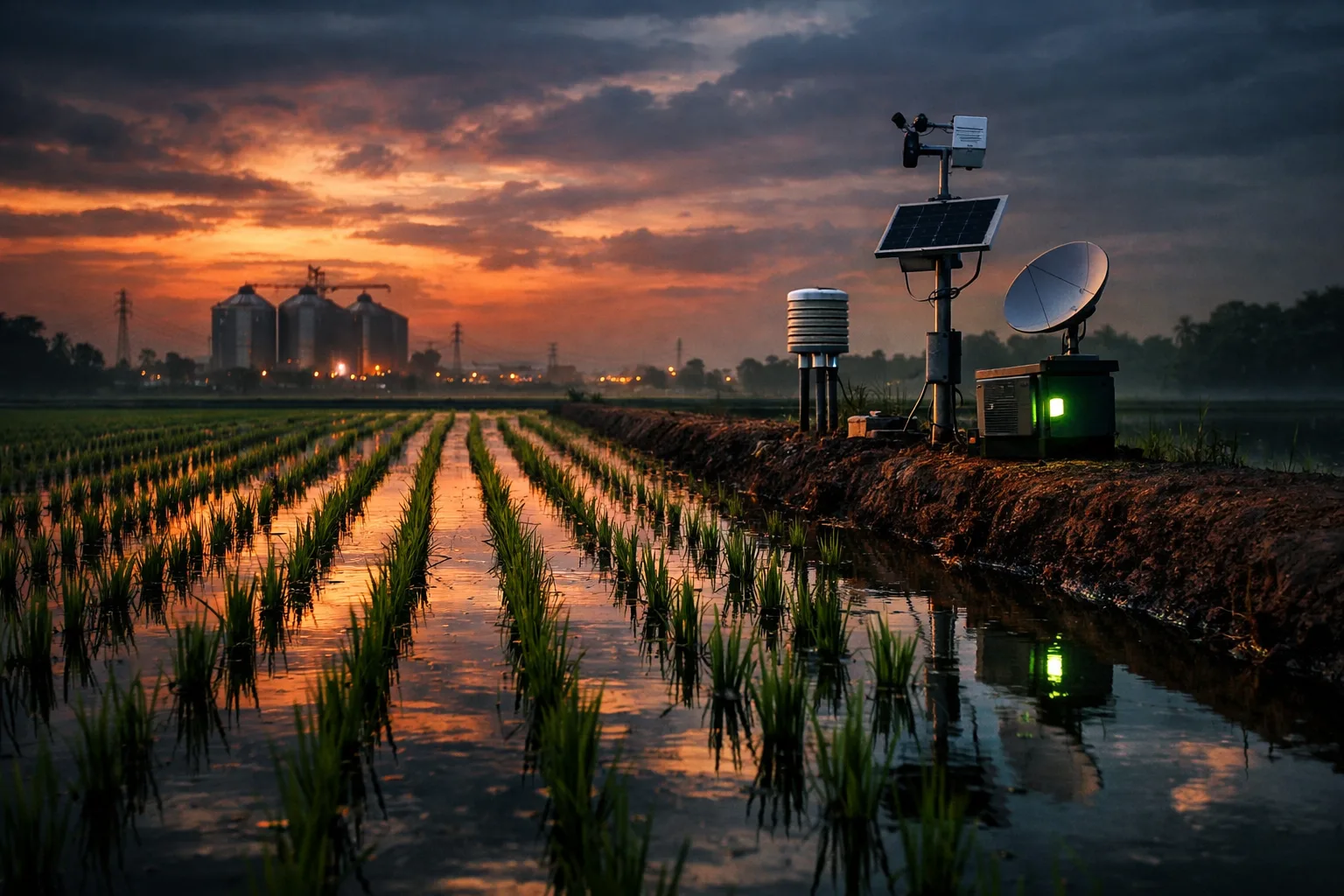
Rice is central to the climate logic here. Rice systems are a major methane source, while practices such as alternate wetting and drying, reduced flooding, and better water management can cut emissions and save water. For corporates, that makes these credits easier to position for insetting, scope 3 strategies, or nature-based offset portfolios with co-benefits.
India’s real edge is aggregation economics. Millions of smallholder farms are hard to finance one by one, but they can become investable supply chains if intermediaries can standardize onboarding, digital MRV, permanence accounting, and claims governance. That is the B2B question behind the headline.
The next question is whether this model can move from one flagship offtake to a wider buyer base with clearer price discovery. Amazon’s demand is important because it may help define that next phase.
How Amazon’s US$30 Million Deal Fits Into the Next Phase of Buyer Demand
Amazon’s agreement should be read as part of a shift from spot purchases of verified credits toward long-term offtake contracts. That structure is attractive to multinationals that need future supply certainty, not just occasional retirement volumes.
The deal also points to stronger buyer appetite for high-integrity methane abatement in agriculture. Rice credits are easier to defend when they are linked to methane cuts, water efficiency, and farmer livelihood gains rather than only carbon accounting.
Scale matters here. At US$30 million, the transaction is large enough to test whether a corporate buyer can underwrite programmatic supply across multiple seasons and geographies. That makes it a reference point for pricing and bankability.
For buyers, the due diligence questions are now practical. Additionality, baseline setting, leakage, and permanence all matter, especially in agricultural systems where practice adoption can reverse and yield impacts can vary. Developers that can document field-level methodology and farmer-revenue impacts will be better placed to win trust.
That leads to the next layer. Once corporate demand is established, domestic regulation can reinforce it or distort it. India’s Carbon Credit Trading Scheme is where that tension starts to matter.
What India’s Carbon Credit Trading Scheme Means for Domestic Demand and Project Economics
India’s Carbon Credit Trading Scheme, enacted by the Ministry of Power in 2023, creates both a compliance mechanism and an offset mechanism. That matters because domestic compliance demand can support credit prices and reduce dependence on export-only buyers.
The scheme already targets nine energy-intensive sectors on the compliance side. That signals a real domestic carbon market architecture, not just a voluntary registry. For developers, future demand may come from regulated entities as well as corporates and traders.
For agricultural projects, the key commercial question is whether the offset mechanism expands enough to support methane, soil carbon, and supply-chain insetting at scale. If it does, developers could diversify revenue beyond credit exports into domestic offtake, issuance premiums, and program financing.
Market design also affects project economics through transaction costs, verification cycles, and registry clarity. If MRV becomes simpler and buyers trust issuance timelines, agriculture programs can move from grant-funded pilots to financeable pipelines backed by pre-purchase agreements.
India is not the only Asian market moving in this direction. Vietnam’s evolving framework, especially around construction-linked emissions, shows how regional compliance demand could widen the buyer base beyond agriculture.
Why Vietnam’s Carbon Rules for Builders Matter for the Wider ASEAN Carbon Market
Vietnam’s carbon-market roadmap has advanced materially. The OECD notes that companies began collecting carbon inventory data in 2023 to 2025 ahead of participation, while market launch has been moving toward a pilot phase in 2025 with fuller implementation later.
Construction matters because ASEAN decarbonization is increasingly being framed around cement, steel, and the built environment. The 2035 AFCM Decarbonization Roadmap shows that regional building materials supply chains are now part of the carbon-market conversation.
For carbon-credit buyers and investors, Vietnam matters because a regulated domestic market can create price signals, compliance demand, and offset demand that spill over into project finance. That may increase the value of credits from forestry, agriculture, and industrial mitigation assets across ASEAN.
The implication for developers is straightforward. Projects serving builders and cement producers will need to survive tighter scrutiny on MRV, sectoral baselines, and emissions inventories, especially if credits are used for limited offsetting rather than broad claims.
This sets up the bigger regional question. If India creates supply and Vietnam creates compliance pressure, Asia could move from isolated pilots to integrated cross-border carbon supply chains.
The Bigger Trend: From Pilot Projects to Regional Carbon Supply Chains
The regional pattern is shifting from one-off pilots to repeatable carbon supply chains. India is scaling agricultural origination, Vietnam is building market infrastructure, and ASEAN industry is setting sectoral decarbonization roadmaps. Together, those signals point to a more coordinated Asian carbon ecosystem.
The winners will be platforms that can link project development, verification, registry operations, buyer contracting, and settlement across jurisdictions. That matters for buyers with multi-country procurement mandates and investors looking for diversification.
Agricultural credits are likely to become more infrastructure-like. Bundled programs, standardized methodologies, digital MRV, and long-tenor offtake agreements will matter more than fragmented project-by-project sales. Amazon’s deal is important because it shows that large buyers can underwrite this model when the asset thesis is credible.
Carbon supply chains may also start to align with trade, industrial policy, and supply-chain decarbonization requirements. That makes Asia more attractive for both credit originators and structured-finance players.
The final question is no longer whether these markets exist. It is how international buyers and capital providers should position themselves before standards, pricing, and liquidity tighten further.
What International Buyers, Developers, and Investors Should Watch Next
International buyers should watch whether more corporate offtake agreements follow Amazon’s model. The market signal gets stronger if multiple global firms start buying Indian agricultural methane credits under similar long-term structures.
Developers should watch methodology acceptance, registry timing, and buyer disclosure rules, especially for rice, soil carbon, and methane abatement projects. Those variables decide whether a pipeline becomes financeable at scale or stays a policy experiment.
Investors should assess whether domestic carbon market reforms in India and Vietnam create a true two-sided market. Compliance demand on one side and voluntary or insetting demand on the other could improve liquidity, tenor, and exit options.
Across ASEAN, the key watch item is whether industrial and agricultural credits converge into a shared regional procurement logic. Buyers may increasingly want to source from multiple sectors under comparable integrity standards, which favors scalable platforms over standalone projects.
Amazon’s rice deal is not just a procurement story. It is an early test of whether Asia can turn climate credits into a durable cross-border supply chain asset class.