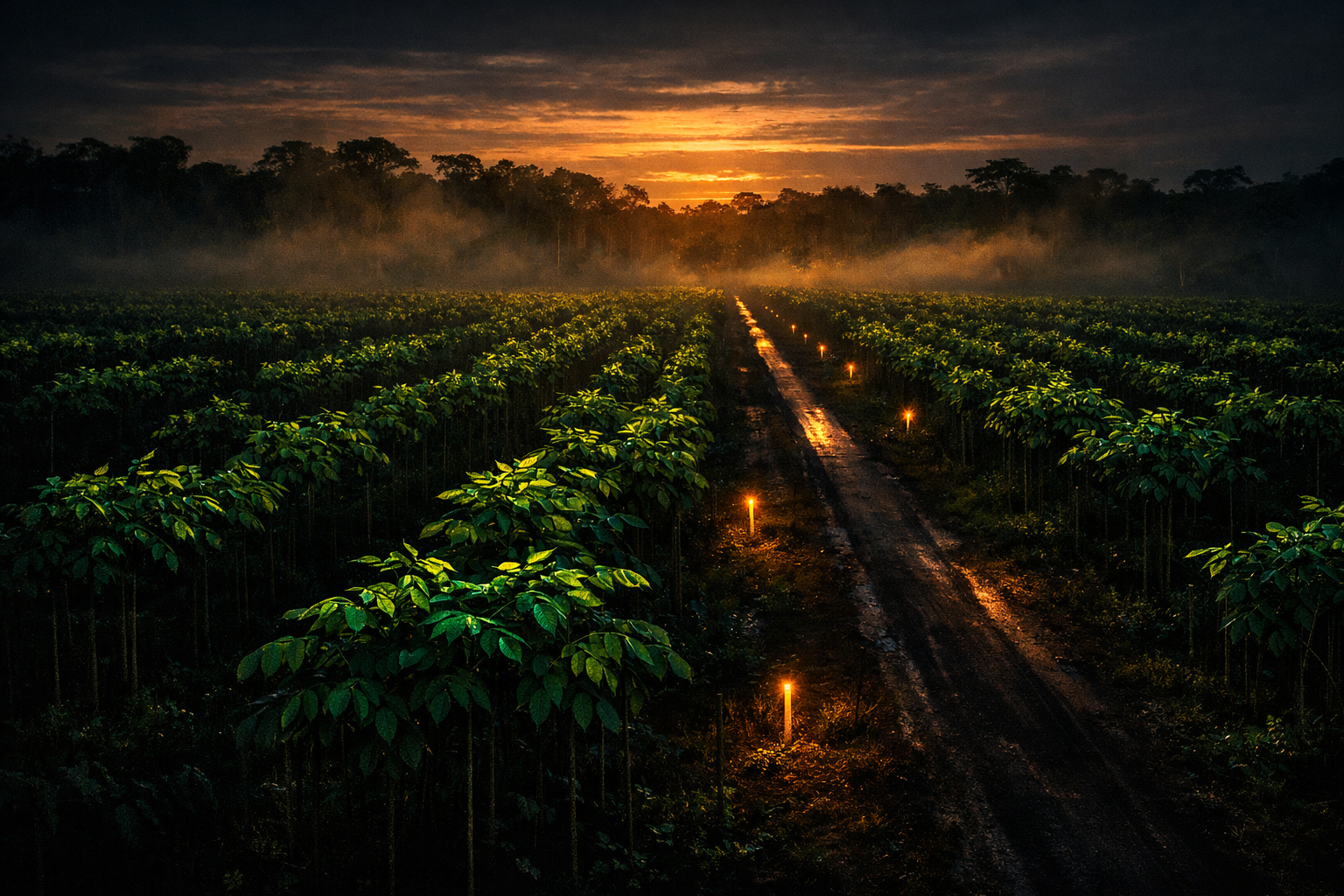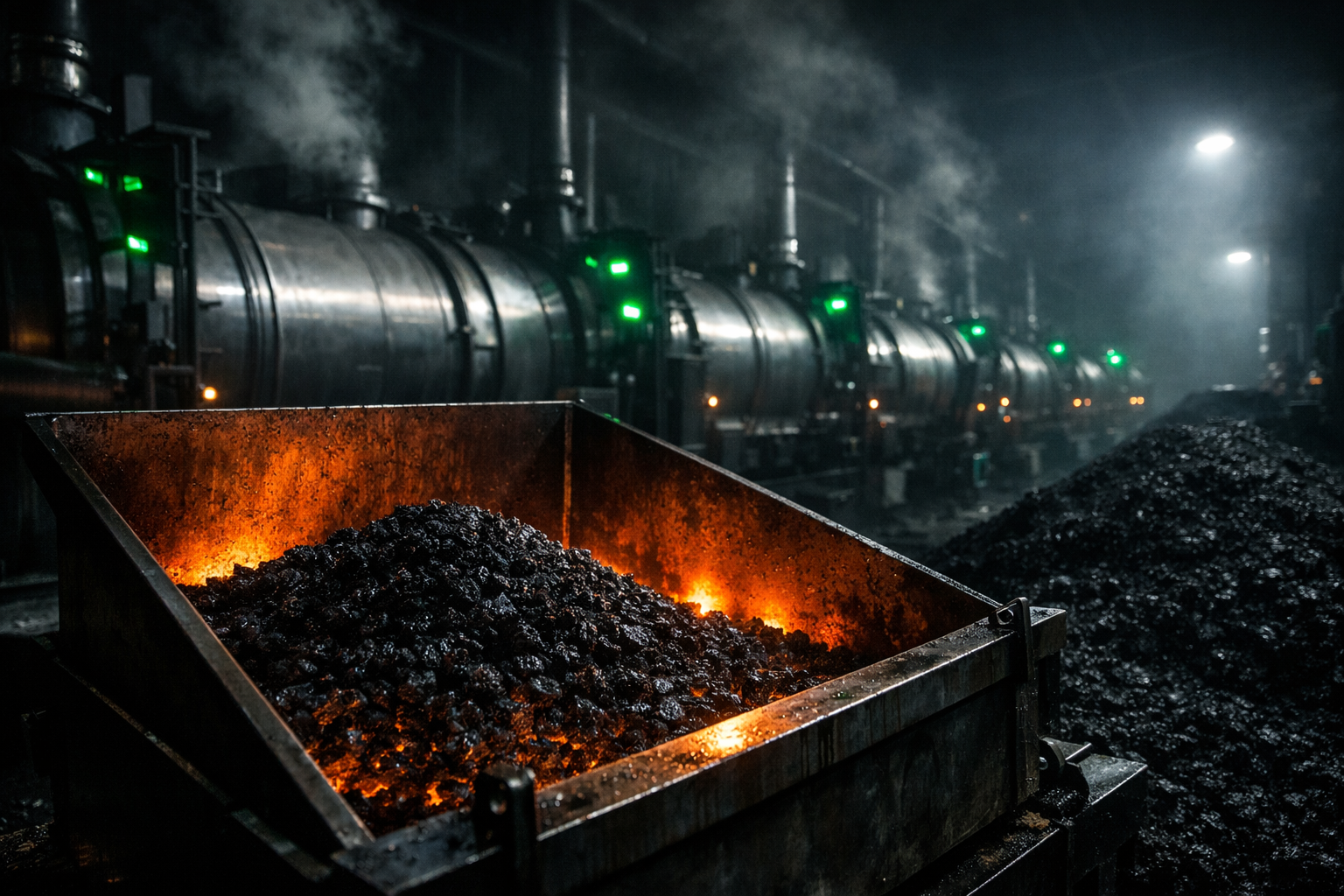

A new investigative report is challenging the integrity of biochar carbon removal credits from one of Brazil’s most established producers, and it does so from an angle most carbon credit due diligence barely touches: not the pyrolysis process, but the plantation system that feeds it. The report, Dry Streams in an Ocean of Eucalyptus, published on September 21 by the Global Forest Coalition together with Biofuelwatch, the Environmental Paper Network’s Biomass Action Network and the Hands Off Mother Earth Alliance, alleges decades of land dispossession, water depletion and Cerrado destruction linked to the eucalyptus operations of Aperam BioEnergia, the Brazilian forestry arm of steelmaker Aperam and a listed carbon removal supplier on Puro.earth. For buyers treating biochar as the low-risk, high-durability workhorse of their removal portfolios, the case is a reminder that a certified carbon stream can still sit on top of a contested feedstock.
What the Report Alleges
The investigation focuses on the Upper Jequitinhonha Valley in Minas Gerais, where Aperam manages around 150,000 hectares, roughly two-thirds of it eucalyptus plantations, much of it established from the 1970s onwards on land traditionally used by chapadeira-groteira and Quilombola communities.
The documented impacts cited are specific. Native vegetation on the Chapada das Veredas plateau fell from 86.1% in 1973 to 24.6% in 2018. A 2019 survey found that 89% of local springs had dried up, and research cited in the report found water tables fell by approximately 4.5 metres between 1974 and 2019. The eucalyptus plantations on the Chapada das Veredas alone are estimated to consume 31.9 billion litres of water per year.
The report goes beyond documentation. It calls for an immediate halt to Aperam’s plantation expansion, an independent investigation into historical land acquisition, suspension of financial support until harms are remedied, and suspension of relevant sustainability certifications pending transparent, in-field verification of community concerns.
The Financing and Regulatory Pressure Around It
The scrutiny lands on an expansion that is already financed. In February 2025, Aperam signed a €250 million financing package, including up to €150 million from the International Finance Corporation, to support the acquisition of 42,600 hectares and the expansion of charcoal production, kilns, bio-oil and seedling production. Notably, the IFC itself recognised that the project could generate “significant adverse” environmental and social risks that could be “diverse and irreversible”, language that buyers’ counsel will now read alongside the coalition’s findings.
Public authorities are also moving. A federal investigation was opened in Minas Gerais in August 2026 into the socio-environmental impacts of Aperam’s eucalyptus expansion. Whatever its outcome, the existence of an open investigation changes the risk classification of the underlying asset, and by extension of the credits derived from it.
The Other Side of the Ledger
Aperam BioEnergia’s own positioning, visible on its Puro.earth facility page, describes approximately 156,000 hectares of FSC-certified planted and native forests, more than 2,000 direct jobs, and a circular production model in which residual biomass that would otherwise decompose is converted by pyrolysis into biochar and applied to soils, mostly within the company’s own forestry operations, with part donated to local farmers. Vegetal tar from pyrolysis is processed into bio-oil. The facility lists capacity of approximately 70,000 tonnes of carbon removals per year, built on more than 420,000 tonnes of annual charcoal production supplying the steel sector.
None of the report’s allegations have been adjudicated, and certification under a registry programme and FSC remains in place. But that is precisely the point for procurement teams: the dispute is not about whether the biochar methodology quantifies carbon correctly. It is about whether “FSC-certified plantation plus certified methodology” is a sufficient integrity screen when the feedstock base carries open land tenure, water and community questions.
Why Feedstock Is Biochar’s Blind Spot
Biochar’s reputation as the most deliverable engineered-adjacent removal pathway rests on process integrity: controlled pyrolysis, durable carbon, measurable application. Feedstock has largely been treated as a binary: residues good, purpose-grown extraction questionable. The Aperam case collapses that binary. The credits are based on charcoal fines and forestry residues from an industrial eucalyptus system, so the feedstock qualifies as residue in carbon accounting terms while the plantation model producing it is accused of consuming land and water at landscape scale.
That distinction matters for how the market reprices. If buyers begin discounting or excluding biochar whose residues come from contested plantation systems, the effective supply of “safe” biochar tightens in a market that already struggles to deliver volume, and the diligence question shifts upstream from the reactor to the land.
What It Means for Buyers, Financiers and Standards
For buyers, the actionable change is to add a feedstock layer to biochar due diligence: where the biomass comes from, the land tenure history of the producing estate, water basins affected, the status of community claims, and any open regulatory investigations. Registry certification answers the carbon question; it does not answer these.
For financiers, the IFC’s own risk language makes this a test case for how development finance handles carbon-removal-linked expansion: capital committed in 2025 is now exposed to a 2026 federal investigation and an international advocacy campaign.
For standards and registries, the pressure point is whether feedstock sustainability criteria for biochar methodologies are strong enough to catch plantation-level harms, or whether that screening is left entirely to forest certification schemes that the coalition is explicitly asking to be suspended.
What to Watch
Three markers from here. First, whether the Minas Gerais federal investigation produces findings, and whether Aperam responds substantively to the report. Second, whether any certification body or registry reviews the facility’s status, since a suspension or a defended status quo would each set a precedent for plantation-fed biochar. Third, buyer behaviour: whether offtake contracts for Brazilian biochar start carrying feedstock and land-tenure covenants, which would signal that feedstock risk has been priced into the market rather than remaining a reputational footnote.