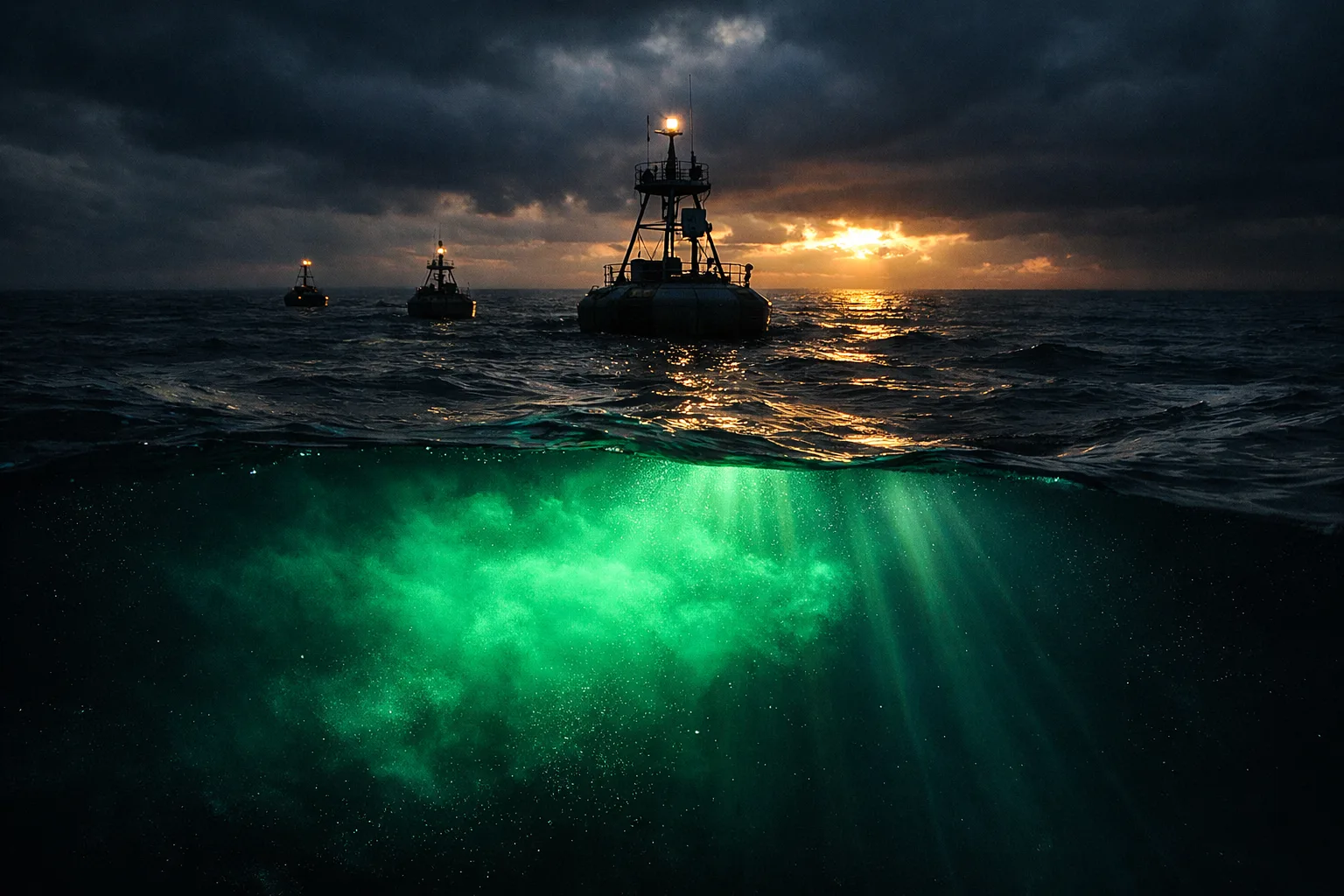
The European Commission is looking at marine carbon dioxide removal (mCDR) as a potential addition to the list of permanent CO2 removal technologies eligible for certification at EU level, according to Carbon Pulse. Officials stress that nothing is decided yet, with key scientific gaps still to be addressed. For developers of ocean-based removal projects and buyers seeking durable credits, the signal matters: it confirms that marine methods are now inside the formal EU certification conversation, while stopping well short of a decision.
Which methods Brussels is evaluating
The methods under evaluation include ocean alkalinity enhancement (OAE) and direct ocean capture (DOCCS), alongside enhanced rock weathering (ERW) and mineralisation, according to Carbon Gap. The question is whether these approaches can be certified under the Carbon Removals and Carbon Farming (CRCF) Regulation, the framework the EU uses to certify permanent carbon removals.
The evaluation follows technical scoping papers published by the Commission in September 2025 and February 2026, and subsequent feedback from the novel mCDR community, according to Carbon Gap. That sequencing shows the process is at a scoping and evidence-gathering stage, not at methodology adoption.
Why nothing is decided
The central obstacle is the state of the science. Based on the scoping papers and the community feedback, Carbon Gap considers that the evidence is not sufficient to immediately pursue a full certification methodology for these methods, according to Carbon Gap.
The open questions span the full certification chain. Most mCDR approaches still face uncertainties around real-world effectiveness, monitoring and verification, environmental and social safety, governance and scalability, according to Carbon Gap. Public awareness and acceptance of these methods also remain low, according to Carbon Gap.
Carbon Gap frames Europe’s position as a balance between two risks, according to Carbon Gap. The first is rushing ahead while significant uncertainties remain. The second is inaction, which would further delay and stall the innovation needed to move these methods forward, since outstanding scientific questions must be actively researched and field tests are needed to prove or disprove the various approaches.
The demand case behind the debate
The policy interest in permanent removals is not abstract. The Commission’s Impact Assessment for the 2040 climate target indicates that around 400 MtCO2 will need to be removed annually, including 75 MtCO2 from permanent carbon dioxide removal, according to Carbon Gap.
Those figures explain why Brussels is testing the boundaries of the CRCF framework now. If permanent removals are to contribute at that scale, certification pathways need to exist for technologies beyond the methods already inside the framework. Marine methods are candidates because of Europe’s research base, favourable geography and existing maritime infrastructure, according to Carbon Gap.
What Carbon Gap recommends
Rather than a binary choice between certifying now and waiting indefinitely, Carbon Gap’s November 2026 publication, authored by Eloisa Viloria and Sylvain Delerce, proposes a structured pathway, according to Carbon Gap.
Its recommendations include a clear political commitment to advancing novel mCDR, with a structured process and milestones to periodically assess scientific progress and conditions for certification, according to Carbon Gap. It also proposes an overseeing body to drive and track progress, potentially a marine CDR sub-group under the Carbon Removal Expert Group.
On the funding side, the report calls for a shared marine CDR research and innovation agenda, coordinated across available EU, national and private funding in the short term and formalised under the next Framework Programme over the longer term, according to Carbon Gap. It further recommends embedding mCDR in the wider EU ocean policy framework: the EU Ocean and Water R&I Strategy should support a dedicated research agenda, the Ocean Act should recognise mCDR as a priority, and the OceanEye initiative and the wider European ocean observing system should build the data and monitoring capacities needed for MRV, according to Carbon Gap.
What this means for buyers and developers
For buyers, the immediate implication is that no new marine removal supply is entering the EU certification system yet. CRCF-certified credits from OAE or DOCCS remain a prospect, not a procurement option, and any forward positions would rest on a framework that is still being scoped.
For developers, the opening is procedural rather than commercial. A scoping phase is the moment when evidence requirements, MRV expectations and research priorities get defined, and the Commission’s own scoping papers and the feedback process around them are shaping that agenda. Carbon Gap’s proposed sub-group under the Carbon Removal Expert Group, if established, would become the venue where progress toward certification is tracked.
What to watch
The first marker is whether the Commission acts on the scoping work from September 2025 and February 2026 with a formal step toward methodology development for OAE or DOCCS, or confirms that the evidence bar is not yet met. The second is institutional: whether a marine CDR sub-group emerges under the Carbon Removal Expert Group, as Carbon Gap proposes. The third is funding alignment, in particular whether the next Framework Programme and the EU Ocean and Water R&I Strategy pick up the research agenda that certification would eventually depend on.