How the EU’s CBAM Could Shift Industrial Jobs Toward Southeast Asia
Why CBAM Is More Than a Trade Measure: The Risk of Carbon Leakage
CBAM is no longer just a customs tool. In the EU’s own framing, it is a carbon pricing mechanism for imported goods, designed to mirror EU ETS costs and reduce the incentive to move emissions-intensive production offshore.
That matters because the policy is moving from reporting into a more operational regime. The transitional phase ran from 1 October 2023 to 31 December 2025, and the Commission’s guidance now covers the definitive phase and related implementing acts.
For buyers and traders, the key issue is no longer only tariff classification. It is product-level emissions data, process boundaries, and audit-ready reporting.
The economic logic behind carbon leakage is simple. If EU producers face a rising carbon cost while non-EU suppliers do not, sourcing can shift toward lower-cost jurisdictions unless those suppliers can prove lower embedded emissions.
That makes CBAM a supply-chain and margin issue, not just a policy issue. It changes how companies compare suppliers, not only how they clear customs.
The compliance burden is also getting more technical. The Commission’s 2026 webinar material on multifunctional production processes shows that iron, steel, and aluminium reporting is becoming more detailed, especially where precursor data and process emissions matter.
CBAM does not automatically move factories. It can, however, reprice geography. That is why the next question is which sectors are most exposed to that repricing.
Which Industries Are Most Exposed: Steel, Cement, Aluminium, and Fertilizers
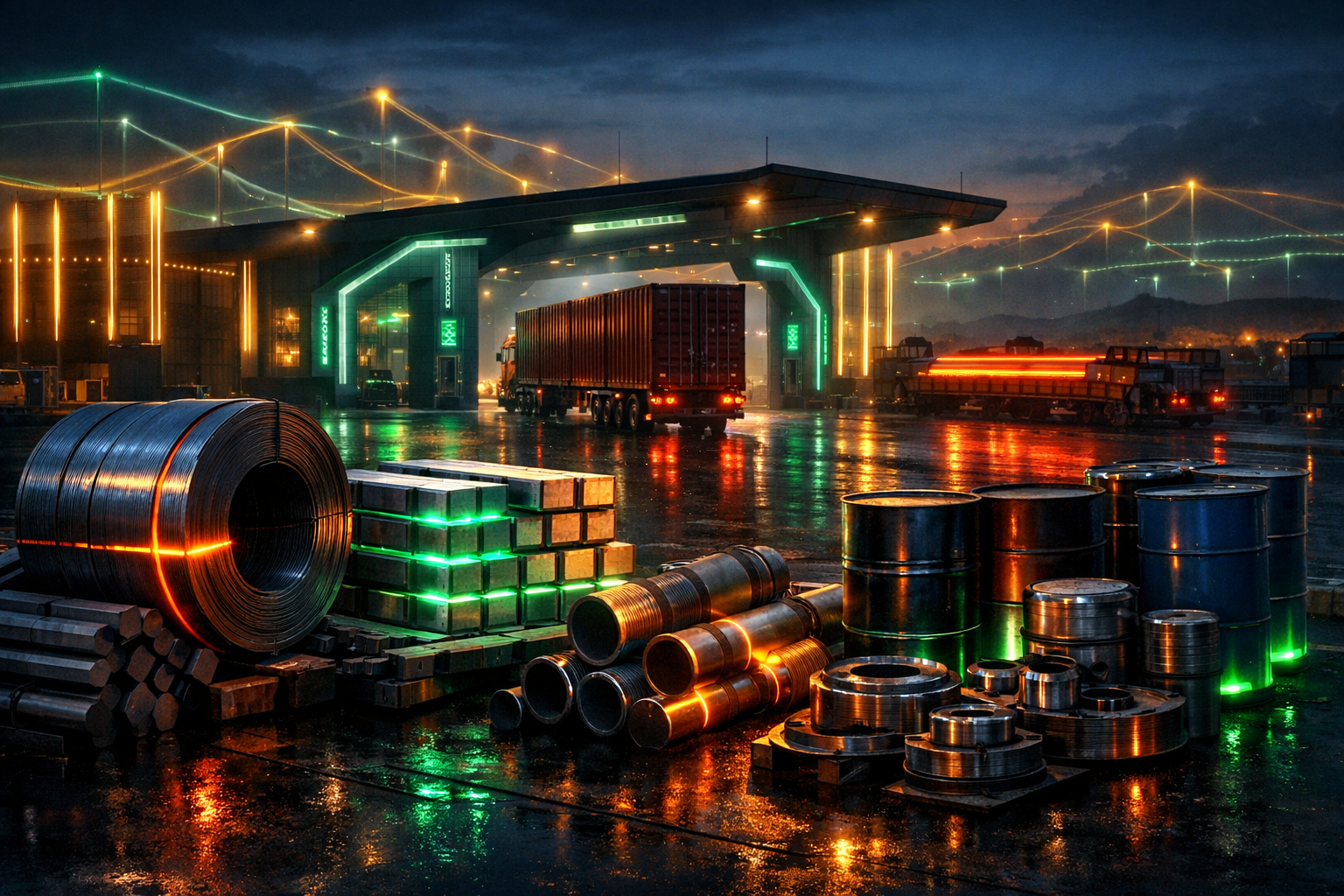
CBAM currently covers cement, iron and steel, aluminium, fertilisers, electricity, and hydrogen. The highest relocation sensitivity sits in the first four because they are bulk, emissions-intensive, and globally traded.
Steel is the clearest benchmark case. It is one of the world’s most traded heavy materials and remains structurally emissions-intensive across blast furnace and integrated routes. World crude steel production reached 1.8826 billion tonnes in 2024, which shows how large the trade exposure base is.
Cement and fertilizers are especially sensitive because their emissions are tied to process chemistry and energy inputs, not just electricity use. That makes product-level emissions data central to supplier screening.
Aluminium deserves separate attention because upstream power-carbon intensity can vary widely by country. For buyers, that creates a commercial gap between smelters running on coal-heavy grids and those using hydro or other lower-carbon power.
Exposure is not uniform even within one sector. Plants with older assets, higher clinker ratios, or carbon-intensive process heat will feel the pricing pressure first.
That sets up the next question. If costs rise in Europe, where does the next wave of capacity go?
Why ASEAN Could Become the New Landing Zone for Carbon-Intensive Production
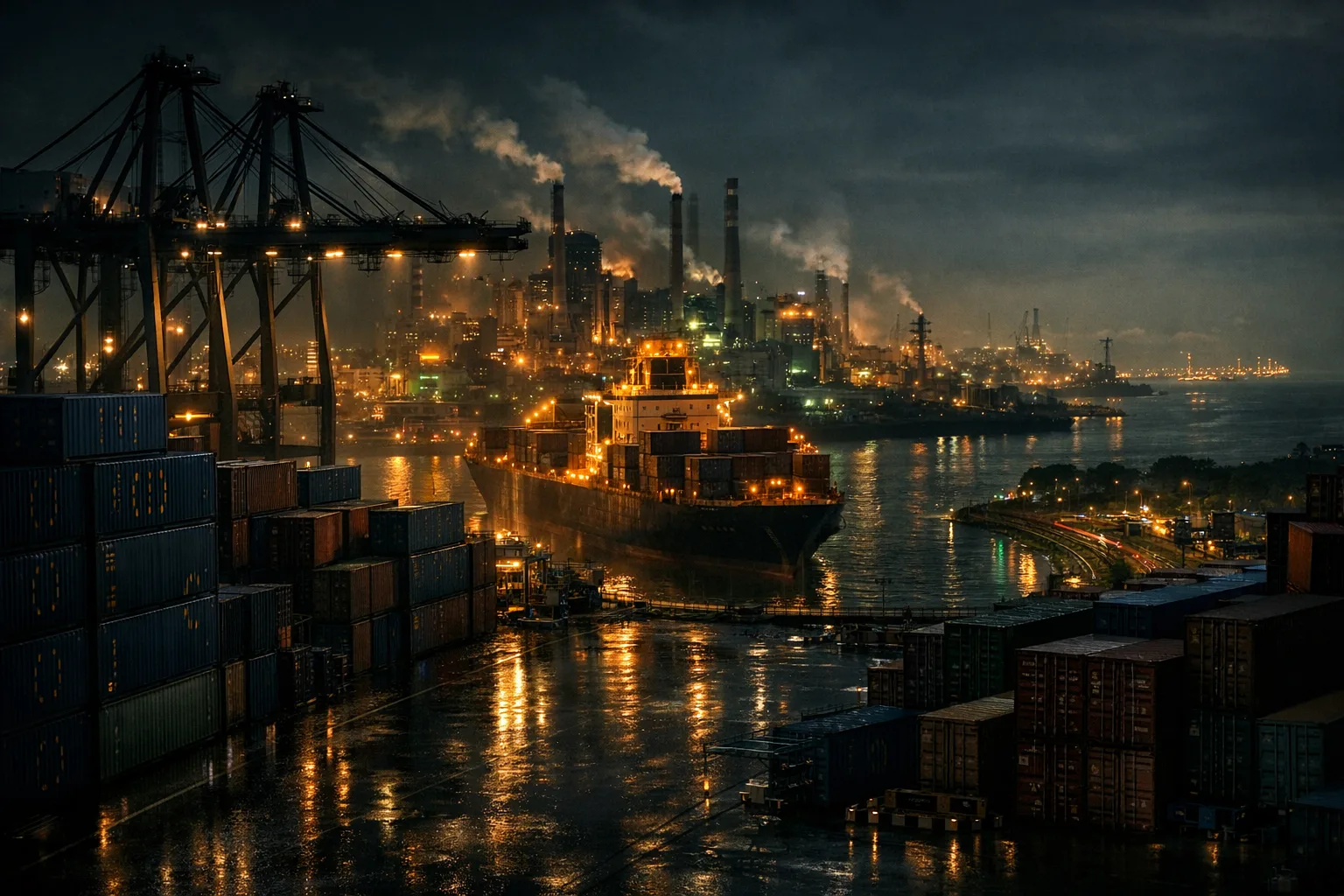
ASEAN is already attracting more manufacturing capital, which makes it a plausible destination for reallocated industrial capacity. UNCTAD says manufacturing FDI in ASEAN grew by nearly 150% to $44 billion in the latest report, while ASEAN’s total investment inflows reached a record $225 billion in 2024.
The region’s appeal is not only lower labour cost. It also sits inside global supply chains, has improving logistics, and can host export-oriented plants close to raw material inputs and downstream assemblers.
For heavy industry, Southeast Asia already matters in steel demand and capacity planning. OECD notes that additional steel demand growth is expected from emerging markets, especially ASEAN, which makes the region attractive both as a consumption base and as a future production base.
The carbon-risk angle is straightforward. A factory relocation to ASEAN can reduce EU compliance exposure while preserving market access if the destination country has looser carbon pricing or weaker disclosure rules.
That is the classic carbon leakage pathway, but it is now happening through investment routing rather than simple trade diversion.
The real question is what this means for jobs, supplier ecosystems, and industrial policy in the region.
What This Means for Jobs, Investment, and Industrial Policy Across the Region
If carbon-intensive production shifts, the first effect is not just new factories. It is job creation in construction, operations, logistics, maintenance, and industrial services, plus indirect demand for ports, power, and input suppliers.
For buyers and operators, that means labour availability and industrial cluster depth matter as much as land and tax incentives.
The labour-market challenge is that industrial upgrading has not always translated into high-productivity job growth. The World Bank notes that the region’s growth model has been facing headwinds from automation and changing trade patterns, which raises the stakes for capital-intensive industrial policy.
A new cement, steel, or fertilizer line can anchor an entire supplier ecosystem. That includes scrap handling, refractory services, industrial gases, EPC contractors, rail and port handling, and grid reinforcement.
Investors often look at more than project IRR. They also assess cluster effects, permitting timelines, and utility reliability.
Policy makers face a trade-off. Accepting more emissions-intensive investment can boost short-run employment and export revenues, but it can also lock in carbon-intensive assets that may become stranded as disclosure and border-adjustment rules tighten.
That creates a need for industrial policy that links FDI attraction to decarbonization pathways.
The next step is Europe’s response, because the story does not end with relocation.
How Europe May Respond: Decarbonization, Trade Friction, and Supply Chain Rewiring
Europe’s response is likely to combine three levers: deeper industrial decarbonization, stricter CBAM enforcement, and selective supply-chain rewiring toward lower-carbon suppliers.
The Commission has already signaled further CBAM work on loopholes, methodology, and certificate pricing, which shows the regime is still being built out rather than frozen.
For buyers, the commercial shift is from cheapest landed cost to lowest compliant landed cost. Embedded emissions, verification quality, and future carbon price risk become part of sourcing decisions.
That will favour suppliers who can document process emissions, precursor data, and product-level intensity with traceable systems.
Europe is also likely to face trade friction as exporters in affected sectors push back on compliance burdens and argue for equivalence, exemptions, or recognition of third-country carbon pricing.
The endgame is supply-chain rewiring. That means more low-carbon steel, recycled aluminium, lower-clinker cement, and cleaner fertilizer inputs, supported by contracts that reward verified emissions performance rather than volume alone.
CBAM may reshape trade flows, but the suppliers that adapt fastest will be the ones that can industrialize decarbonization first.