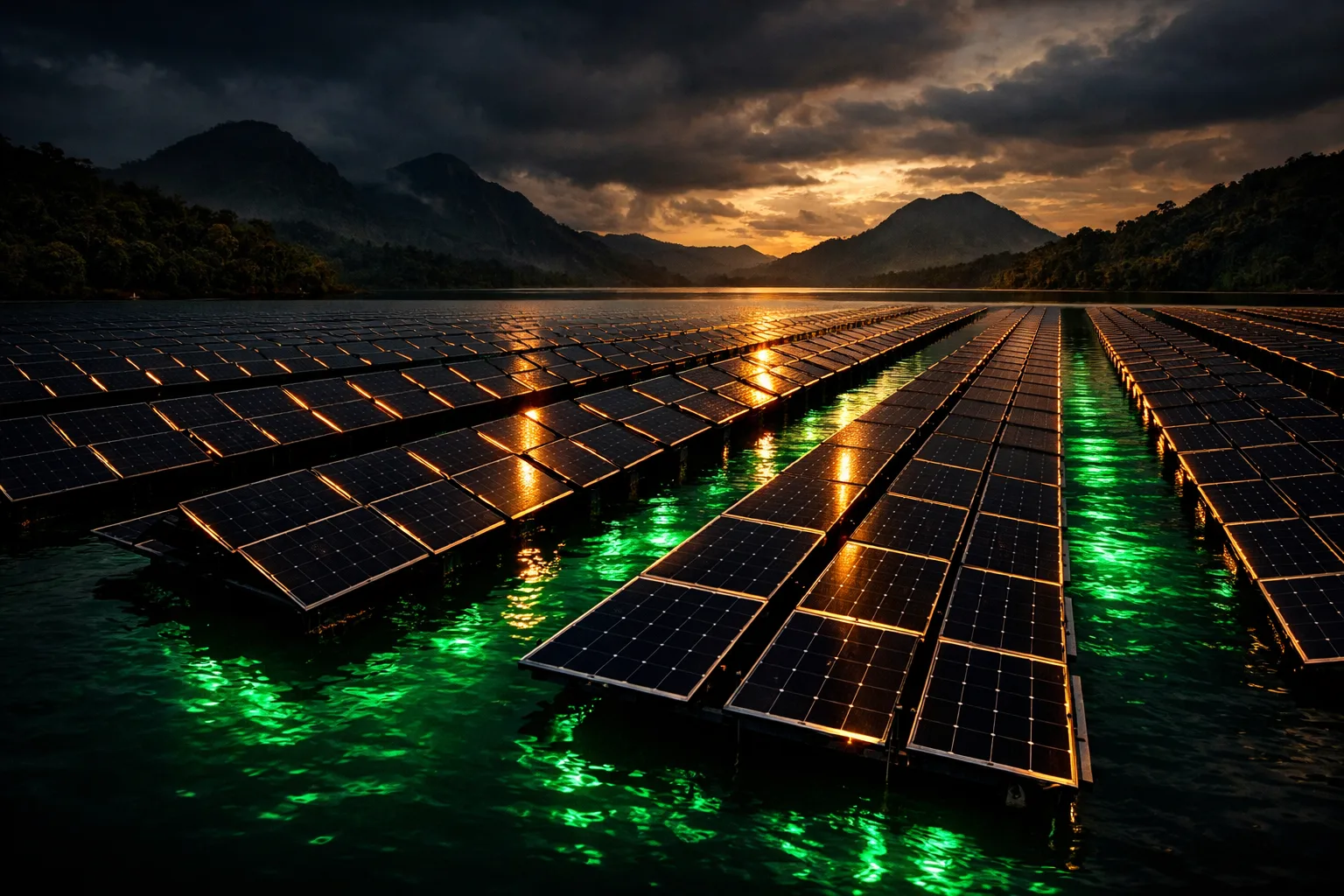
Indonesia and Norway have signed a mitigation outcome purchase agreement (MOPA) to support renewable energy projects in the Southeast Asian country under Article 6 of the Paris Agreement, Carbon Pulse reports. The deal, signed at COP31 in Antalya, Türkiye, is Indonesia’s first MOPA to operationalise Article 6.2, and for carbon market participants it shows government to government purchases of mitigation outcomes moving from bilateral frameworks to signed contracts with volumes and prices attached.
Signed at the Indonesia Pavilion
The signing took place on Wednesday 11 November 2026 at the Indonesia Pavilion during COP31, witnessed by Moh Jumhur Hidayat, Indonesia’s Minister of Environment and Head of the Environmental Protection Agency, and Sigrun Aasland, Norway’s Minister of Climate and Environment, according to GGGI. The agreement itself was signed between PT PLN, Indonesia’s state-owned electricity company, and the Global Green Growth Institute, Antara News reported.
The commitment continues a Letter of Intent signed at COP30 in Belém, Brazil, in 2025. The agreement is facilitated by GGGI and supported through the Norwegian Article 6 Climate Action (NACA) Fund, a carbon fund hosted under GGGI’s Carbon Transaction Facility. GGGI said the deal is expected to be among the largest transactions under Article 6.2 of the Paris Agreement to date, a characterisation that remains an expectation rather than a confirmed ranking.
A 12 million tonne cap, an estimated $20 to $40 per tonne
According to Antara News, PLN can make claims until 2038, with a cap on emission reductions of 12 million tonnes of CO2 equivalent. Under the arrangement, PLN can claim each emission reduction achieved by its floating solar power plants to Norway through GGGI.
The value of each claimed emission reduction is estimated at around $20 to $40 per tonne of CO2 equivalent, under the scheme agreed by the two parties, Antara News reported. That is an estimate, not a fixed contract price. Haryo Pambudi, a director at Indonesia’s environment ministry responsible for carbon economic value governance, described the document as the first and largest carbon trading contract recorded under the UNFCCC. That description is the official’s own claim, not a UNFCCC assessment.
Results-based crediting for floating solar
The MOPA supports the implementation of Indonesia’s Generation-Based Incentive (GBI) Program, a results-based crediting mechanism designed to accelerate investment in new and additional clean, grid-connected electricity generation, according to GGGI. As a sectoral financing mechanism, the GBI can be applied across renewable energy technologies, but its initial technological window in Indonesia focuses on floating solar photovoltaic, in line with national priorities and Article 6 of the Paris Agreement.
The program addresses financial, regulatory and grid-related constraints that have slowed renewable energy investment in Indonesia. It provides additional incentive payments when the standard power purchase price is insufficient to make an eligible project financially viable. In other words, the mitigation outcome revenue is designed to close the bankability gap for projects that would not proceed on power sales alone.
What the ministers said
Jumhur Hidayat framed the deal as a concrete step in implementing the Article 6.2 bilateral agreement between the two environment ministries, adding that the cooperation will support efforts to strengthen Indonesia’s SRUK, its Carbon Unit Registry System, and ensure transparent recording and tracking of international transfers. “Our priority is to ensure that this cooperation delivers credible mitigation outcomes, upholds environmental integrity, and is implemented in line with Indonesia’s national climate commitments,” he said, according to GGGI.
Aasland pointed to the emissions logic of the partnership. “Indonesia’s emissions are growing rapidly. Norway’s cooperation with Indonesia is helping ensure that more of the country’s electricity comes from solar power rather than coal,” she said, adding that the contract allows Norway to fund projects that cut carbon emissions in Indonesia, including floating solar.
What to watch
First, implementation. GGGI said it will work closely with the Government of Indonesia, PT PLN and the Norwegian Ministry of Climate and Environment to finalise implementation and operational arrangements. The contract is signed, but the operating details, from monitoring to transfer accounting, are not yet set.
Second, scope. Indonesia has proposed extending the cooperation beyond energy, for example to waste management, if the partnership works well, according to Antara News. That remains a proposal, not an agreed expansion.
Third, registry readiness. The integrity of the transfers will rest on SRUK’s ability to record and track mitigation outcomes transparently, a priority both sides have flagged publicly.
For buyers and investors, the headline is that Article 6.2 supply from Indonesian renewables now has a signed government-backed purchase route, with a volume cap, a price indication and an end date attached. Whether other host countries replicate the PLN-GGGI structure will say much about how fast the Article 6.2 market matures after COP31.