Why EU ETS Industrial Decarbonisation Still Needs a Price Floor, Not Just a Price Signal
Why carbon price volatility is slowing industrial investment decisions
The EU ETS is still cutting emissions, but the price signal alone is not enough for heavy industry. Covered emissions fell by 5% in 2024 and by 1.3% in 2025 versus the previous year, yet price volatility still makes long-term CAPEX planning harder for energy-intensive assets.
That matters because industrial buyers and processors need more than a credible carbon price. They need a price they can model into payback periods, sensitivity analysis, WACC assumptions, and investment committee papers. For projects with 10 to 20-year horizons, a stable floor price or corridor is often more useful than a carbon signal that can swing sharply.
The issue is even sharper because Europe is still under pressure on competitiveness, energy costs, and productive investment. The Commission continues to stress the need for more investment, innovation, and stability to support the green and digital transition.
The ETS is built around daily allowance auctions and a stability mechanism, but that does not automatically create a bankable minimum price for industrial projects. A market signal is not the same thing as revenue certainty.
That is why many project sponsors want certainty of cash flows, not just a carbon signal. The next question is what kind of public support can close the gap between climate ambition and bankability.
The role of targeted support in bridging the gap between ambition and bankability
Targeted support is expanding because the market is not yet financing the full industrial transition on its own. In 2025, the EIB Group mobilised more than 100 billion euros for energy security, grids, storage, and net-zero industries.
For industrial B2B projects, the problem is not only the carbon cost. It is the full risk profile, including construction risk, technology risk, feedstock risk, and off-take risk, especially when projects move from pilot to first-of-a-kind or first-commercial-of-a-kind.
Targeted support helps turn climate ambition into bankable cash flows through blending, grants, debt de-risking, and long-term contracts. Without that, many projects stay stuck in FID limbo.
This works best when support is aimed at segments with the biggest technology and market barriers. It is less effective when capital is spread across projects that are already close to competitive.
That leads to the next question: which industrial sectors face the hardest mix of emissions intensity, high abatement costs, and long payback periods?
Which industrial sectors face the biggest financing and technology barriers
Steel, cement, chemicals, refining, pulp and paper, and industrial heat face the biggest barriers. These sectors combine high-temperature processes, large fixed assets, and decarbonisation options that are still costly or not mature at scale.
In cement and steel, incremental efficiency is often not enough. Process redesign is usually required, and electrification, hydrogen-based DRI, CCUS, and heat integration all depend on infrastructure and supply chains beyond a single plant.
For industrial buyers, the barrier is not only technical. It is also contractual. They need off-take agreements, access to CO2 transport and storage, low-cost energy, and in many cases co-investment across the value chain.
The Commission also notes that process heating is one of the largest uses of industrial energy, which makes heat decarbonisation a cross-cutting priority for many manufacturers.
Because these sectors face high CAPEX and technology uncertainty, the next section looks at which tools actually reduce project risk: CfDs, grants, and the Innovation Fund.
How contracts for difference, grants, and innovation funds can de-risk decarbonisation
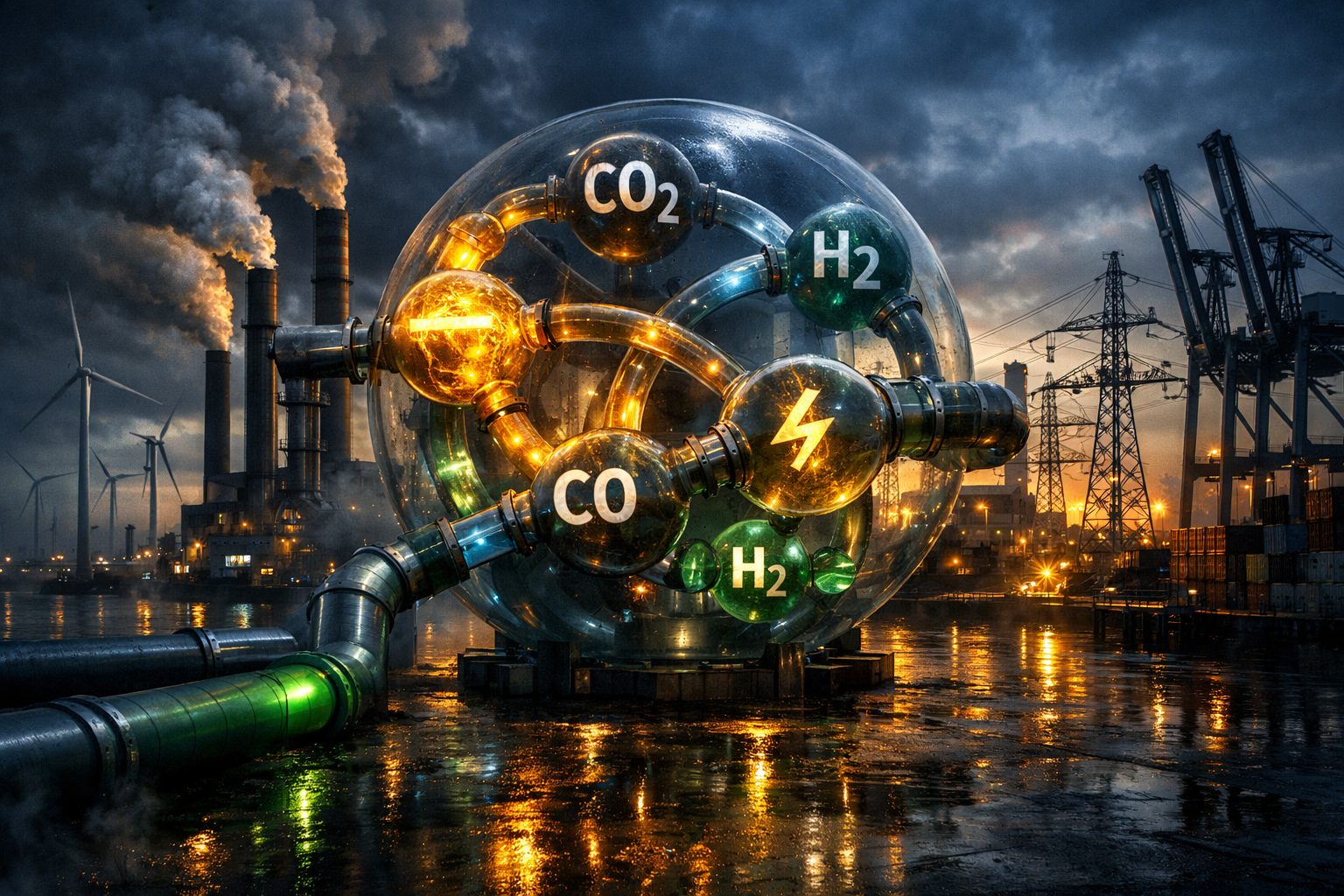
Carbon contracts for difference and industrial contracts for difference can provide revenue certainty. They compensate the gap between abatement cost and market price, which helps low-carbon steel, e-fuels, or clinker substitution projects reduce revenue volatility and improve project financeability.
Grants and blended instruments are also critical because they can cover first loss and lower the cost of capital. That matters most for technologies still in scale-up, where execution and commissioning risk is often higher than pure commercial risk.
The Commission’s Innovation Fund is relevant because it supports large-scale low-carbon industrial projects and helps bridge the gap between demo projects and commercial deployment. That transition is often the hardest step for buyers and developers.
The policy mix in Europe is moving toward a combination of carbon pricing, direct support, and more sophisticated market tools. The goal is to avoid a CO2 signal that is too weak or too uncertain to drive industrial FIDs.
That creates a natural final question: if policy became more predictable, what would change for competitiveness, leakage risk, and the pace of emissions cuts?
What stronger policy certainty could mean for EU competitiveness and emissions cuts
More policy certainty would improve the bankability of industrial assets. A price floor, a more predictable cap trajectory, or clearer stabilisation mechanisms could unlock investments that are being delayed today.
Competitiveness is also tied to carbon leakage protection. The Commission is strengthening the level playing field through CBAM, which enters its definitive regime from 2026, and recent proposals also aim to reduce leakage pressure for EU exporters.
For B2B operators, that means the market will increasingly reward companies that combine carbon strategy, clean energy procurement, abatement roadmaps, and CBAM compliance in one industrial plan.
A more stable ETS, targeted support, and leakage protection could also accelerate emissions cuts beyond the trend already visible. ETS emissions are around 50% below 2005 levels, and the Commission points to a path toward the 2030 target of -62%.
In short, a price signal without a floor is often not enough for heavy industry. What the market needs is a policy architecture that makes decarbonisation investable, exportable, and scalable.