
What the 2025 rainforest loss decline really means for global nature targets
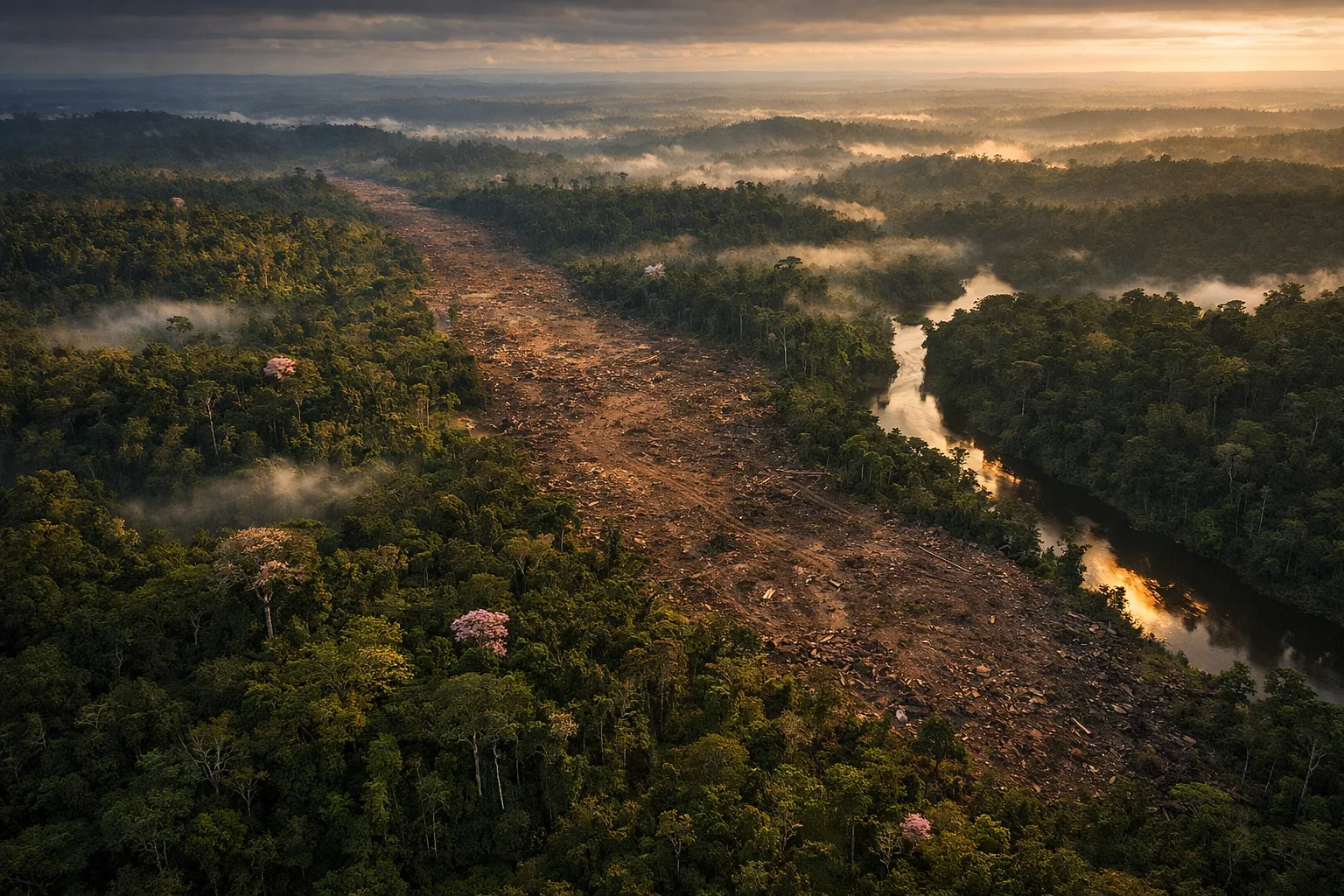
The 2025 drop in tropical rainforest loss is good news, but it is not a structural fix. Tropical primary forest loss fell 36% from the 2024 record, yet it still sits about 46% above the level of a decade ago. That means the signal is slowing, not reversing.
For buyers and investors, the key distinction is simple: less loss is not the same as zero net loss. Climate and biodiversity targets need stable, verifiable trajectories, not annual swings driven by fires, El Niño, enforcement changes, or agricultural policy.
The geography matters too. The global decline was driven mainly by Brazil, with improvements also seen in Colombia, Indonesia, and Malaysia. That concentration is useful to know because it also means the risk can return quickly if policy shifts, commodity prices rise, or land-use pressure increases.
This is where the idea of forest risk repricing becomes useful. A single year of improvement does not remove asset, supply chain, or reputational risk for companies exposed to soy, beef, palm oil, cocoa, and mining.
The real question is not whether deforestation is falling. It is whether the pace is fast enough to meet 2030 goals for forests, biodiversity, and climate stability.
Why a 36% drop can still leave the world far off track for 2030
The world is still off track even after the 2025 decline. Reference trackers continue to show that ending deforestation by 2030 remains out of reach, and the gap is cumulative rather than linear. Every year of delay adds emissions, fragmentation, and habitat loss.
The biodiversity impact is also uneven. A relatively small number of concentrated forest losses can damage critical ecological functions, endemic species, and high-density carbon stocks. That makes biodiversity loss worse than the headline absolute number might suggest.
For business, the timing problem is immediate. Commodity processors and buyers cannot wait until 2030 to become deforestation-free, because procurement, disclosure, and due diligence requirements are already tightening.
The right framing is climate-nature alignment. A 2030 forest target is not just about annual deforestation rates. It is about whether primary forest decline is slowing fast enough to protect biodiversity integrity at scale.
The next question is why the pace is still too slow. The answer sits in policy, governance, and capital.
The policy and finance bottlenecks slowing forest protection at scale
The biggest constraint is not ecological value. It is the mismatch between what forest protection needs and what actually gets financed. UNEP estimates that annual forest investment needs must rise from 84 billion dollars in 2023 to 300 billion by 2030, leaving an annual gap of about 216 billion dollars.
Private capital is still far below that scale. Private forest finance was only 7.5 billion dollars in 2023, and it tends to flow toward lower-risk markets rather than the tropical commodity frontiers where much of the deforestation pressure sits.
For buyers, that means the lever is not just compensation. Procurement, credit conditions, ESG-linked financing, and capital reallocation toward producers, cooperatives, and jurisdictions with verifiable governance matter just as much.
Tenure insecurity is another brake. Where land rights are unclear, investments in protection, restoration, and agroforestry become legally fragile. That raises the cost of capital and makes bankable pipelines harder to build.
Policy and finance often fail at the same point. They lack shared risk structures, robust MRV, and enough incentives to scale forest protection like an industrial system.
How carbon markets, biodiversity credits, and Article 6 could help or fall short
Carbon markets can channel capital into conservation, but only if credits are high integrity. Additionality, permanence, leakage, and robust MRV remain the core tests. Without them, the market can end up paying for activity that would have happened anyway, or for outcomes that cannot be verified.
Article 6 could strengthen institutional demand, but it is not a shortcut. Its value for buyers and governments depends on clear rules, credible accounting, and compatibility between international transfers, NDCs, and environmental integrity.
Biodiversity credits may add a more specific layer for habitat, species, and ecosystem services. The risk for B2B buyers is fragmentation. If metrics are too inconsistent, credits become hard to compare and hard to use in nature-positive strategies.
A multinational buyer can combine jurisdictional REDD+, restoration credits, and supply-chain decarbonization. That only works if claims, disclosure, and geospatial verification sit inside one coherent framework.
The market can help, but only if investors, buyers, and governments can separate scalable tools from instruments that look promising but do not close the real risk gap on the ground.
What investors, buyers, and governments should watch next in tropical forest risk and opportunity
The first thing to watch is persistence. One positive year is not enough. The real signal comes from multi-year trends in tropical forest loss, fire incidence, enforcement, and commodity-linked deforestation.
Investors should focus on three B2B variables: exposure to forest-risk sectors, the quality of customer sourcing policies, and the presence of verifiable deforestation-free supply chain metrics. Those factors can quickly turn into higher funding costs and a reputational discount.
For buyers, due diligence is shifting from policy statements to performance proof. Geolocation of origin, first-mile traceability, independent audits, and contract clauses on non-conversion are becoming competitive requirements.
Governments should also watch whether blended finance mechanisms, including tropical forest-centered funds, can pay for conservation on an annual and long-term basis. One-off grants are not enough to change the economics of forest protection.
The opportunity is clear. The 2025 decline is encouraging, but the market value lies in turning a cyclical drop into a structural and financeable reduction in forest risk, with real benefits for biodiversity, supply chains, and asset allocation.