How CBAM Was Designed for Imports, Not for the Goods Europe Sells Abroad
CBAM is an import-only carbon border adjustment mechanism. It applies to goods brought into the EU customs territory and is built to mirror the EU ETS on those inbound flows. It does not tax exports, and it does not rebate carbon costs when EU producers sell abroad.
That design matters for exporters immediately. An EU steel mill shipping coils to Türkiye, the US, or the UK still carries the carbon cost from production inside the EU. The foreign buyer does not receive a CBAM-linked credit at the border. The result is a pricing asymmetry that procurement teams and commercial directors feel in export quotes and long-term supply contracts.
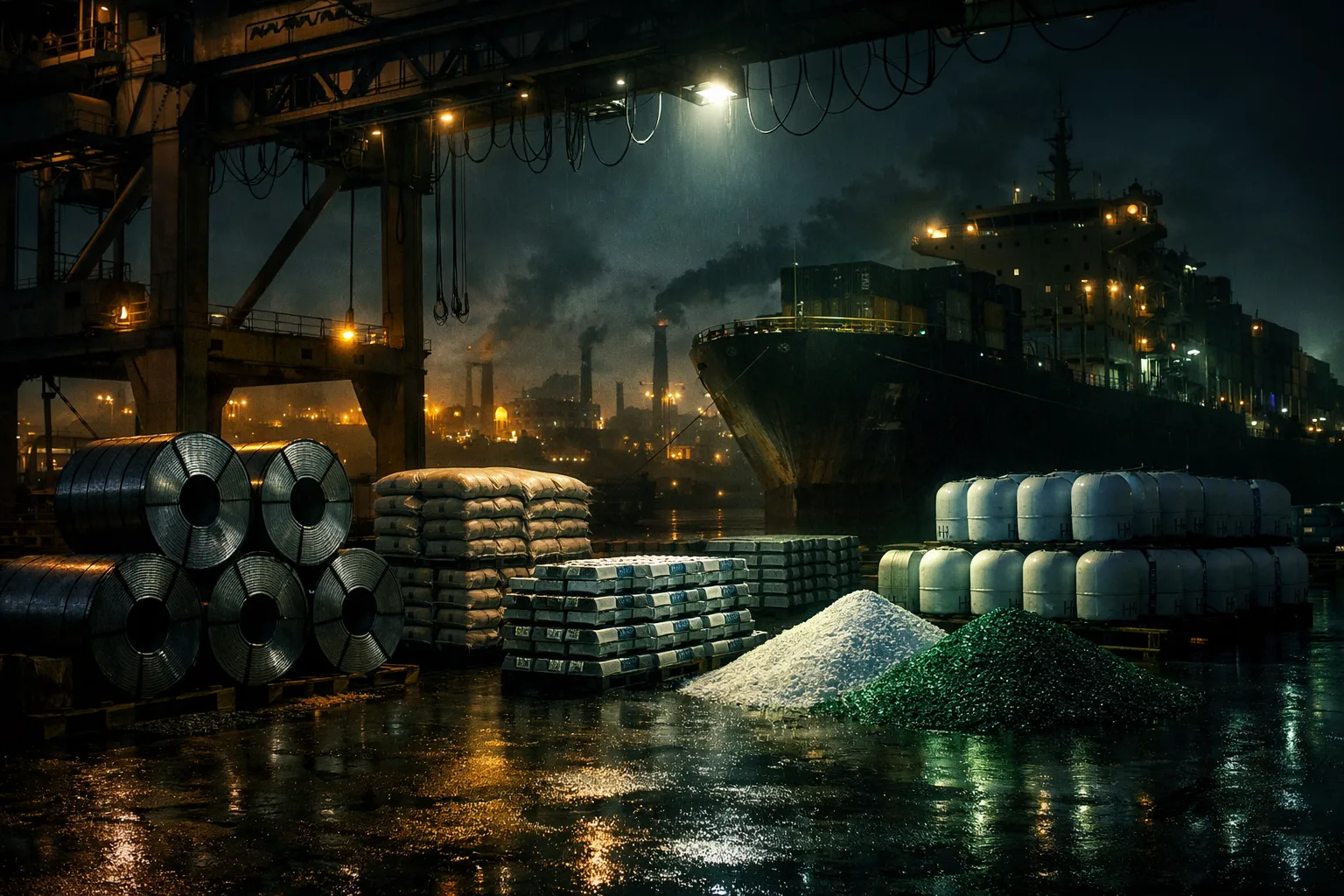
CBAM scope is also narrow but highly material. In phase 1, it covers steel, cement, aluminium, fertilisers, hydrogen, and electricity. These are carbon-intensive basic materials, so the mechanism is especially relevant for industrial buyers comparing imported inputs with EU-made inputs.
The policy logic was always about imports and carbon leakage. CBAM was meant to stop emissions shifting into the EU through cheaper, higher-carbon imports. The export side was left for later review, and the Commission was already required to assess export leakage risk by 2025.
Why Steel, Cement, Aluminium, Fertilisers, and Hydrogen Face a Competitiveness Gap
These sectors sit at the centre of the competitiveness debate because they are energy-intensive, trade-exposed, and already under ETS pressure. EU trade data show iron and steel exports reached €77.8 billion in 2024, which underlines how large the export base still is.
The core issue is margin pressure. Electricity prices, fuel mix, process emissions, and the cost of EU ETS allowances all feed into the final ex-works price. In procurement terms, even a small carbon premium can decide whether a buyer awards a multi-year supply contract to an EU producer or a third-country alternative.
Aluminium and steel are especially sensitive because they sit upstream in many downstream manufactured goods. Carbon cost does not stop at the primary material stage. That is why downstream competitiveness and industrial chain effects are becoming central topics, especially for steel-intensive products, aluminium-intensive products, and value-chain carbon leakage.
Hydrogen and fertilisers matter for a different reason. They are both inputs to broader industrial ecosystems, and they are now directly inside CBAM’s scope. That means their pricing affects ammonia, chemicals, refining, and low-carbon fuels procurement strategies.
The competitiveness gap is not just about higher costs. It is about the absence of border relief on outbound trade. That is the policy problem exporters feel first.
The Core Policy Problem: Carbon Costs at Home, No Relief at the Border
The problem is structural. The EU prices emissions inside the bloc through the ETS, but CBAM does not neutralise those costs when the same product is exported. EU exporters can therefore face a carbon cost wedge relative to producers in jurisdictions with weaker climate pricing.
Free allocation was the historical tool used to reduce carbon leakage risk. That buffer is now being phased down for CBAM-covered sectors from 2026 onward, reaching zero by 2034 under the current framework. That creates a transition period in which exporters may be more exposed before any export-side solution exists.
For buyers and transformers, this changes sourcing decisions. Embedded-carbon disclosure matters more. Origin risk matters more. Carbon price pass-through in supplier contracts matters more. Export margin erosion becomes a procurement issue, not just a policy one.
The policy tension is clear. Brussels wants to preserve WTO compatibility and avoid explicit export subsidies, while still protecting decarbonising industry. That tension is why the export question has stayed politically difficult.
What Export Rebates, Free Allocation, and WTO Rules Could and Could Not Solve
Export rebates sound simple, but they would need careful design to avoid being treated as an export subsidy under WTO disciplines. Trade friction is already real. A WTO consultation filed by Russia in 2025 shows that CBAM-related disputes are not hypothetical.
Free allocation can soften leakage risk inside the EU ETS, but it is not a clean export solution. It weakens the carbon price signal and distorts incentives. That makes it a temporary competitiveness buffer, not a durable export architecture.
A two-way CBAM or export rebate would also raise hard operational questions. Product scope would need to be defined. Emissions benchmarking would need to be credible. Mixed-origin inputs in supply chains would need to be treated consistently. That matters especially for B2B transformers that combine EU scrap, imported semi-finished inputs, and exported finished goods.
The real question is not whether a rebate is desirable. It is whether it can be targeted, auditable, and legally defensible. WTO rules and trade law constraints sit at the centre of that test.
Why This Blind Spot Matters for Global Trade, Industrial Investment, and Carbon Leakage
If export exposure is ignored, investment may shift toward jurisdictions where carbon costs are lower or easier to avoid. That risk is strongest for commodities with thin margins and high freight sensitivity. Industrial relocation becomes a real possibility when carbon leakage risk is not addressed on the export side.
Global buyers do not compare headline price alone. They compare delivered cost, supply security, and compliance risk. For steel, cement, aluminium, and fertilisers, that means EU producers can lose tenders even when they have stronger ESG credentials if their carbon cost is not recognised in export pricing.
The EU is already acting as if the problem is real. The Steel and Metals Action Plan and the 2025 CBAM review both point toward broader coverage, anti-circumvention measures, and possible downstream extension. That is a strong sign the blind spot is not theoretical.
Trade data make the scale tangible. Iron and steel remain a major EU export category, and the bloc still runs large cross-border material flows. Even a partial export disadvantage can affect procurement, capex, and plant utilisation across supply chains.
The Next Policy Tests for Brussels: Can CBAM Work as a Two-Way System?
CBAM is not finished. The Commission has launched a consultation on downstream extension and anti-circumvention measures, and the Steel and Metals Action Plan points to a comprehensive CBAM review. That puts CBAM reform, downstream extension, anti-circumvention strategy, and a possible two-way carbon border adjustment on the table.
One test is whether Brussels can move from a pure import levy to a broader competitiveness package. That could mean more precise product coverage, better benchmarking, or targeted sectoral support rather than a blanket export rebate.
Another test is operational. The CBAM definitive phase began on 1 January 2026, so regulators now have live compliance data, registry experience, and practical evidence on where carbon leakage risk appears in real trade flows.
For B2B buyers, this matters because policy direction will influence contract pricing, supplier selection, and where future low-carbon industrial capacity is built. CBAM is moving from a customs tool to an industrial policy lever.
The key takeaway is simple. The EU’s carbon border regime may stop import leakage today, but unless Brussels resolves the export side, exporters remain structurally exposed. The next round of reform will decide whether CBAM becomes a true trade-and-climate system or stays a one-way correction.