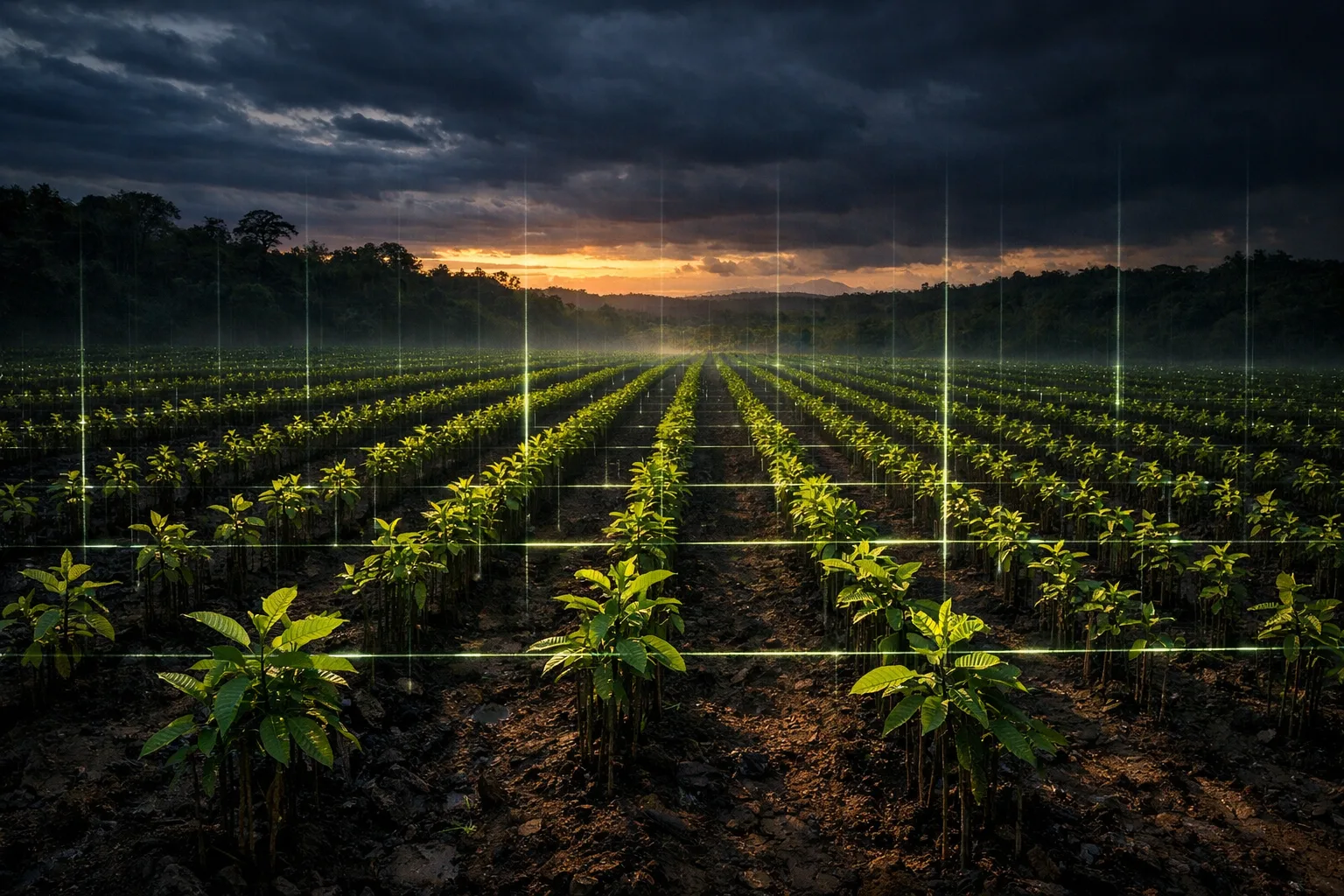
Brazilian carbon removal developer Mombak has delivered its first carbon removal credits from Amazon reforestation to buyers including members of the Symbiosis Coalition, with some credits transferred more than two years ahead of schedule, Carbon Pulse and Reuters reported on 4 August. For corporate buyers holding long-dated reforestation offtakes, and for investors pricing delivery risk into nature-based carbon removal, the transfers are the first concrete test of whether the sector’s largest contracts can convert into issued, delivered tonnes.
What Was Delivered, and to Whom
The credits delivered to buyers trace back to a milestone issuance five weeks earlier. On 1 July, registry Isometric issued 21,771 reforestation certificates from Mombak’s Reforesting the Brazilian Amazon Project 1, certified under its CCP-approved Reforestation Protocol. Those certificates were Isometric’s first nature-based issuance and, according to the registry, the world’s first native-species reforestation certificates issued using dynamic baselines.
The buyer roster is the reason the delivery matters beyond one project. Mombak, based in Sao Paulo, has secured offtakes worth more than $170 million in contracted revenue with buyers including Google, McKinsey, and Microsoft, and its Amazon project was the first selected by the Symbiosis Coalition, the buyer group founded by Google alongside other large tech companies to contract high-quality nature-based removals. Reuters reported that Google was among the recipients of the early deliveries.
Why Early Delivery Is the Story, Not the Volume
The volumes involved are small relative to the contracts behind them. Mombak’s reported offtake book runs to more than 1.8 million tonnes of carbon removal, so a first delivery in the tens of thousands of tonnes is a down payment, not a conclusion. The signal is in the timing.
Nature-based carbon removal has a well-documented delivery problem. Reforestation projects take years between planting and verified issuance, and buyers that signed large offtakes in 2023 and 2024 have been carrying the risk that contracted tonnes arrive late, under-deliver, or never materialise. That delivery gap has shaped contract design across the market, from milestone-based payment schedules to replacement clauses and buffer requirements. A delivery that lands more than two years ahead of schedule pushes in the opposite direction: it suggests that at least one large-scale ARR developer is over-delivering against its contracted timeline.
“Voices all over the carbon removal market have been saying relentlessly that this is the time to move from promises to delivery, and this issuance is just that,” Mombak CEO Gabriel Silva said when the certificates were issued in July. “Mombak and Isometric are issuing the highest-integrity tonnes available, earlier than expected.”
What Is Behind the Timeline
Two operational facts help explain how Mombak reached delivery ahead of schedule. First, scale of planting: the project spans 12 farms to date, where the company has planted almost 15 million trees across more than 100 native species, 16 of them endangered, generating close to 600 direct jobs in vulnerable Amazonian regions. Second, the certification architecture: Isometric’s Reforestation Protocol sets baselines independently, comparing each project against comparable unrestored land so that only removal beyond what would have happened anyway is certified, and it was the first reforestation protocol to account for albedo change. Certification was run through Certify, Isometric’s agentic platform, with the evidence and calculations behind every certificate published on the Isometric Registry.
That combination matters for buyers because it compresses the two timelines that usually slow reforestation credits: biological growth and verification. Neither is eliminated, but an issuer that certifies against independently set dynamic baselines, and publishes the underlying data, reduces the documentation lag between trees in the ground and credits in a buyer’s account.
Implications for Buyers, Developers, and Investors
For buyers with reforestation offtakes, the delivery is a data point for counterparty assessment. Early delivery against a high-integrity protocol strengthens the case that contracted ARR volumes from top-tier developers can be treated as scheduled supply rather than aspirational supply, which feeds directly into net-zero planning and residual-emissions budgeting.
For developers, the bar moves. Mombak’s delivery pairs native-species, biodiverse planting with registry-level transparency, and it was rewarded with the market’s most visible buyers. Developers still selling forward volumes on weaker documentation will face harder questions about why their timelines and data trails look different.
For investors, the delivery begins to answer the sector’s core underwriting question. Contracted revenue figures, such as Mombak’s $170 million plus in offtakes, only convert to cash when credits are issued and transferred. Each on-time or early delivery compresses the perceived risk premium on nature-based CDR pipelines, and by extension the cost of capital for the next wave of restoration projects.
What to Watch Next
Three signals will show whether this delivery is a precedent or an outlier. First, the pace of follow-on issuances from Mombak’s Project 1 and its wider farm portfolio: a steady cadence of certified tonnes would confirm the operational model, while a long gap would suggest the first issuance front-loaded the easiest credits. Second, whether other Symbiosis Coalition selections reach delivery on similar timelines, which would indicate the coalition’s procurement standards are systematically de-risking supply rather than simply picking one strong developer. Third, pricing: if early, high-integrity deliveries start commanding a documented premium over generic ARR supply, the market’s quality segmentation will move from narrative to observable price data.
The broader read is measured but real. One early delivery does not close the carbon removal delivery gap, and reforestation will always carry biological and permanence risks that engineered pathways do not. But for a market that has run on promises for three years, the first transferred tonnes are the unit of credibility that counts.